
Kate Middleton’s Great British Wool Tour, and why UK Trade Policy Should Follow Her Home.
An op-ed by guest writer Sam Stuart
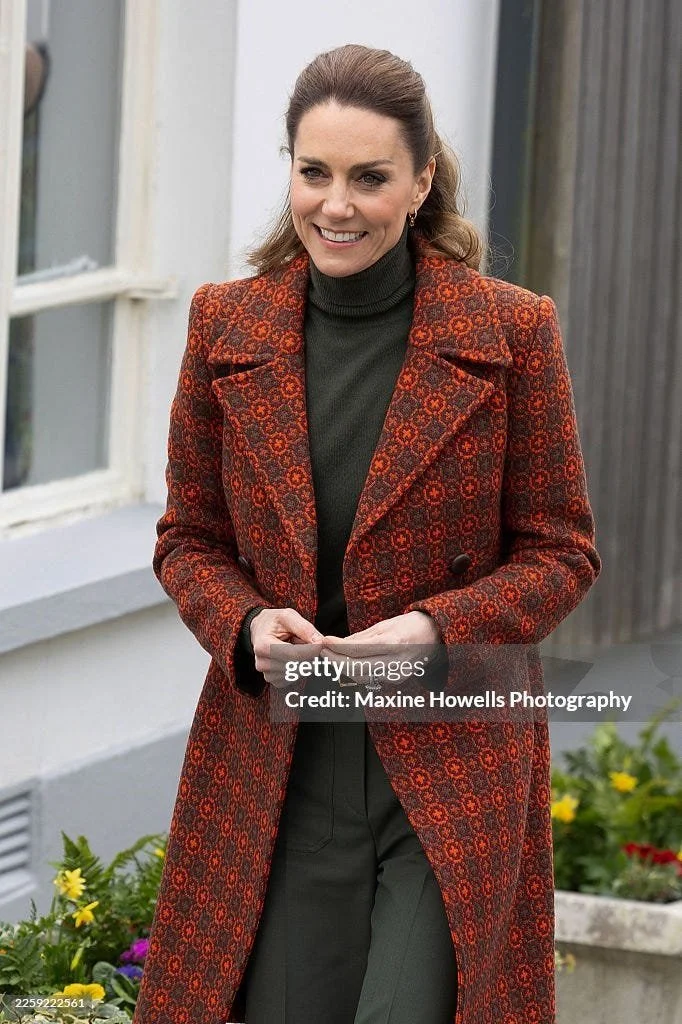
The Princess Of Wales Visits Textile Manufacturers In West Wales (2026) by Maxine Howells Photography / getty images
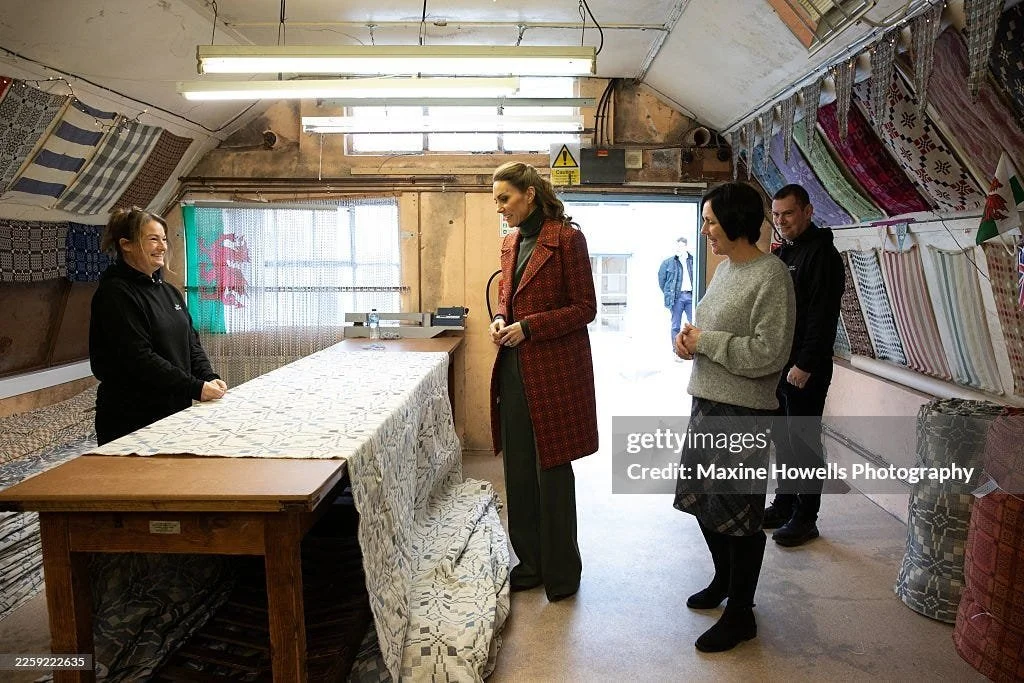
The Princess Of Wales Visits Textile Manufacturers In West Wales (2026) by Maxine Howells Photography / getty images
The Princess of Wales has gone back to her roots. Recent visits to textile manufacturers – Sudbury Silk Mills and Marina Mill in the South of England, Melin Tregwynt and Hiut Denim in West Wales – have paid homage to more than just exceptional British craftsmanship. Because weaving is woven into her ancestry: Leeds woollen manufacturer William Lupton & Co. was at one point owned by the Princess’s great-grandmother Olive Lupton. Having a royal so personally dedicated to spotlighting British manufacturing heritage is invaluable to our textile industry. Attempts to value her economic influence on UK fashion have settled on a staggering figure of £1 billion. And the reach of this so-named ‘Kate Effect’ is global, constituting, as The Guardian’s Gaby Hinsliff puts it, ‘the sort of soft power politicians would kill for.’1In a moment when global supply chains are fraying, such politicians, specifically UK trade negotiators, would do well to follow Kate’s lead in recognising the strategic value of British textiles. If they do, fabric might become an unlikely but pivotal frontier of trade diplomacy.
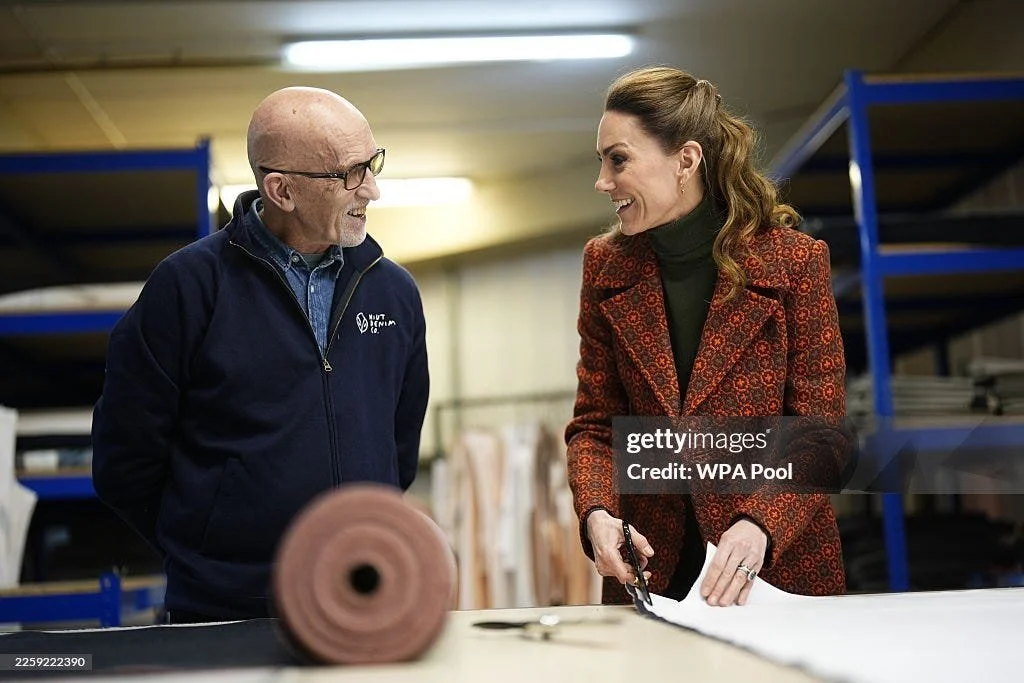
The Princess Of Wales Visits Textile Manufacturers In West Wales (2026) by WPA pool / getty images
There have been recent victories for UK trade on the world stage. The landmark Free Trade Agreement with India, signed in July 2025, has been rightly heralded as the most significant bilateral trade deal since Brexit, promising to reduce tariffs for more than 90 per cent of UK goods and deepen ties with one of the world’s fastest-growing economies. According to the government’s projections, its implementation will increase UK GDP by £4.8 billion over time – not an achievement to be sniffed at.2 More recently still, a cautious thaw in relations with China has produced modest but symbolic gains, including the launch of the first UK-China Financial Working Group, renewed ministerial dialogue after years of diplomatic chill, and the halving of import tariffs on Scotch whisky from 10% to 5%.3In the contemporary context of a splintering global trading system, these advancements matter. They signal that Britain remains open for business, that it is capable of negotiation in a multipolar world.
And yet these deals are also undeniably marked by the narrowness of our current trade imagination. The slashing of historically punitive whisky tariffs(from 150% to ~40%, in India’s case) is a low-risk move that can generate highly rewarding headlines. Cars, financial services, green technology and education dominate the agenda. Meanwhile, manufacturing heritage sectors such as textiles and fashion are mentioned only in passing, if at all. This omission would be understandable if fashion were economically marginal. It is not. The UK fashion and textile sector employs hundreds of thousands of people, anchors regional economies from Yorkshire to Wales, and generates billions in exports and brand value. And, as the Princess of Wales has demonstrated, it can engender a global cultural resonance which few other industries can match.
The geopolitical context makes this oversight all the more striking. Across the Atlantic, the United States has been quietly rewriting the rules of global e-commerce since August 2025, by abolishing the ‘de minimis’ exemption allowing for low-value parcels to enter duty free. For decades, this loophole underpinned the business model of ultra-fast fashion giants and enabled Chinese manufacturers to ship millions of garments directly to American consumers with minimal customs scrutiny. Its removal transforms the global apparel trade: with Chinese exporters now facing full tariffs and compliance costs on every parcel, their direct-to-consumer shipping model is undermined. Manufacturers must rethink where and how they sell.
The solution, it seems, is a pivot. With the American market ever more complex and costly, Chinese producers need turn attention to Europe, the UK, the Middle East and Asia. India, too, is recalibrating its export strategy as it seeks to ascend the value ladder from low cost garment assembly to branded textiles and technical fabrics. This might be a double-edged sword from a British perspective.
Intensified competition in domestic and European markets is inevitable, as high volumes of redirected Chinese trade depress prices. Equally, the opportunity is undeniable - global buyers, wary of the supply-chain risk posed by tariff volatility, are on the hunt for trusted and diversified sources of fabric.
Britain has a centuries-old story to tell. Wool, tweed, cashmere, lace, woven cottons are premium and traceable, increasingly sustainable weapons in the fashion world’s arsenal as it grapples with the industry’s environmental footprint. Wool in particular is enjoying a renaissance, prized for its durability and biodegradability. High–low chic (the mixing of luxury materials with everyday garments) has become a dominant aesthetic. In such a market, British manufacturers can command a premium for their fabrics. One need only glance at https://whatkatewore.com/ and peruse the Princess of Wales’s wardrobe choices of tailored wool coats and heritage knitwear to observe this pattern. Traditional materials are, globally, aspirational signifiers.
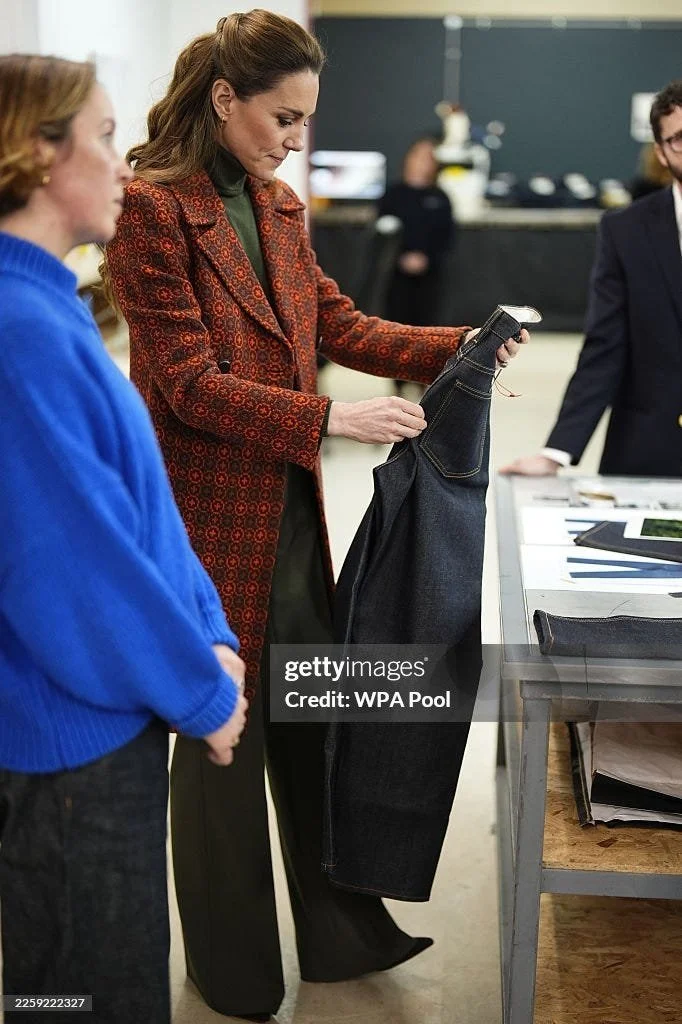
The Princess Of Wales Visits Textile Manufacturers In West Wales (2026) by WPA Pool / getty images
And yet Britain’s trade policy barely acknowledges this potential. The India deal, for all its ambition, primarily opens the UK market to Indian textiles rather than aggressively promoting British fabric exports into India’s burgeoning luxury and middle-class markets. The recent China rapprochement focuses on high-profile consumer goods and services, overlooking upstream manufacturing sectors. If trade negotiators are deeming fashion either trivial or politically awkward, they do so in strategic error.
Because fashion is industrial policy. Textiles sustain regional economies by bridging agriculture and advanced materials. They also offer a credible route to circular manufacturing through traceability and recycling. Today’s consumers seek the story of craftsmanship and sustainability. As fashion confronts overproduction and environmental scrutiny, British wool and heritage fabrics offer a counterpoint to disposable fast fashion, with the Princess of Wales emerging as a perhaps unlikely envoy for this vision.
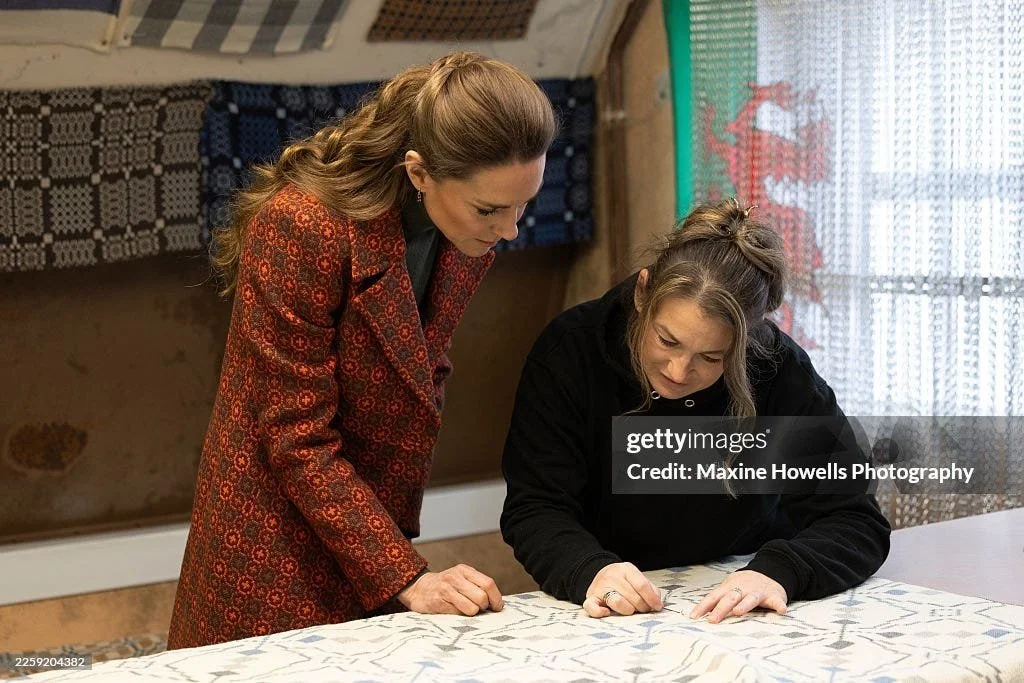
The Princess Of Wales Visits Textile Manufacturers In West Wales (2026) by Maxine Howells Photography / getty images
Trade policy should build on her signal, because textiles belong in trade negotiations of export strategy and diplomatic commercial agendas. Post-Brexit trade policy has privileged services and technology. Yes, these matter, but they are incomplete. Global relevance does not always emerge from digital platforms and financial hubs; it might begin in a Welsh loom or a Yorkshire mill, stitched in a bolt of cloth destined for Mumbai or Shanghai. Wool once anchored Britain’s commercial identity, from medieval weavers to industrial mills – it was described in parliament in 1353 as ‘the sovereign merchandise and jewel [in the] realm of England’. With any luck, it might become so again.