
Op-Ed: Fashion Pledges: Do They Even Count If The Focus Is Still On Growth?
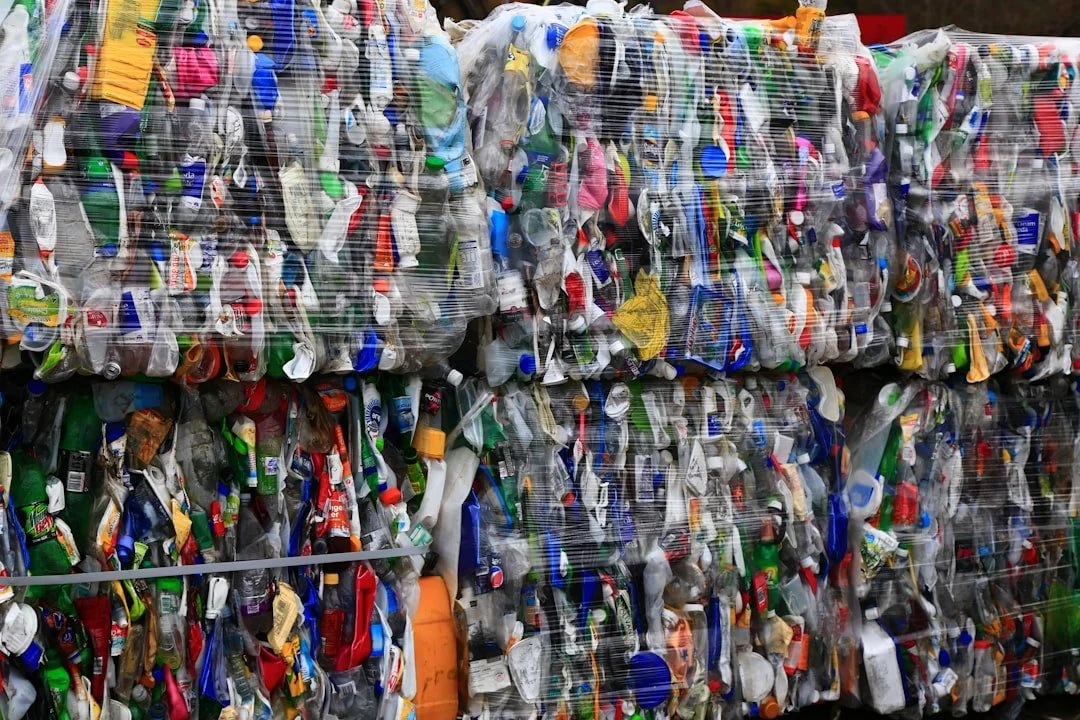
Photo by Nareeta Martin on Unsplash. 98% of rPET (recycled polyethylene terephthalate) come from plastic bottles and not textiles.
I’ve been thinking a lot about impact in the field of fashion sustainability. I don’t know if anyone else feels this, but it seems that for every step forward we take, we’re forced to take ten steps back. Something that keeps plaguing my current thought process is the current pledges that large multi-national fashion brands are making. While I am here for any pledge made by a brand that looks to cut emissions or uptake more sustainable fibres, if growth is still part of the dialogue how does this work in practice?
As I was contemplating this, I came across a chapter by John Thakara in an academic publication, who used a large Swedish furniture giant as an example. The example went something like this…
If a large multi-national brand makes sustainability claims, such as to use 50% more sustainable fibres by 2030, but still focuses on growth, what happens to the other 50% non-sustainable fibres, particularly as the company and its outputs continue to grow?
For those wanting a concrete example, let’s use Inditex (the parent company of Zara), who have set ambitious sustainability goals around fibre.
Specifically to use 100% ‘preferred’ fibres by 2030. Here is the breakdown:
40% of fibres coming from recycling processes;
25% next generation fibres (scaled through the Inditex Sustainability Innovation Hub);
25% organic and regenerative farming materials.
While this sounds impressive, in practice this means that the bulk 40% of their fibres will largely still be conventionally recycled materials, such as polyester and nylon and to an extent recycled wool/cotton. Their latest Sustainability Report shows that they are on track to meet these targets by 2030, but their Annual Report for 2025 aimed at shareholders, features ‘growth’ 49 times across the report.
This is not meant to single Inditex out in any way, it is just one example of the pull of capitalistic systems in a sector that is also striving for sustainability. This takes us back to the example made by Thakara at the start of this piece – what happens to targets as companies and outputs continue to grow?
As preferred material use increases, for example, the total impact will either stay the same or worsen, because the sheer volume continues to grow. If brands continue to grow annually, then their carbon footprint and resource extraction will still continue to rise.
According to Textile Exchange, global fibre production equated to 58 million tonnes in 2000 – since then this has more than doubled and is expected to grow to 160 million tonnes in 2030 if business continues as usual. Of this, virgin fossil-based synthetic fibres, increased from 67 million tonnes in 2022 to 75 million tonnes in 2023. Less than 1% of the global fibre market came from pre- and post-consumer waste, in fact 98% of rPET (recycled polyethylene terephthalate) came from plastic bottles and not textiles. This is because polyester textiles tend to contain complex dyes and additives, finishes and trims, making the recycling process a complex one. This is therefore still fundamentally a linear path which lowers the quality of the waste stream.
This tension between sustainability and growth has always been a paradox and is particularly relevant as Extended Producer Responsibility (EPR) comes into play in the UK, meaning the focus over the next few years will be squarely on WRAP’s (Waste and Resources Action Programme) 10-point blueprint around recycling. This UK-wide scheme aims to follow what Europe and California have already begun.
However if EPR fees are not high enough, there is a risk that larger multi-national brands will utilise this as a ‘tax to pollute,’ meaning that the cost of recycling could be dissolved into margins, while maintaining the status quo. To mitigate this, tax incentives for B Corps and companies with proven positive social and environmental contributions, particularly if they commit to manufacture in the UK, should be looked at.
Concerns have also been raised about the potential for chemical recycling to be treated the same as mechanical recycling. Chemical recycling is far more energy-intensive and can involve toxic byproducts in the process. This could be used as a greenwashing tactic by brands. There will also be difficulty in verifying fibres without mandatory Digital Product Passports (DPP), something which will need to be implemented alongside EPR. Finally, the proposed fee structure in the blueprint, which prioritises criteria other than a garment’s ‘durability’ is a concern and something that needs to be challenged.
To date, no major fashion entity has been able to decouple financial growth from resource consumption. As long as the sector is measured by quarterly sales and growth, its pledges ultimately act as more of a PR move than a key solution for meeting 2030 decarbonisation and sustainability targets.
So my question is, do fashion pledges even count if the focus is still on growth?
“As long as the sector is measured by quarterly sales and growth, its pledges ultimately act as more of a PR move than a key solution for meeting 2030 decarbonisation and sustainability target.”