
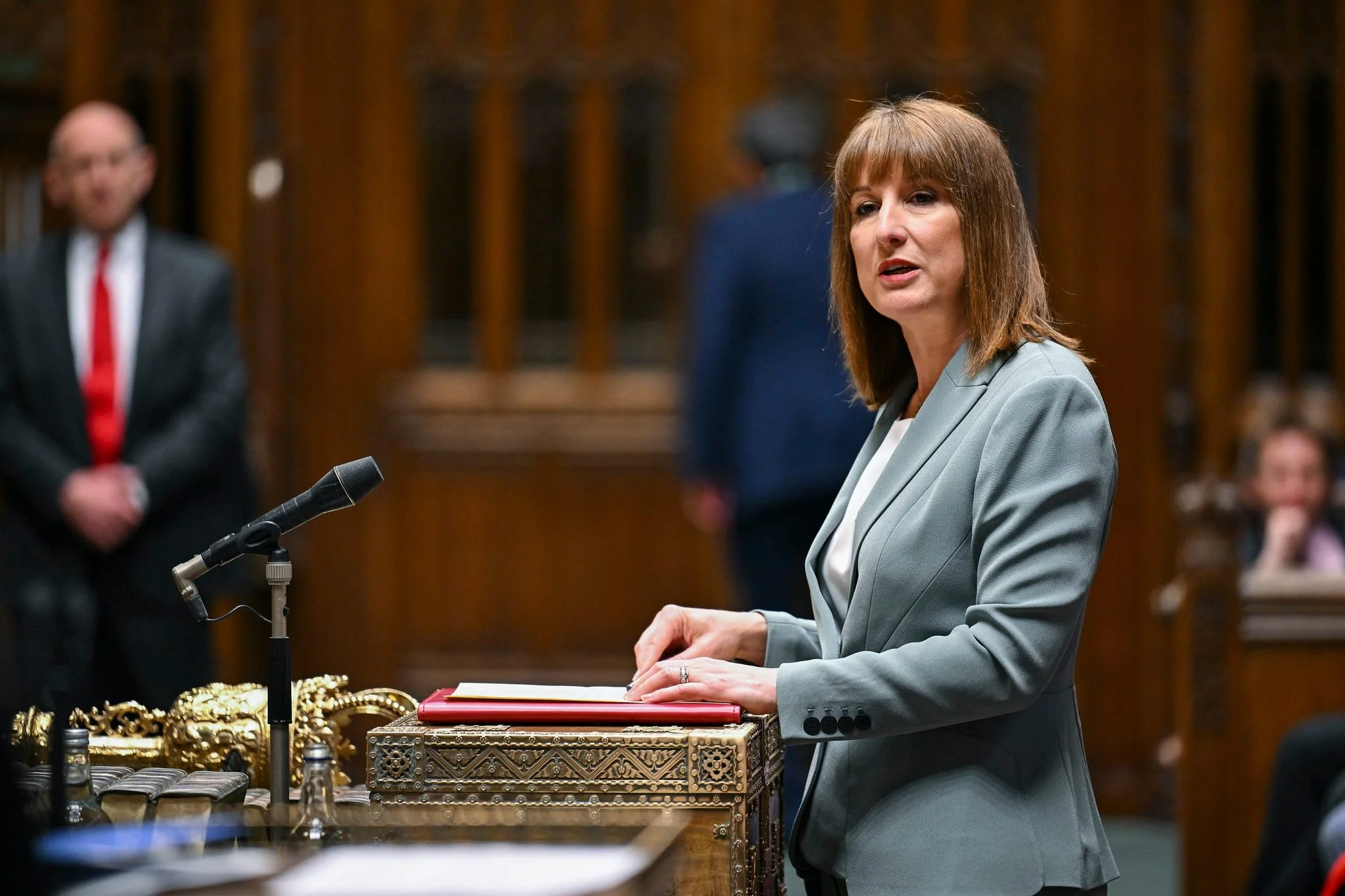
“Rachel Reeves MP, The Chancellor of the Exchequer (Leeds West and Pudsey, Labour)” by House of Commons, CC BY-NC-ND 2.0
Yesterday, on the 3rd March 2026, Rachel Reeves delivered her Spring Statement. As the conflict continues to unfold in the Middle East, the Chancellor said her focus remained on securing our economy against shocks.
Reeves said, “Stability is the single most important precondition for economic growth.”
We were told that despite global uncertainty, Britain demonstrated its economic resilience during, “global headwinds [...] with the fastest growth of any G7 country in Europe.”
Reeves stated that GDP is forecast to grow by 1.1% in 2026, 1.6% in both 2027 and 2028, and 1.5% in 2029 and 2030 respectively. However, despite Reeves’s statement, growth expectations from the Office for Budget Responsibility (OBR) have decreased to 1.1% from the November 2025 prediction of 1.4%.
So, where does this leave the fashion sector?
The statement omitted relief for the retail industry, ignoring industry requests for the return of the VAT Retail Export Scheme. This could have provided an estimated economic boost of £10bn a year, according to our data.
The reduced economic growth forecast is a concern amid rising costs and unemployment. Retailers are expected to continue bearing high operating costs alongside increases in National Insurance, with unemployment rates set to peak later this year at 5.3%. Reeves did not suggest any plans to regenerate high streets – a key solution in terms of shoplifting and tackling vacancies on the high street.
Reeves said she was proud to be the Chancellor delivering the biggest uplift in defence spending since the Cold War and that she would continue to focus on, “investment in our infrastructure, including our Armed Forces…and reform to Britain’s economy.”
A key opportunity that was passed over here was Government support for on-shoring, a strengthening of public procurement, and a commitment to British-made goods. Local procurement for defence workwear for example, could have been considered under the ECAP framework as a priority for job growth, as well as a circular infrastructure for textiles. We attended a Westminster Hall debate in February on this topic and will be following up on this in our role as Secretariat of the Ethics and Sustainability in Fashion All-Party Parliamentary Group.
Reeves said that she will break down trade barriers and deepen alliances with, “our European partners for a more secured, and connected economy.”
Reeves could have offered additional support for UK sustainable fashion and textiles businesses that export to the EU, in meeting the EU’s Extended Producer Responsibility (EPR) commitments.
Finally, new consumer priorities across the UK and the EU, driven partially by taxes on disposable incomes, mean consumer spending is expected to remain cautious. An area not affected by cautious consumer spending is the resale market. As we head into 2026, predictions are that more brands will embed trade-in and resale as the norm, particularly as the global resale market is projected to double in the next few years, with projected growth estimated to reach $360 billion by 2030.
Nonetheless, to unlock this potential, tax incentives for B Corps and companies with proven positive social and environmental contributions could have provided relief and aided in the current UK policy lag in the fashion and textiles space, currently behind the EU and California.
All in all, 2026 is likely to be much of the same for the fashion industry, and many hope that the next Budget in autumn will address some of these central concerns for the sector.
To read our policy recommendations for the fashion and textiles sector in full, click here.
To read the 2026 Spring Forecast, click here.