
Regenerating British Wool

Regenerating British Wool:
A Fashion Roundtable Programme
Why Wool Matters
Fashion Roundtable have spoken to stakeholders within every facet of the current wool supply chain across the UK. From farmers, to mills, to designers, they all share a passion to reinvigorate the use of British wool, which comes with an equal measure of despair at the lack of economic resilience that rural economies are faced with. This in combination with a growing desire by designers to localise their supply chains, onshore their production and work in a more regenerative, circular system, makes a strong case for British wool.
Evidence from our Cleaning up Fashion Report, suggests that supporting local jobs, communities and developing skills are essential in achieving a sustainable fashion sector. Make It British reported an 83% increase in brands looking to onshore their production in the UK. Meanwhile, Wales has seen a number of closures of mills, leaving just 5 in the entire country.
There are around 30,000,000 sheep in the UK, however this represents only 1% of the global fibre market. Lower costs in labour and differing environmental regulations have resulted in a significant shift in globalising this supply chain, resulting in substantive environmental and economic impacts: a far cry from when wool was grown and processed locally. In 2021, approximately 20.5 million kilograms of wool was exported from the UK while 36.13 kilograms was imported.
The UK leads in the global shift to achieve net zero ambitions, embedding sustainable practice in design and innovation, alongside a rich heritage of craft, skills and workmanship. We believe this wool programme would stem the current practice, where the UK imports more wool than it exports and achieve a series of long-term solutions, supporting each step of the value chain, from farm, to manufacture, from design, to consumer with a more considered and innovative approach.
The result of our qualitative pilot study, led by Meg Pirie, Fashion Roundtable’s Welsh and Slow Fashion Policy Lead, is Fashion Roundtable’s wool programme, in partnership with key nationwide strategic partners united in our ambitions to instil a circular, regenerative and sustainable approach to working with British wool.
The ‘Regenerating British Wool’ Programme aims to support the localising of British wool, to pioneer both cyclical and sustainable ways of working, but also fundamentally in building economic resilience for local communities and the UK’s largely SME and bigger brands fashion and textiles sector.
This is a missed opportunity. British wool has such a diverse range of uses, and is renowned to be one of the best performing, cyclical and ecological fibres.
For further details on this exciting project, please contact us
News

As a follow on from the pilot launch of Fashion Roundtable’s wool programme in 2022, after vast amounts of qualitative and quantitative research and conversations with key stakeholders came the launch of The Great British Wool Revival, an open source tool that connects farmers, designers, makers and industry together to join the dots and make traceable British wool more accessible in fashion supply chains from farm right through to final product.
Website design and art direction by www.studiobyfarr.co.uk


Designer Harriet Fletcher-Gilhuys attended last week’s Conduit event: ‘Is Regenerative Fashion Possible?’ supported by the Farmer’s Footprint. Here she delves into the complexities and explores the panellists discussion exploring the transition to a fashion system that ultimately sets out to benefit nature and society.
Photo by Zoe Schaeffer on Unsplash. Image shows farmer at work.

Thriving in a sustainable future means that brands must navigate this changing terrain and take into account these legislations in forecasting and future business strategies. Perhaps poignantly, scrutiny will not only come from governments and regulators, but also stakeholders, consumers and competitor brands, as we collectively move from climate targets to climate transitional plans.
In her book, Reimagining Luxury, author Diana Verde Nieto offers practical frameworks and concrete examples for brands, through a holistic approach – covering topics such as sustainable investments; regenerative practices; legislation; environmental and social implications; as well as positive storytelling.

The start of a new year and already there are the familiar rumbles of a General Election. The feelings of general unrest seem to be growing, amidst a time of climate anxiety, global boiling, economic upheaval, and broken or overburdened support systems. Resulting in an increase in the polarity between surviving and thriving, with a lack of long-term strategy around our collective wellbeing.
Last year, we released our Creative Wellbeing Economy paper, where we made a case for a deeper, more long term reconnection with core values across the whole of our lives, with a particular focus being wellbeing for people and planet.
Read on for more.
Photo by Florian GIORGIO on Unsplash. Photo shows the Houses of Parliament.

On Friday our CEO Tamara Cincik was invited to the King's Foundation Celebrating Craft at Highgrove House in Tetbury, for a Christmas event in the presence of His Majesty the King. The King's Foundation is a charity launched by the King as a vehicle to train the next generation of skilled craftspeople – including in fashion and textiles – in heritage techniques valuable to many traditional UK industries.
Read more.

Alice V Robinson is a designer based in London and is the co-founder of British Pasture Leather. Her journey began through the process of making a handbag, whilst studying her MA in Accessory Design at the Royal College of Art.
On realising the lack of connection between agriculture and fashion and the convoluted supply chain she was faced with, Alice embarked on a journey of extraordinary lengths to make a connection and discover the provenance story of British leather.
Provenance is often ubiquitous with food, but doesn’t always connect with fibre in the same way. In writing her book ‘Field Fork Fashion’ Alice purposefully makes this connection, whilst working at a smaller scale with regenerative farming practices.
Through this interview, Meg Pirie and Alice discovered many thematic similarities between Fashion Roundtable’s work on regenerating British wool and Alice’s discoveries while working with leather as a medium.

This week has been a whirlwind, and has seen our CEO, Tamara Cincik travel across the country – quite literally – from Manchester for a DCMS event with Secretary of State for Culture, Media and Sport – Lucy Frazer, and then on to Scotland and London.
In Scotland, Tamara attended Dumfries House and spoke at the King’s Foundation (formerly Prince’s Foundation) x the Fashion Council Germany conference entitled ‘Disruption’ which was this year supported by TENCEL™, eBay and The PVH Foundation. The King’s Foundation's Future Textiles initiative is designed to breathe new life into a renowned British textiles industry. Back to London, we then hosted one of our largest events on localism in Parliament, in our capacity as Secretariat of the Ethics and Sustainability All-Party Parliamentary Group. Click through for more.
Image shows our CEO Tamara Cincik in a red dress in a panel discussion at Dumfries House. Image credits Eleanor Kelly @mastrelli.media

Last night an exposé by BBC Panorama aired probing the practices of fast-fashion giant Boohoo, who last year made a reported £1.7bn worth of sales. The majority of the filming occurred in their Manchester headquarters, where journalist Emma Lowther spent 10 weeks.
The evidence garnered showed increasing pressure to cut prices in order to save money and the unscrupulous practice of amending prices after the stock had already been made. Lowther exposed a number of occasions where suppliers were left out of pocket due to discounts being applied which were not initially agreed.
We unpick the evidence.

Zebedee is an inclusive talent agency, championing disabled, visibly different, non-binary, and trans UK models. Global names already signed by Zebedee include Ellie Goldstein, who recently made the cover of British Vogue and Jasroop Kaur Singh who appeared in the Australia Vogue ‘Vogue Vanguard’ issue.
Zebedee was established by co-founders Laura and Zoe in 2017 as a direct response to the lack of representation and inclusivity in the media. Now Channel 4 has created an insightful documentary series with the working title, ‘New Model Agency’ which follows Zebedee HQ and many of their diverse and dynamic cast of models. The documentary will air in February 2024 around London Fashion Week – so watch this space!
Meg Pirie speaks with co-founder Laura Winson who also sits on our Representation and Inclusion Committee. They talk about the progress Laura feels has been made in the fashion sector; what still needs to happen; and the spending power of disabled people – which is thought to be around £280 billion pounds every year in the UK alone and £1.3 trillion worldwide; and the fact that if brands don’t get on board, they’ll soon be left behind.

Meg Pirie in conversation with Victoria Jenkins.
Victoria Jenkins co-chairs our Representation and Inclusion Committee and is a garment technologist with 14 years of experience in the fashion industry who became Disabled in her 20s. She is behind the sustainable adaptive fashion brand Unhidden. The idea was born after a chance encounter with a woman with cancer that changed the course of her life. As she watched the woman during her own hospital stay, she realised that there were no adaptive clothes on the market and this is how Unhidden was born.
Now Victoria is listed as one of Vogue’s Top 25 Powerhouse Women, redefining Britain and co-presents and designs on Channel 4’s Unique Boutique. A must-watch where inclusive fashion lovers and designers create bespoke outfits for every-body in a custom-built shop.
We speak about future plans for a not-for-profit arm of Unhidden, training people with disabilities and chronic health conditions how to sew adaptive alterations so they can then work as and when they choose making adaptive alterations for any one who doesn't sew. There are also plans for workshops that will cover how to adapt clothing you already own yourself so there is no barrier to accessing adaptive clothing and re-loving your existing wardrobes.
Finally, Victoria shares her key policy asks to ultimately make fashion more inclusive.
[This is an image of Victoria Jenkins, wearing a royal blue power suit, standing in the street, with a sparkly mobility aid. Credit: Deb Burrows]

Stephen Jones is perhaps one of the most influential milliners of our century, bursting onto the London fashion scene during the explosion of street style in the late seventies. Yet even today, Jones’s designs have retained their modern and compelling edge. At the forefront of fashion, Jones’ hats are exquisitely crafted and quixotic – all whilst encapsulating the mood of the moment. Jones’ latest collection could not have come at a better time, where young people are reportedly leaving Wales, particularly in Welsh speaking heartlands, this collection offers hope. Entitled ‘Cymru’ and cited as a ‘love letter to Wales’ I delve further into the haunting magic of this collection – from the reimagined Welsh ‘Het’ to the use of Dylan Thomas poetry – ensuing a sense of strength and pride in Jones’ Welsh heritage.

Gerwig is by definition a feminist filmmaker and her characters are often transgressive and curious, rebelling against their suppressive environments (think Jo March!). Barbie is no exception. While it’s important to recognise that Mattel’s 60-year-old flagship doll has had a long and controversial history and in the past has been blamed for its unrealistic beauty standards, the propensity of the film exists to raise women, well, up. In this Op-Ed Meg Pirie explores the issue of fast-fashion brands capitalising on a feminist film and how this pummels the film’s entire meaning.

Last week, womenswear brand Mother of Pearl announced it would be joining forces with door-to-door repair and tailoring app SOJO, as part of the brands ongoing commitment to circularity. We hear from both women CEO’s on the collaboration and share a special offer for our newsletter subscribers.
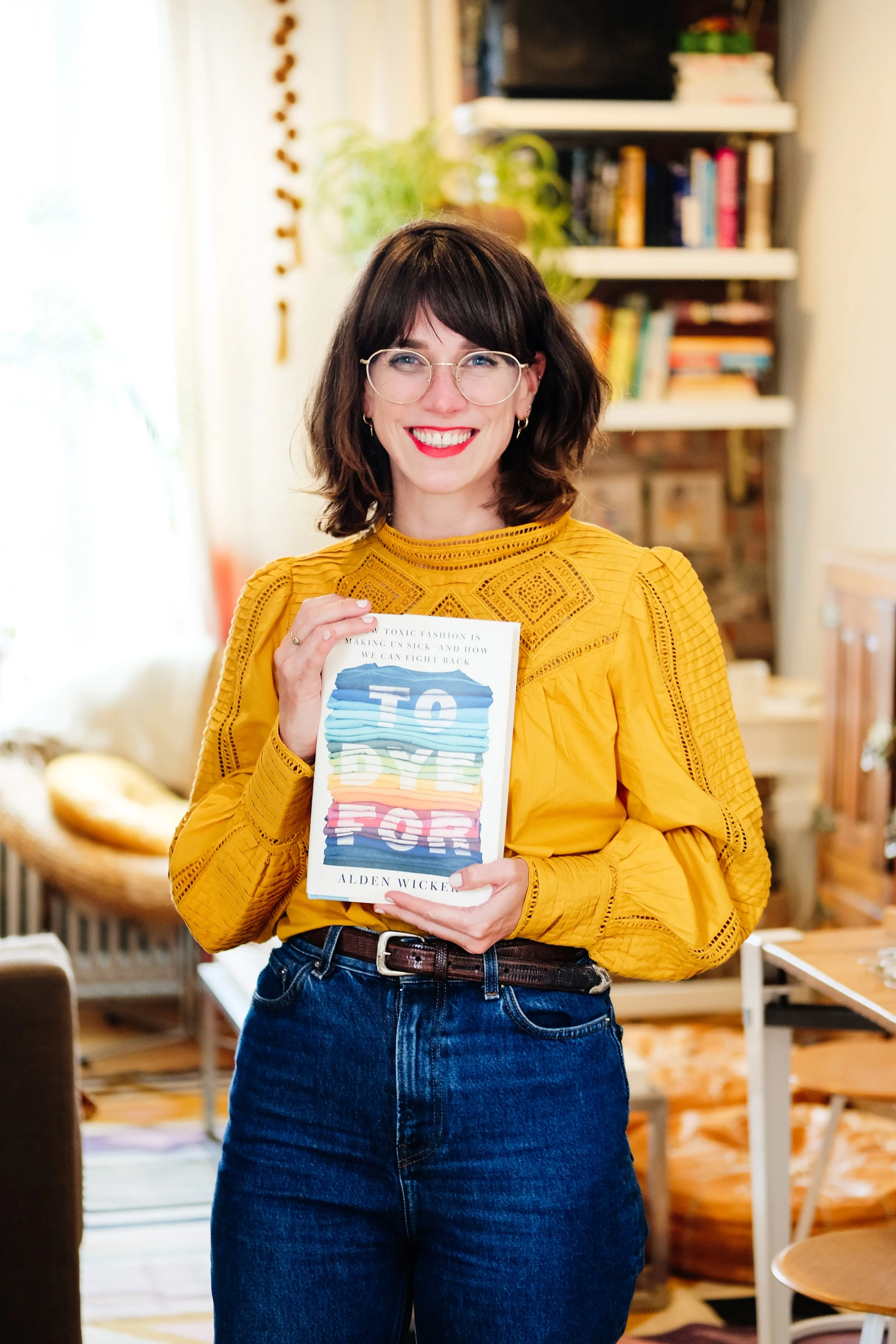
In her book, ‘To Dye For’, award-winning journalist and sustainability expert, Alden Wicker, decided to break the story of unregulated toxic chemicals in fashion and their impacts on health and wellbeing. What follows is a candid conversation, with clear advice on what we can do now.

Our researcher, Meg Pirie, has always loved to read and will often read a book to understand something better, before searching online. For this week’s informer she shares her top 5 books on sustainability and fashion. Click through to read more.

In this Op-Ed by Meg Pirie, she delves into what the fashion sector can learn from Westwood’s fearless activism. Can the business of fashion ever truly measure up? With comments by Kate Fletcher, Professor at the Royal Danish Academy in Copenhagen.
Last week, we launched our Impact Report for 2022. Fashion Roundtable have consistently been the first to address the challenges of Brexit; Covid-19; climate change; exploitative working practices; Extended Producer Responsibility (EPR); VAT reduction for sustainable businesses; issues around fibre and localism; and inclusion in fashion. We use our platform to highlight inequalities across the fashion industry and to effect long-lasting social, business and environmental change.

This Sunday, protestors gathered outside a number of fashion stores on Oxford Street, in a 'Cost of Fashion' walking tour, to commemorate the 10th Anniversary of the Rana Plaza factory collapse and to honour the lives of the 1138 garment workers who were killed. We hear from some of the members of the Rana Plaza Solidarity Collective and discuss our Cleaning Up Fashion Report.

Over the last two years, The Helena Kennedy Centre within Sheffield Hallam University has been at the forefront of exposing corporate and financial institution complicity in the crisis in the Uyghur Region and identifying the risk that crisis poses to our international supply chains. Now they have launched a series of issue briefs and supply chain updates. The series is intended to keep everyone up to date on what is happening in the Uyghur Region and to help us all understand a bit better how supply chains are changing in response to the crisis. We share this and our work in this area through our ‘Cleaning Up Fashion Report.’

For this week's podcast, our Slow-fashion Policy Lead Meg Pirie is in conversation with Ruth Rands, founder of knitwear label Herd. We first met Ruth at one of our initial roundtables focused on wool and Herd is one of our most cited case studies, because of their localised business model and best-practice processes, with provenance at its heart. Through her label, Herd, Ruth has shown what is possible here in the UK, sourcing everything within 150 miles.

An Op-Ed not to be missed by CEO Tamara Cincik. Tamara explores why we need a manifesto for creative wellbeing not more International Women’s Day platitudes.
“Who else is bored? Bored of the neverending pendulum swing between riding a tide of adrenalin infused empowerment, and a continuous news cycle which highlights the endemic structural issues women and girls face. I know I am, and I know I am not alone.”

Fashion Roundtable’s Slow-fashion Policy lead and writer, Meg Pirie, talks with a local guild who are at closure, with the Welsh Wool Museum and the Heritage Craft Association on why skills are more important than ever. With comments from the Welsh Government on introducing the ARTS back into their curriculum.

Writer, Meg Pirie, in conversation with Kate Fletcher and Mathilda Tham about Welsh wool, the climate crisis and the importance of localism for the next generation.

In a world which feels uncertain, unstable, and all too frequently it is, there is something very powerful in recognising the timelessness of sustainable values, craft skills, nature and provenance. These are core to our work at Fashion Roundtable and what I found refreshing was to see them in action from education through to business via the work of The Princes Foundation.

I am often asked where the idea for a soil to skin, vertically integrated yarn and knitwear brand came from - and perhaps HERD would never have come into being without these unconventional roots - but it actually came from seaweed of all things, in my prior brand where we sourced wild, naturally occurring seaweed directly from harvesters around the U.K, Ireland and Northern Europe.

Salts Mill hosted the Campaign for Wool's launch event leading to the current Wool Week last Thursday night. The Heritage site in Bradford (the cultural capital of the worlds's wool industry) is to the keratin fibre what Bournville is to Chocolate.


“We are over producing and over wasting at the same time. We really need to readdress this and almost have to go back to basics to understand the new vision because if you just can do a bit of this and that but the whole industry needs to change.”

This week Fashion Roundtable’s Meg Pirie interviewed four graduates ahead of Loomshed’s Textile Graduate Talk Day. The interview covers traditional folk art, sustainable dyes, hand weaving and the use of surplus British wool from mills.
With more and more crafts being added to the Endangered Crafts List, this is an important conversation in preserving skills as well as our heritage here in the UK. These graduates were particularly focused on localism and small-scale production and it was particularly refreshing to discuss textiles from an earth-first perspective and away from the tired growth model.