
250 years since her birth
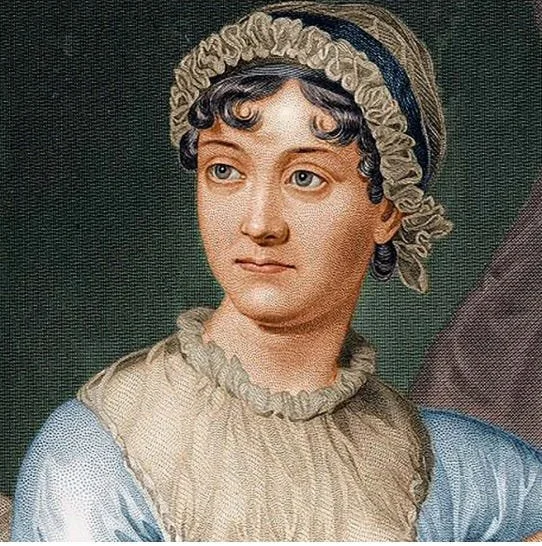
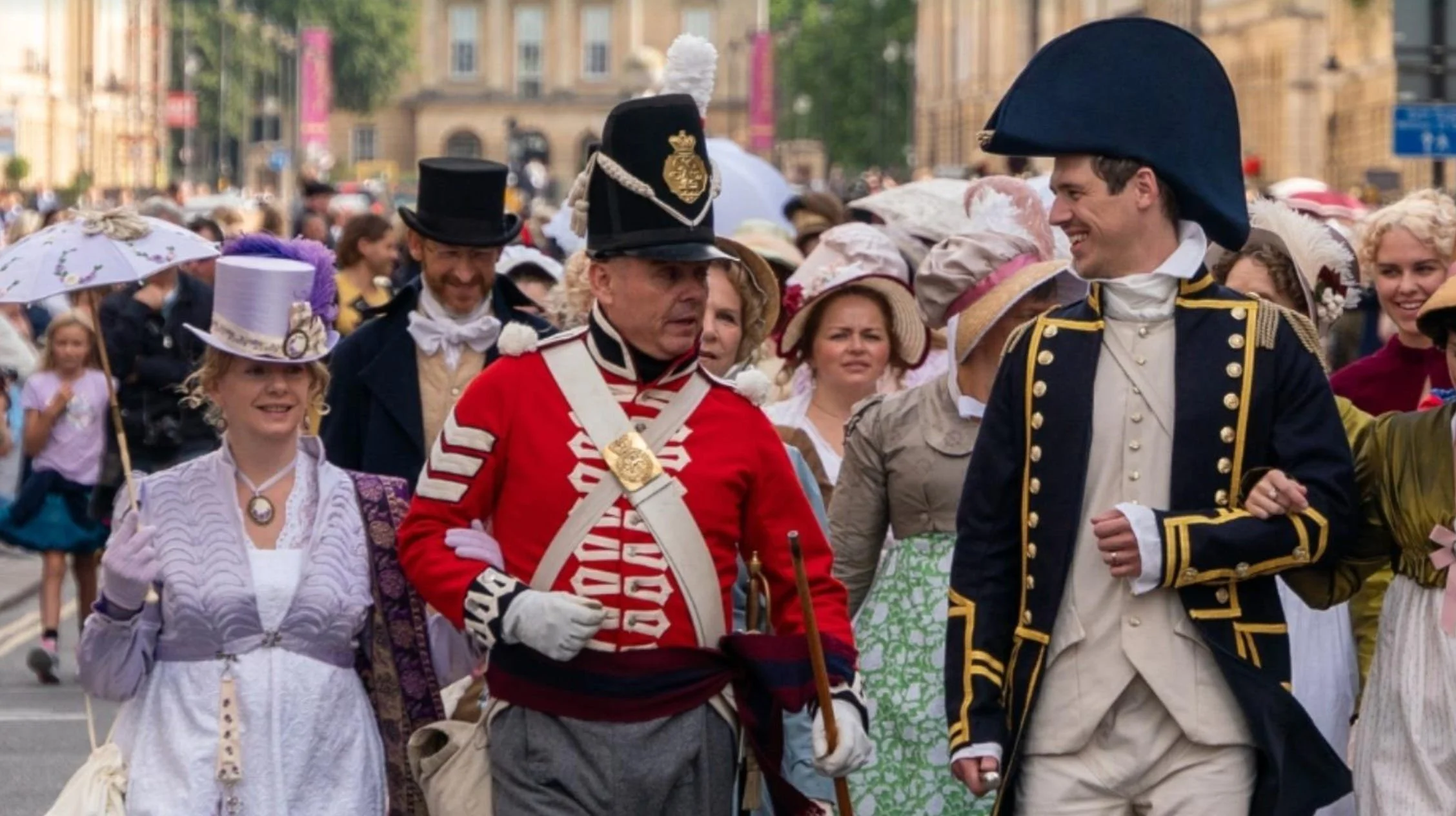
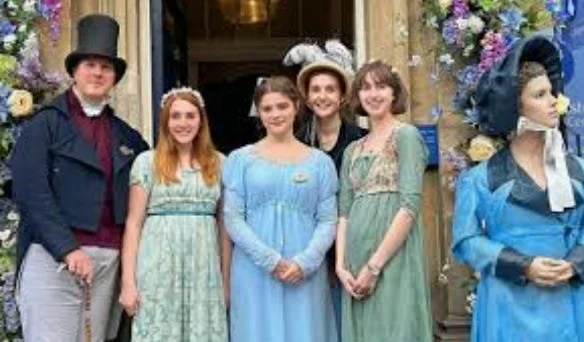
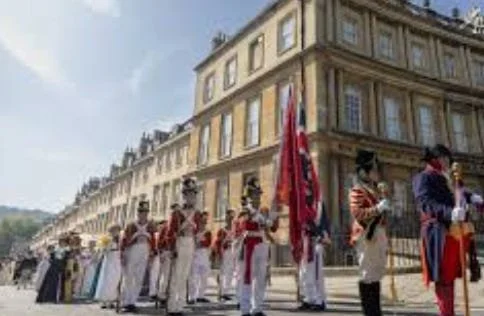
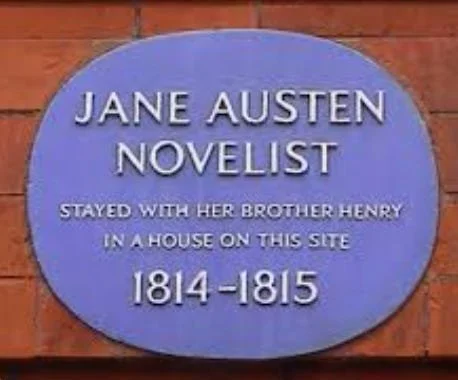
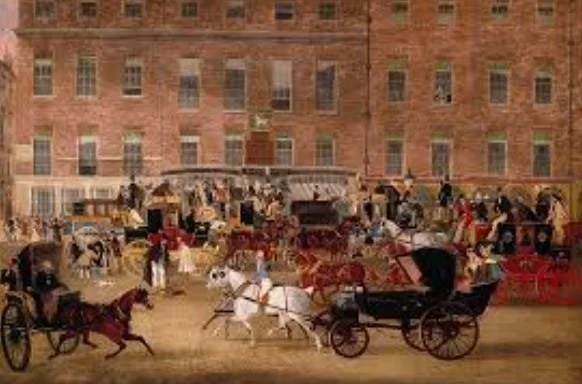
Jane Austen and acolytes now and then
Country weekends, hand delivered gold embossed invitations to debutante balls, and summers in Bath sporting muslin and lace, might all seem a lifetime, or a social class away, but the writer Jane Austen, who helped us peek behind the heavy plush velvet curtain, at the neurotics of the marriage market, the absurdities of social pomposities, and the pitied plight of penniless single females, born 250 years ago today, seems as timeless then as now.
Jane Austen, dear reader, I have read the entire back catalogue, including the rather worthy juvenilia. First as a commitment to early doors feminism. Then as an undergraduate reading English at UCL Austen, alongside the meta mother and daughter act the Marys Wollstonecraft and Shelley, were my escape route from a core subject topic grandly entitled ‘The Romantics’, which would have meant an exam paper covering the grand sweep of what I saw as the depths of British male pretension and upper class arrogance: Byron, Keats and Shelley. Wordsworth I could just about stomach, the daffodils “fluttering and dancing in the breeze,” is a sweet motif, but it was the women who captured my imagination. And so I wrote an entire dissertation on their writings.
Much like for the 20th Century’s The Beat Generation’s poets on the road, their cultural antecedents, the Romantic poets’ (the rock stars of their time) women had been silenced, erased. In the case of Jack Kerouac and co on the West Coast, if they weren’t on the bus, quietly washing dishes, or looking after children, all the while passively waiting for their man to return from drug induced poetry love-ins. The men seemed far more interested in themselves than anyone else. Even at 18 this was clear to me. So far, so Byronic. However, Mary Shelley, Mary Wollstonecraft and Jane Austen offered me an alternative, a woman with a voice, and far more agency than Keats and this version of out of reach, virginal and all too often sickly femalehood:
“Thou still unravish’d bride of quietness!
Thou foster-child of Silence and slow Time…”
Compare this to Wollstonecraft, who travelled across Europe solo, wrote proto-feminist tracts, and set up a school in Newington Green, Mary Shelley, the daugher she never knew as she died in childbirth, who in Frankenstein gave us the definitive monster of the robotic future, or Jane who wrote with a rare perception about the human motivations of love versus loneliness, at a sloping desk shaped like a postage stamp, in the midst of the bustle of a busy family house. For me there was no competition, the women are the heroes of the Romantic Age. Even if Mary Shelley’s The Last Man was not exactly an easy read. At least it was about politics, science and race identity, not just flowers.
250 years today since the birth of Jane Austen, and it seems my analysis is now more widely held. We have seen vampire Austen (why?), musical Austen, walks with Austen, books, shrines, TV series, Hollywood movies, you name it, we have devoured it. What would Byron have made of it all?
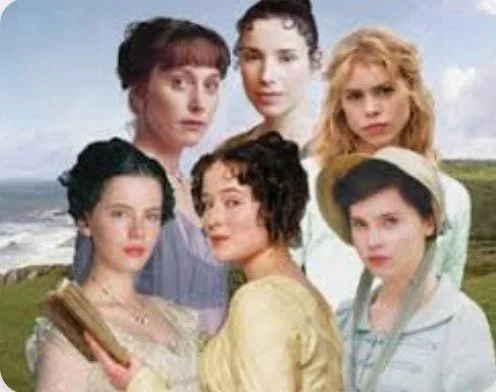
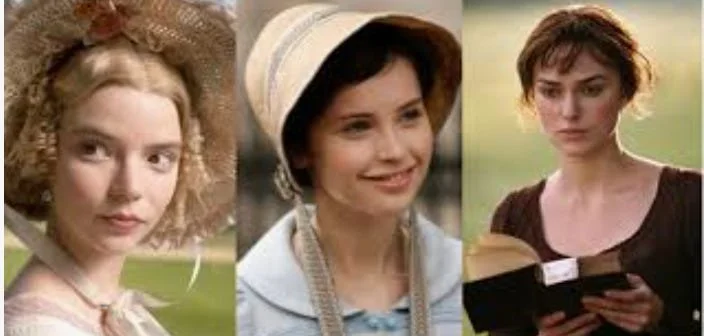
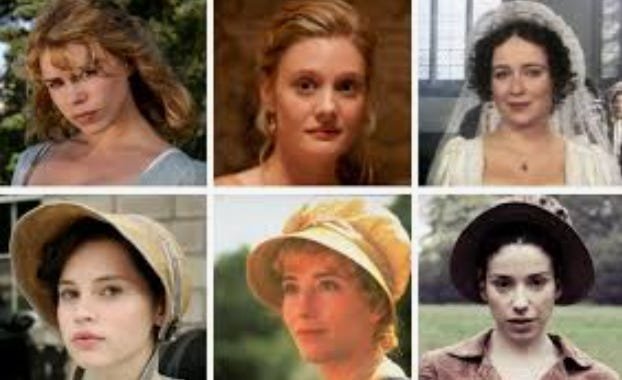
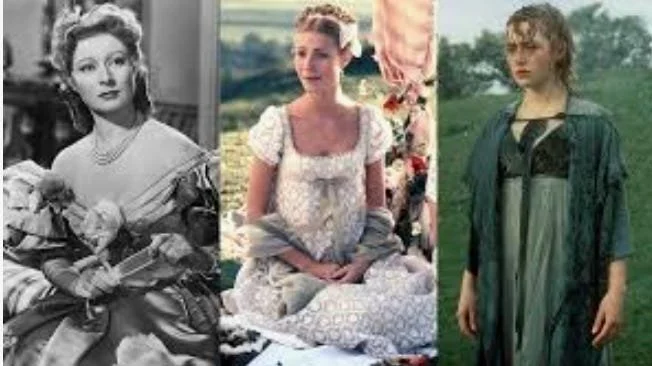
Jane Austen, the movie years and TV adaptation heroines
So, what of the fashions? This is a Fashion Roundtable after all!
“My natural taste is all for simplicity; a simple style of dress is so infinitely preferable to finery.” Emma, 1815 by Jane Austen.
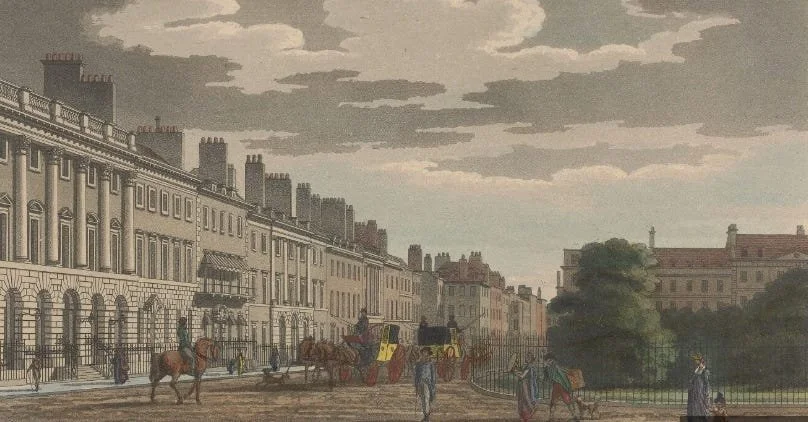
Jane Austen’s England, and Regency fashion, was in reality a place affected by class conflict, colonial trade and a re-imagined ancient past. As with everything 18th Century there is the lingering stench of colonialism in the grand sweep of architecture and freer fashions worn on the chic streets of London’s Regent Street, or Bristol and Bath.
The streets of Bath are redolent with the Georgian imprints of their former days as the parade of shops for milliners, glove makers, and tailors. When I worked for Bath Spa University as their Professor of Fashion and Sustainability, it was my wish to create a walking tour map which rediscovered Bath’s neoclassical living fashion history, for which I worked with the incredible Bath Fashion Museum former curator Rosemary Harden, who in a matter of moments compiled a fantastic walking tour map.
Jane Austen lived at a time of European wars, as the fancy French court style of Marie Antoinette gave way to the radicalisation of the French Revolution, which petered down to every vicarage, ballroom and Bath townhouse. This changed fashion from the inside out, the “stays” that Jane is writing to Cassandra about, changed to become more like a bra women wear today. The neoclassical style of the Empire Line allowed more fluidity in the clothing, less corsetry, a more column-like silhouette. But the women would still have worn stays which ensured posture, that their breasts were not loose, and would to the modern wearer, have still felt constricting.
“Yes, and her petticoat; I hope you saw her petticoat, six inches deep in mud, I am absolutely certain; and the gown which had been let down to hide it not doing its office.” Pride and Prejudice, 1813 by Jane Austen.
This describes when Elizabeth Bennett walks cross country to visit her sick sister at Netherfield. She arrives at the house with ‘weary ankles, dirty stockings, and a face glowing with the warmth of exercise’, much to the disapproval of Miss Bingley and Mrs Hurst. Their snobbery shining a light on her act of independence by walking and thereby being less pristine, across fields to visit her ailing sibling.
The fabrics were colonial, there really is no shying away from it. Regency fabrics were linked to colonial trade with India, China and the Americas. The burgeoning Lancashire textile industry was fed by raw cotton harvested by enslaved Africans, while the growing Yorkshire mills worked with British and offshore wool. Austen glances her commentary at the colonies with Sir Thomas Bertram in Mansfield Park, who visits his West Indian slave plantation, which funds the lives of his indolent children.
Former V&A curator Edwina Ehrman dissected this issue in her pivotal show Fashioned from Nature in 2018. If the slave plantations are growing the cotton which Austen heroines are wearing in her novels, are they complicit?
However cottagecore the clothing seemed, raw materials for finery and dresses were travelling from around the world, as a result of the global trade that even then supported the fashion industry. Silk came from Italy, Spain and the Middle East, flax originated in Northern Europe, linen from Ireland, dyes came from plants sourced in South America and Europe, with precious metals from Bolivia and for the very fancy, ermine fur imported from North America or Russia. Muslin and Cotton, the iconic white, flowing muslin dresses of the Regency period were a direct result of colonial trade with India. This fabric style was popularised partly by the “chemise à la reine” (think Marie Antoinette on the farm, not the opera at Versailles) dress, which originated from “colonial livery” worn by white elites in the French West Indies. The raw cotton for the British textile industry was largely harvested by enslaved Africans in the colonies. On colder nights, an Austen heroine would slip on a Kashmir shawl, for warmth and style over the light dresses, Kashmir shawls (often with popular paisley patterns) were imported from India via colonial forces and of course the expansion of The East India Company: think the wealth of a tech bro in goods not services.
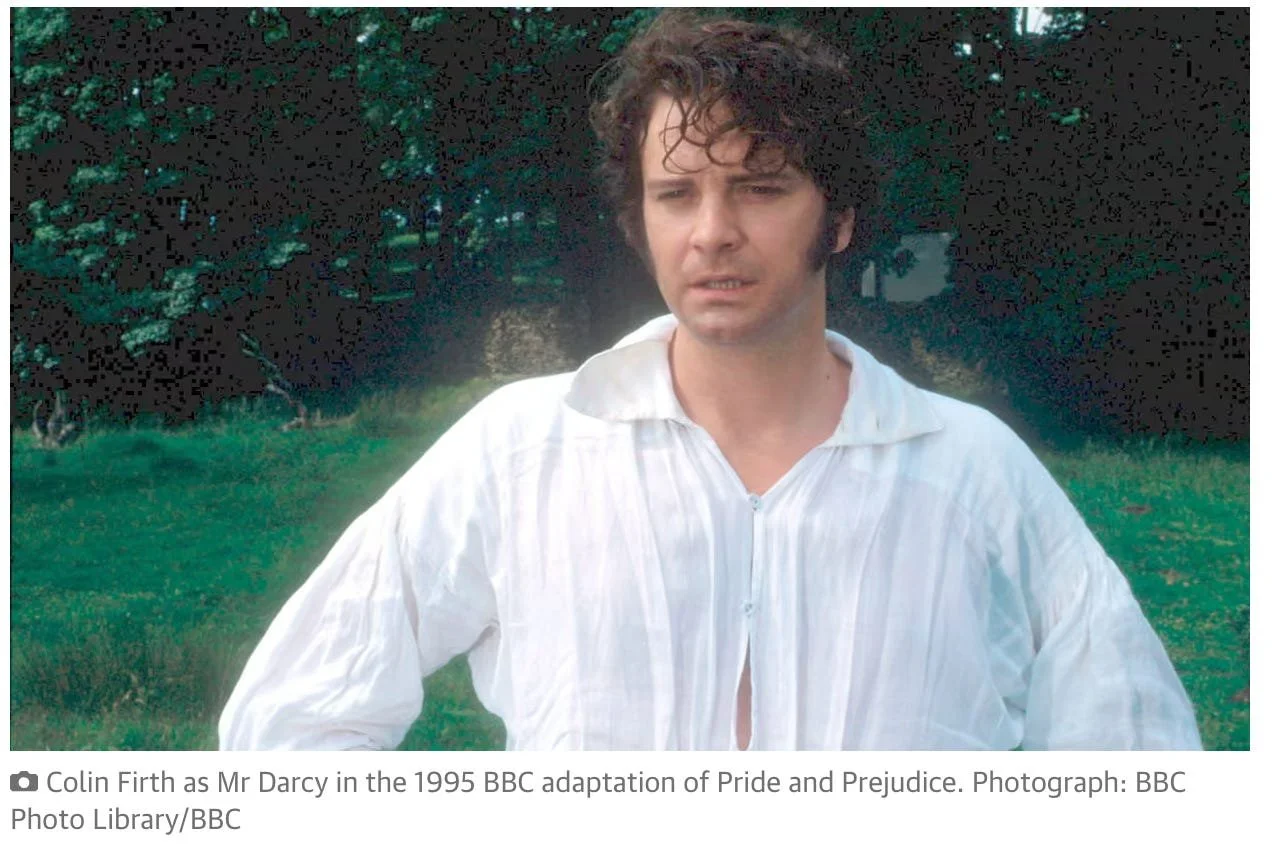
For anyone keen to study how to make clothes for film, their new Costume Craft course at Dumfries House run by The King’s Foundation teaches students to begin with the cotton cambric shirt: think Darcy in the water at Pemberley and swoon (or not). I have seen the results of their cambric shirt making (not Darcy in the lake) and they are very impressive.
So as we were wont to do at UCL, we always brought it back to the text. And in that, Austen retains her clever and utterly timeless magic, without the bells and whistles of vampires, musicals, or dance. And on that note, I leave you with this: “One man’s style must not be the rule of another’s.” Emma, 1815 by Jane Austen.