
5 days in Paris: 5 progressive policies the UK should adopt
This half term, I swapped the usual chaos of my Welsh hometown, where tourists suddenly descend in their hundreds (or possibly thousands), for something a little quieter on the outskirts of Paris. On the surface, it seemed like a typical holiday. There was gorgeous weather, fresh, seasonal organic food, and abundant choices. However, I quickly noticed a key difference. France’s progressive approach to the environment, sustainability, and child welfare was embedded into every aspect of daily life, offering a clear blueprint that the UK could follow.
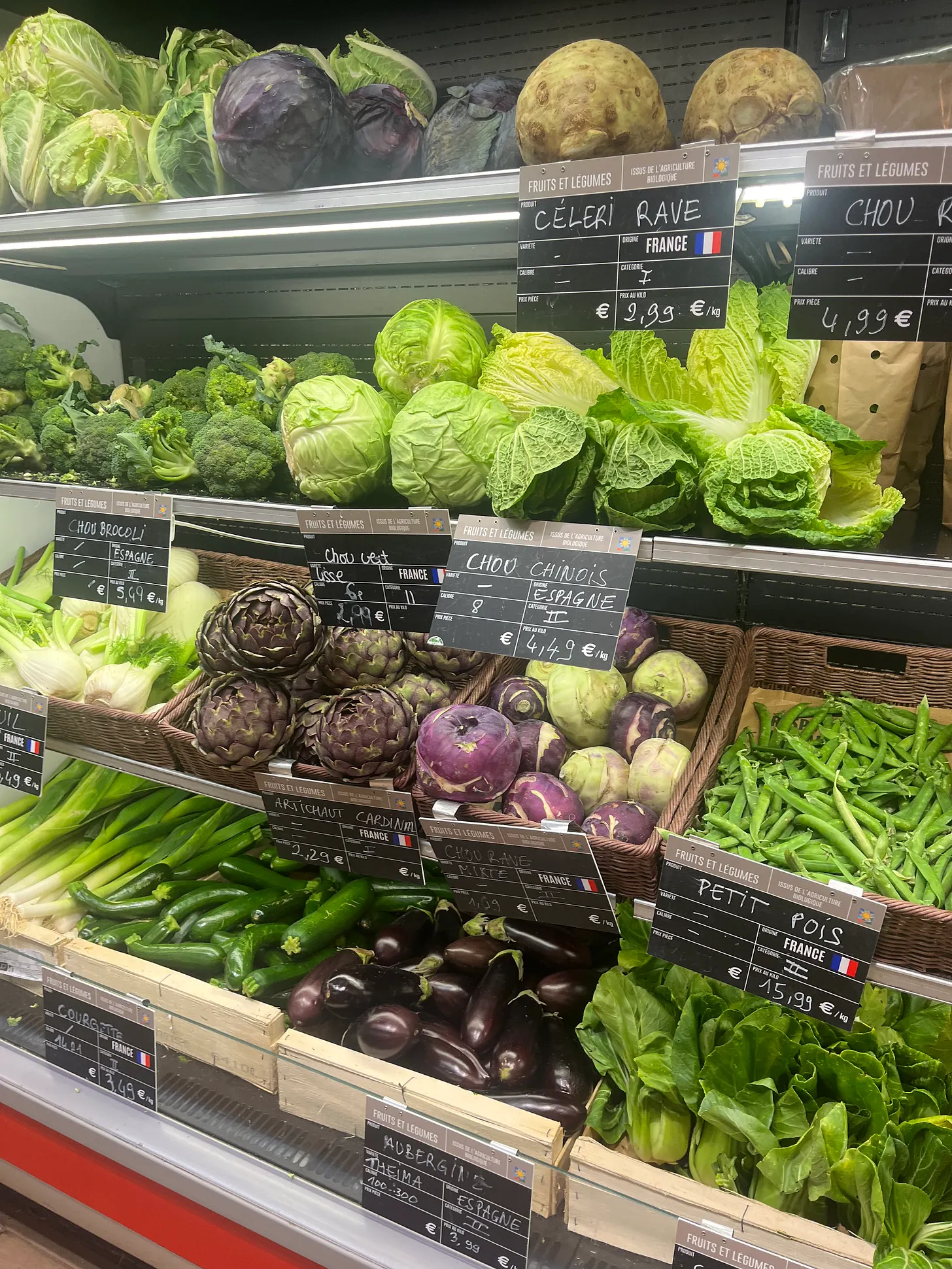
Let’s start with food. France is one of Europe’s largest markets for organic food and is heavily regulated to protect not only biodiversity, but also public health. Their AB (Agriculture Biologique) logo guarantees that their food products contain 95% organic ingredients and are free of synthetic chemicals and GMOs, making shopping far easier. French agricultural policy also continually offers financial incentives for farmers to convert land to organic farms, aligning with Europe’s push to reduce pesticide dependence and playing a big role in its ongoing food security strategies. In France, price negotiations between food brands and distributors also legally begin with the farmer’s actual cost of production, meaning that market buyers cannot dictate the price, unlike what is happening here in the UK. This feeds into French school canteens under France’s EGalim Law, which requires 50% of all food to be sustainably sourced and a minimum of 20% to be grown organically. While 20% is the national legal floor, progressive municipalities such as Mouans-Sartoux, for example, have met a 100% target for organically and locally grown products served in their schools. Promulgated to rebalance the agricultural sector, it also underpins a shift toward local, seasonal, and organic eating among children, making organic food accessible from a young age rather than something reserved for the elite.
In contrast, at the time of travelling, Britain has been accused of sleepwalking into a food emergency, and a recent report by the Adaptation Committee of the Climate Change Committee said escalating food poverty, cost of living crisis, and geopolitics were all secondary to climate issues (extreme heat, flooding and drought), which the Government is currently not acting on. Farming will need to adapt to remain viable, but this will require working with farmers rather than against them – providing access to skills and training, removing regulatory barriers to water storage on farms, and offering subsidies that support agricultural production to provide incentives to adjust farming models as needed, such as regenerative practices. The UK lacks a legal baseline for organic food and remains heavily dependent on ultra-processed food, with 64% of calories in school-catered lunches coming from ultra-processed foods. Despite growing conversations in the UK around healthier school food standards, France demonstrates that food policies can shift habits and access from a young age, making healthy eating mainstream and an outcome which the UK should prioritise.
Eco-pastoralism, 2026’s biggest trend
Moving on to eco-pastoralism. The last thing I was expecting to see in Paris was goats grazing – imagine goats grazing in Hyde Park or trimming the hedges in Parliament Square! While this feels unthinkable in the UK, in Paris it just happened. On different occasions, I saw goats managing parklands and green spaces as a means to reduce noise pollution, fuel emissions, and pesticide use. This is a rapidly expanding environmental practice that uses herbivorous livestock to maintain green spaces, vineyards, and urban areas, as well as areas of industrialisation. Driven by the national biodiversity initiative and the EU Common Agricultural Policy (CAP) eco-scheme, the method relies on rotational grazing to naturally restore ecosystems. This initiative also financially rewards farmers, as these practices preserve grasslands and scale back on pesticide use. French research body INRAE has backed a number of multi-disciplinary studies to better integrate eco-pastoralism into placemaking and public land management policies. Planned grazing is also known to prevent wildfires, as dry undergrowth is cut, and studies have shown a 30% increase in the richness of plant species and biodiversity. As if these benefits weren’t enough, the UN has declared 2026 ‘The International Year of Rangelands and Pastoralists’, aiming to raise awareness of the practice, which is underrepresented in the policy space. While the UK does use this method of practice, namely ‘conservation grazing’, it is largely concentrated in rural rather than urban areas. The UK could look to expand this practice, particularly as many of our native breeds were bred specifically with the British landscape in mind.
Decoupling childhood from big tech
There was a distinct lack of children on devices. Instead, children rode on the back of their parents’ bikes, reading books, remember those! Devices were also absent at cafes, where adults were having actual conversations or people-watching. In France, the national child health record mandates strict screen time recommendations: zero screentime for under 3s, highly restricted until age 6, and no personal smartphones until age 11. There is also a blanket ban on social media for anyone under 15, taking effect from September. These policies preemptively decouple childhood from algorithms driven by data harvesting and ensure that children aren’t treated as a commodity by big tech. A French parliamentary cross-party commission also formally recommended creating a legal offence of ‘digital negligence’ for parents, penalising guardians who leave very young children exposed to extreme, unregulated daily screen time, legally establishing a failure to protect a minor’s health and intellectual capacity. While the UK is now proposing its own social media ban, its rapid adoption of AI, which children are unfortunately not immune to, means that, without proper regulations, UK children are being exposed to AI from a young age. France has adopted a different stance and, as part of the EU AI Act, heavily protects children, placing strict limits on the AI models they can be exposed to. Finally, France has proposed a nationwide initiative establishing one mandatory no-screen day per month for high school students. France’s proactive approach to technology and children’s welfare sees children spending less time on devices and more time engaging with activities that boost wellbeing. This demonstrates that safeguarding childhood through regulation is achievable and effective, and could pose a model for the UK as it navigates increasing digital risks and AI advancements.
Taxing fast-fashion brands actually works
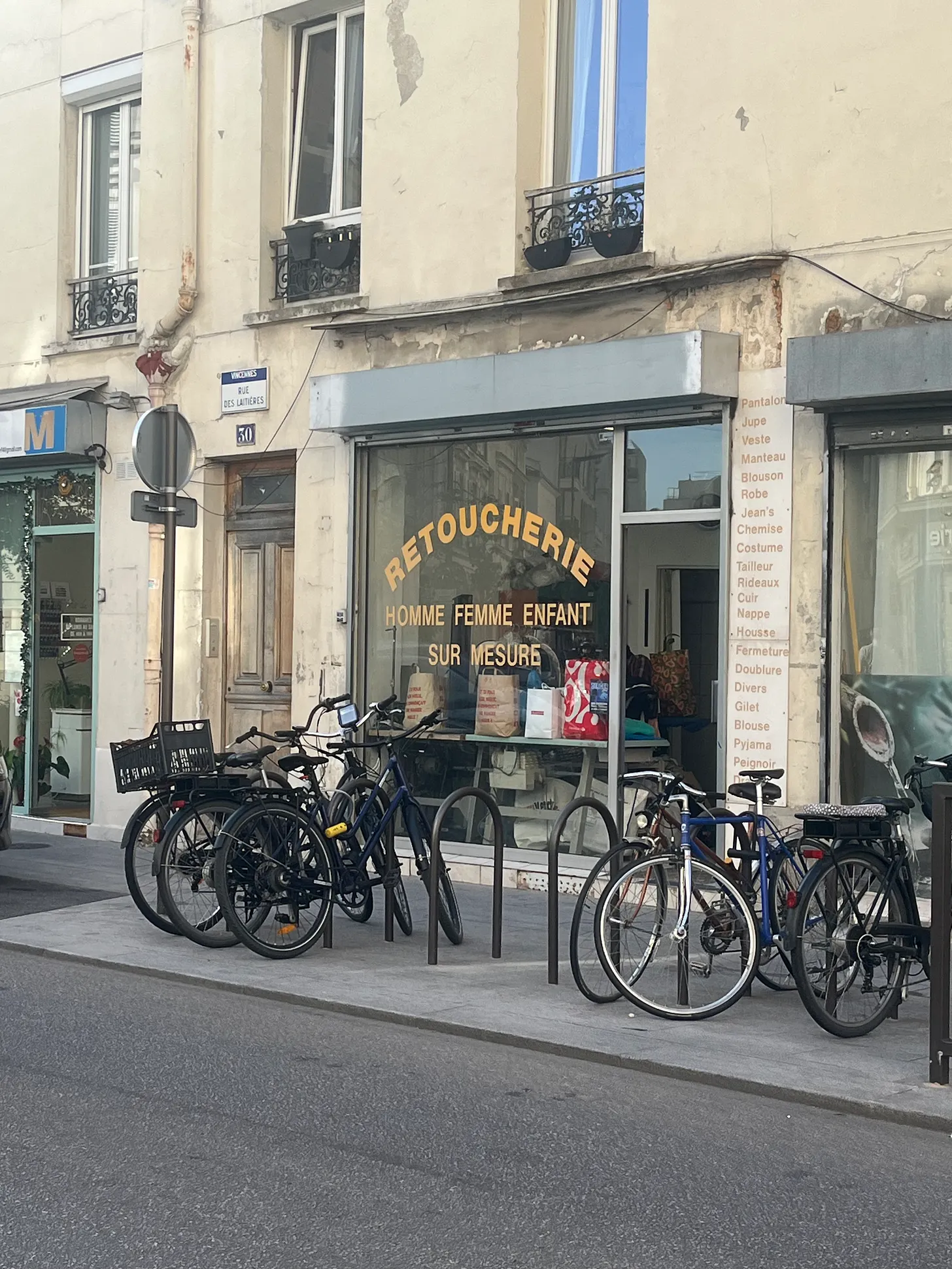
As part of the European Extended Producer Responsibility (EPR) policy, which actively aims to combat fast-fashion and promote a circular economy, France has adopted a state-funded repair bonus (bonus réparation) that covers up to 60% of the repair bill and is financed by taxing fast-fashion. This is something we at Fashion Roundtable have been pushing for a number of years, and it was reassuring to see it work in practice. This policy, mandated by the AGEC law and managed by Refashion, provides discounts on repairs, such as for clothing and household linens. The program also aims to boost local artisanal repair businesses, which were dotted throughout the suburb we stayed in and were also clearly visible in Paris city centre. In its flagship Galeries Lafayette Haussmann location in Paris, there were also a number of repair options. La Cordonnerie on the 4th floor is a dedicated cobbler workshop, originally launched in collaboration with Veja. Now, however, the cobblers can repair all styles of shoes and sneakers. The department store also houses la Marche du Temps, a jewellery and watch workshop staffed by expert watchmakers. Galeries Lafayette also boasts an express clothing alteration and repair service, as well as the Chanel & Moi program, which gives clients access to bespoke restoration or repair for their bags, shoes, and ready-to-wear pieces.
VAT-free shopping was everywhere and working. Back in 2023, France’s share of the European tax-free market jumped from 30% to 46%. This figure is boosted annually around Paris Fashion Week. The visibility and accessibility of repair services in Paris reinforce local businesses and make sustainability tangible. With repair, restoration, and VAT-free shopping all streamlined, France has created a supportive ecosystem for sustainable consumerism, while the UK lags behind after Brexit. The UK should be motivated to implement robust sustainability incentives, starting with EPR regulations for textiles and considering a tax on fast-fashion brands, something we have been lobbying for. Further, reinstating the VAT Retail Export Scheme could generate around £10bn a year for the UK economy.

Apprenticeships can play a part in restoration
Finally, following the fire at Notre Dame Cathedral in 2019, the Notre Dame Restoration Law established a dedicated public agency to oversee its reconstruction. Almost 1,000 workers were involved in its reconstruction, both on site and in workshops across France regionally. The policy mandated that the monument’s exact historic and architectural integrity be preserved and saw modern replacements banned. This mobilised the state-run agency, Établissement Public Rebâtir Notre-Dame de Paris, which sourced artisans specifically trained in medieval techniques. In practice, this meant that carpenters were recruited to recreate the 12th-century wooden framework, master stonemasons were hired to repair the damaged, fragile limestone vaults, and art and painting restorers worked tirelessly on the peeling 17th-century paint – the list goes on!
The public procurement policy utilised Les Compagnons du Devoir, France’s century-old artisan guild system. The procurement policy favoured specialist workshops scattered across regional France over generic construction companies. This required a mandatory apprenticeship scheme, whereby successful tendered artisan companies allocated a portion of their hours directly to apprenticeships and vocational training. This has currently funded nearly 58,000 apprenticeship hours on site, directly passing on vital heritage skills to the next generation. Working in collaboration with artisans, part of the cathedral has already been reopened, with the final completion date set for 2027. What this heritage conservation shows is that policy can actively preserve skills and heritage, something that, post-ratification of the UNESCO Convention on the Intangible Cultural Heritage, the UK must be mindful of. France linked not only traditional techniques and artisans but also apprenticeship schemes to its restoration and preservation of its legacy. The UK should draw inspiration from embedding similar policies to strengthen heritage and create opportunities for the next generation within its frameworks.
While this article has diverged from our typical fashion content, these five French policies make clear that progressive legislation spanning food, the environment, childhood, and heritage improves not only wellbeing but also sustainability and societal resilience. Even after just five days in Paris, the difference was clear in that these policies weren’t just ambitions but realities shaping daily life. France’s approach offers a blueprint that puts wellbeing at the centre for its citizens. As the UK continues to wrestle with economic uncertainty, immigration, strained public services, and a lack of affordable housing, it’s time to look beyond Brexit and take real inspiration from France and the wider EU. At Fashion Roundtable, we exist to challenge the status quo and advocate for policies that move the needle on access to wellbeing and opportunity for all.