
Crafting the Catwalk: Why Hand-stitched Embroidery From Gaziantep Matters Beyond the Runway
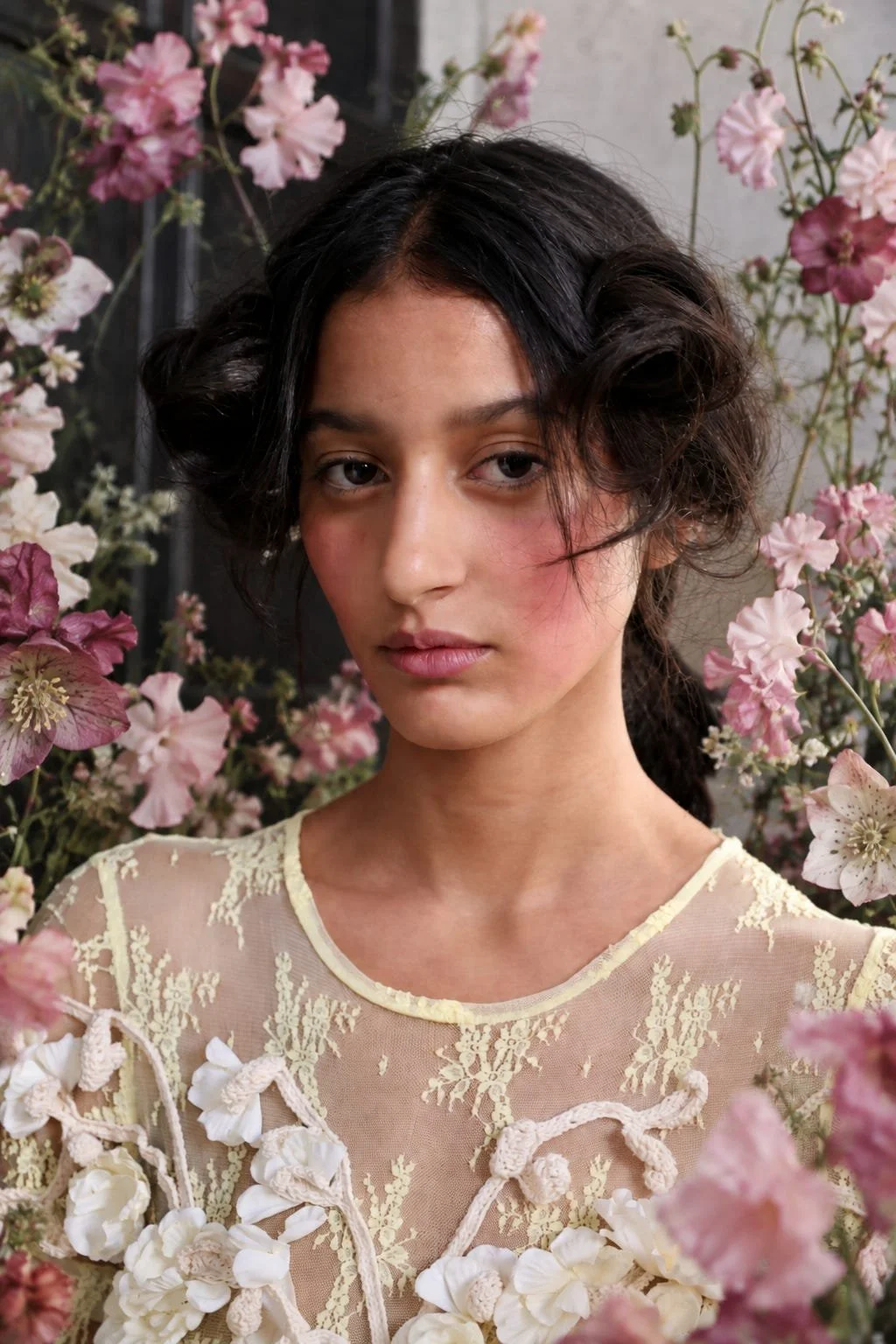
Credit: Zuzu Valla
For this week's ‘Crafting the Catwalk’, Tamara Cincik speaks to London-based designer Bora Aksu about his latest collection, which features Antep işi, the hand-stitched embroidery of Gaziantep in southern Türkiye. Inscribed on UNESCO's Representative List of the Intangible Cultural Heritage of Humanity in 2025, it is a craft whose significance reaches far beyond the runway. Bora tells of his cultural identity rooted in Türkiye and of his grandmother and mother making lace and knitting in the home. He also speaks to his interest in bringing those traditions into a contemporary language, rather than simply reproducing them, as a means for keeping heritage alive.
As Bora said, “Heritage does not have to remain in the past. It can be part of the future.”
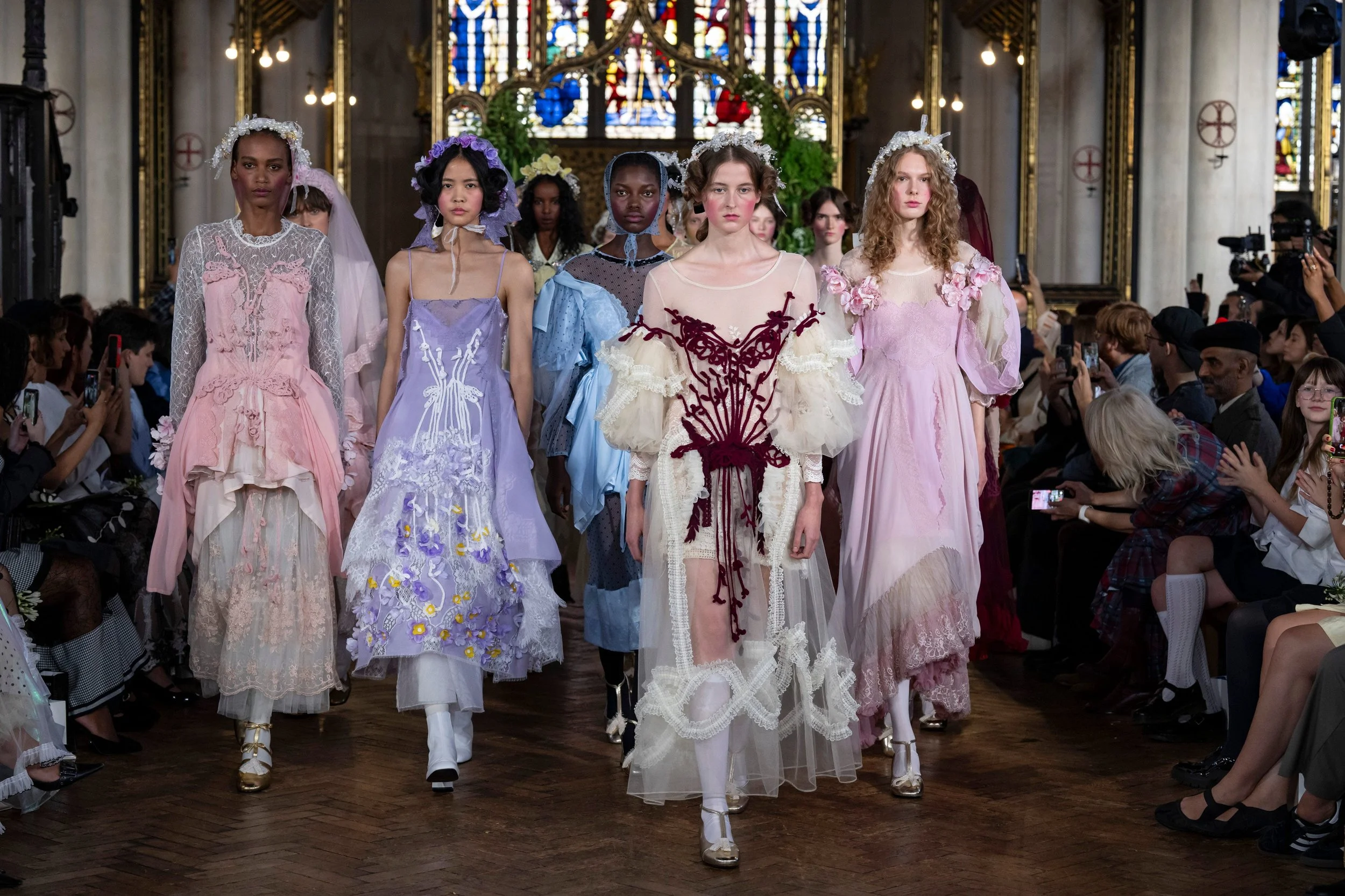
Credit: Bora Aksu
Bora, congratulations on your recent LFW show. I particularly loved your use of handmade lace from Gaziantep in Southern Türkiye, which is protected by UNESCO’s Representative List of the Intangible Cultural Heritage of Humanity. What drew you to Gaziantep needlework specifically for this collection, and how did that decision first come about: was it the municipality’s initiative, your own research trip, or something more personal? I know you are originally from Izmir, so wonder how wider Turkish craft and cultural heritage informs your creative practice?
For me, Antep işi was never simply a beautiful technique that I could use on a dress. It carries a history, and more importantly, it carries the hands and stories of generations of women. The opportunity to discover it more deeply came through the invitation from Gaziantep Metropolitan Municipality and Fatma Şahin, which gave me the chance to visit Gaziantep and see the craft within its own cultural environment. But it also felt very personal to me. I grew up in Turkey surrounded by women who made things with their hands. My grandmother made lace and my mother knitted, so I have always understood craft as something intimate, something that is passed from one generation to another. Coming from Izmir and having built my career in London, I have always carried that Turkish cultural identity with me. Turkey has such an extraordinary diversity of regional crafts, techniques and traditions. I am interested in bringing those traditions into a contemporary language rather than simply reproducing them. For me, that is how heritage stays alive.
“My grandmother made lace and my mother knitted, so I have always understood craft as something intimate, something that is passed from one generation to another.”
What did the actual collaboration look like on the ground? What was it like travelling to Gaziantep to sit with the women who do this embroidery, and how did you translate their traditional motifs and techniques into pieces that would work on a London runway and for your international clients?
Travelling to Gaziantep was incredibly important because I wanted to understand the craft beyond seeing it as an image or a technique in a book. Sitting with the women who make Antep işi, seeing the concentration, patience and extraordinary precision involved, gave me a completely different appreciation of it.
What struck me most was the time contained within every piece. These are not techniques that can be rushed. They are built stitch by stitch, through knowledge that has been passed from one woman to another. For the collection, I didn’t want to simply take a traditional motif and place it onto a dress. I wanted to understand its language and then translate it into my own. We used the lace alongside tailoring, tulle, ruffles and more structured, almost masculine silhouettes. There is a dialogue between softness and strength throughout the collection. The delicacy of the handwork is contrasted with tailoring and harness-like details, so the craft becomes part of a contemporary fashion vocabulary while retaining its identity.
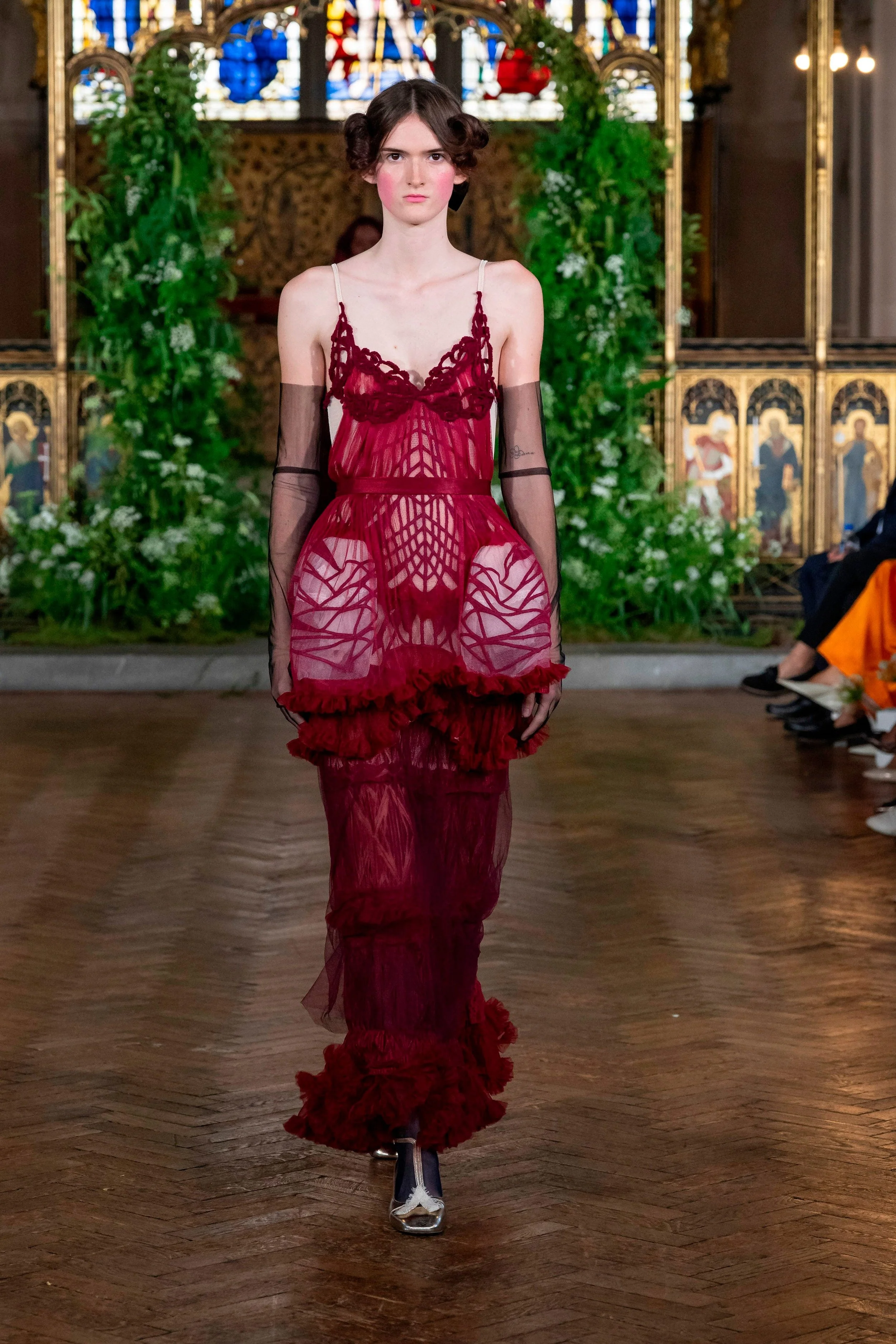
Credit: Bora Aksu
Antep işi is recognised by UNESCO as part of humanity’s intangible cultural heritage. What does that history mean to you, and did learning more about its roots change how you approached designing with it? I also wonder if you could expand a little on the diverse heritage of Gaziantep, and Türkiye more widely, so we have a sense of the historical and cultural heritage of place based crafts such as Gaziantep lace.
Knowing that Antep işi is recognised as part of Turkey’s intangible cultural heritage makes you realise that you are not simply working with an aesthetic technique. You are working with knowledge, memory and a living cultural history.
Gaziantep itself is a fascinating example of how deeply a place can shape craft. It sits at a crossroads of different cultures and civilisations, and its history is reflected in its food, architecture, textiles and traditional arts. More broadly, Turkey has an extraordinary richness of regional craftsmanship because different parts of the country have developed their own languages of making over centuries.
What interests me as a designer is that these traditions are not frozen in the past. They can continue to evolve. I see fashion as a bridge between history and the present. Bringing Antep işi to a London runway allows a very specific Turkish tradition to enter an international conversation without losing where it came from.
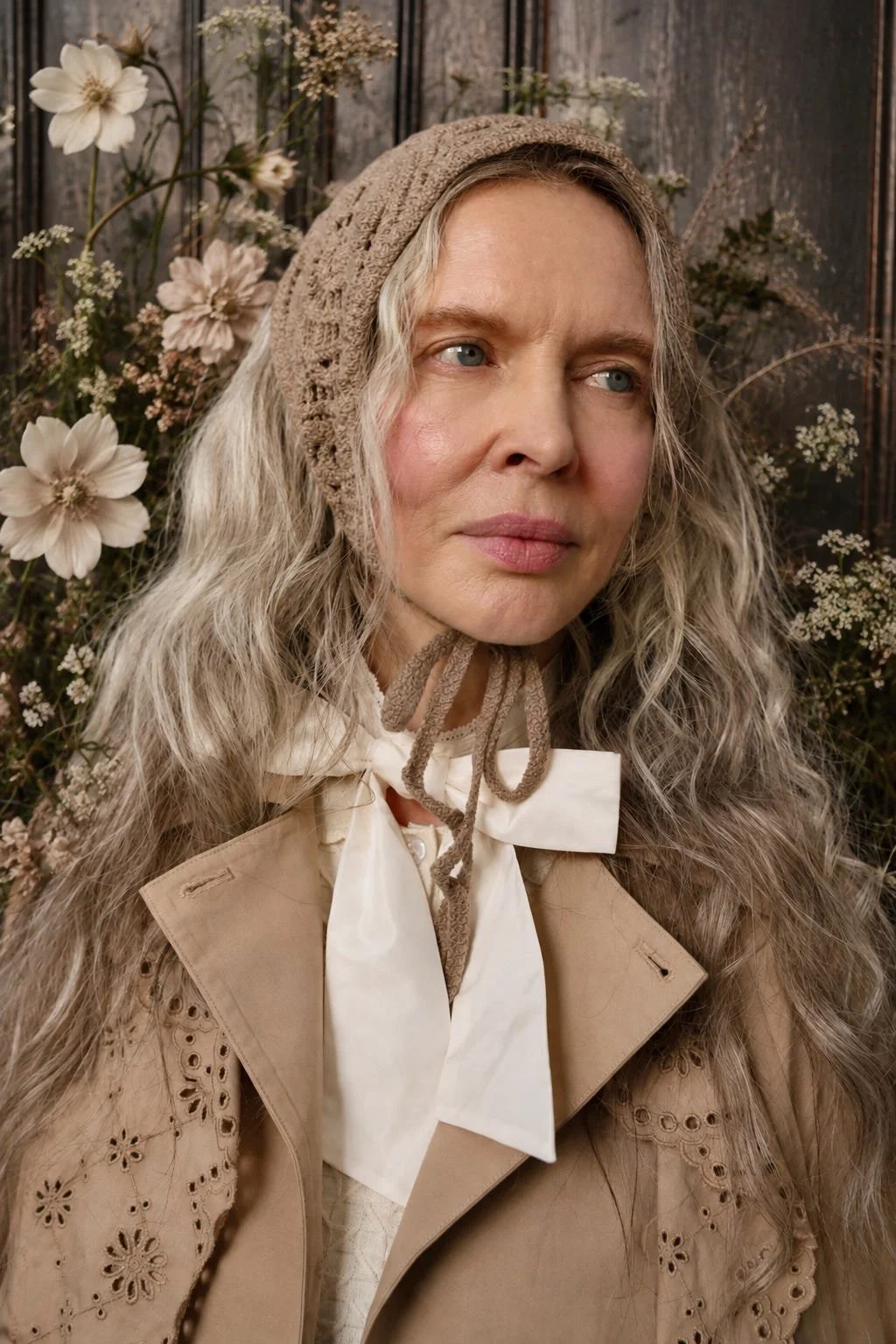
Credit: Zuzu Valla
You’ve talked before about your grandmother’s lace-making and your mother’s knitting as early influences. Indeed when I styled my first show for you, when you were based in Istanbul, we used pieces which were hand crafted in that collection, which felt very rooted in Turkish craft. How does this Gaziantep collaboration fit into that cultural identity for you, and what does “craft” mean to you as a value running through the brand?
This is probably the most personal part of the story for me. My grandmother’s lace-making and my mother’s knitting were some of my earliest experiences of making and of understanding the value of the handmade. I grew up seeing women creating things not because they were following a fashion trend, but because making was simply part of life. So when I encountered Antep işi, there was an immediate emotional recognition. The technique is different, the geography is different, but the spirit of it felt very familiar to me.
Craft has always been an important value within Bora Aksu. I believe that when something is made slowly, carefully and by hand, it carries something of the person who made it. That is increasingly meaningful in a world dominated by speed and mass production. For me, craft is not about nostalgia. It is about respecting knowledge and skill, and finding ways to give that knowledge a future. That is why I wanted to take something deeply rooted in Turkish culture and place it within a contemporary London collection.
What do you hope this collaboration does to increase the visibility of these craftswomen and their techniques, for how your brand is understood, and for keeping a tradition like this alive for the next generation?
I hope it brings attention not only to Antep işi itself, but to the women behind it. We often admire the finished object without thinking about the person, the time and the knowledge that went into making it.
There is also an important social dimension to these crafts. Traditional handwork can provide women with skills, income and a sense of independence, while allowing knowledge to be passed to younger generations. When a craft is valued, there is a greater reason for the next generation to learn it rather than allowing it to disappear.
For me, bringing Antep işi to London is therefore about creating visibility and creating a conversation. I want people to see its beauty, but also to understand its cultural and human value. Ultimately, I would love for a young woman seeing these pieces on a London runway to understand that something made by the hands of women in Gaziantep can have a place in contemporary international fashion. Heritage does not have to remain in the past. It can be part of the future.
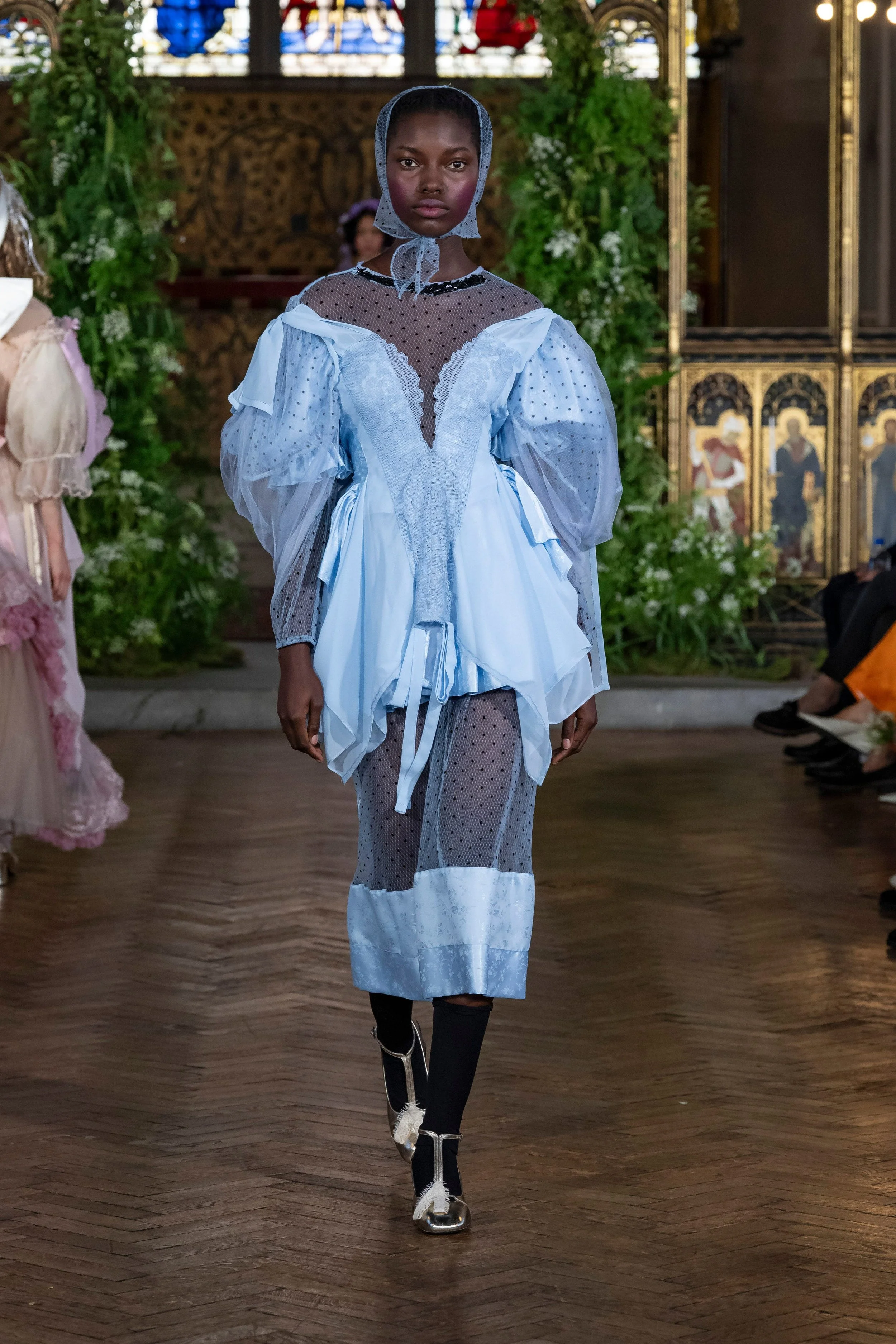
Credit: Bora Aksu
“What struck me most was the time contained within every piece. These are not techniques that can be rushed. They are built stitch by stitch, through knowledge that has been passed from one woman to another. For the collection, I didn’t want to simply take a traditional motif and place it onto a dress. I wanted to understand its language and then translate it into my own.”
Edited by Meg Pirie