
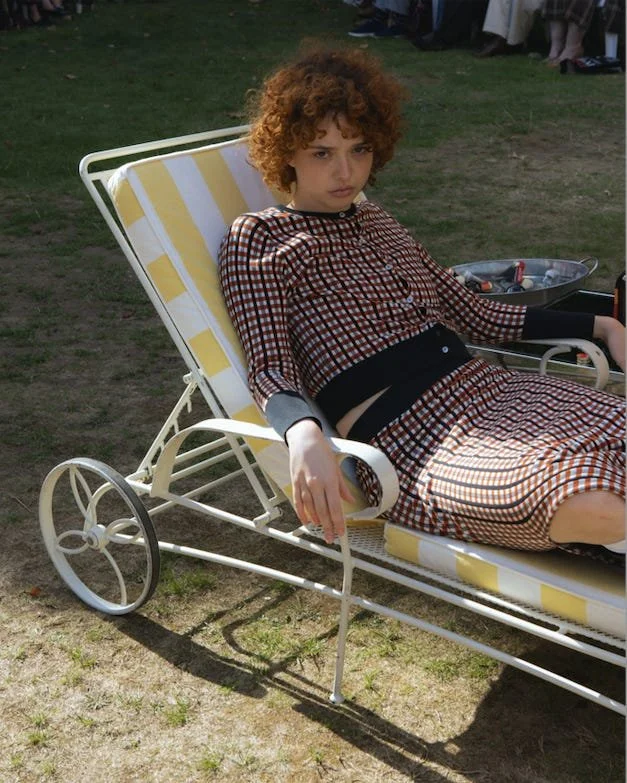
Credit: Katie Bishop
For this week's ‘Crafting the Catwalk’ Tamara Cincik meets a designer who believes British heritage belongs in the story of innovation. Maximilian Raynor staged his latest show as a fete in Bloomsbury's Mecklenburgh Square, complete with the whimsy, nostalgia and mix of characters that made things feel ever so British. A lover of crochet and a champion of UK making, he has brought his subversive Central Saint Martins eye to collaborations with the likes of John Smedley and Gola. Tamara sits down with Maxi to talk all things fetes, theatre and the crafts he'd like to see revived.
As Maxi said:
“For me, fashion is a form of theatre, and the runway is an opportunity to bring these stories to life.”
Maximilian, I love that you hosted a fete in Mecklenburgh Square, Bloomsbury for your fashion show. I had a fete at my wedding, so I can relate to the happy mood of bringing people together and its charm. What made you decide to host a fete, and was this inspired by your childhood? If so, what or when was your best fete memory; or something more artistic perhaps, like the work of Martin Parr as a viewer? What did you hope the audience would feel watching the show?
I have always been drawn to British eccentricity which I think is perfectly encapsulated in a fete context where different walks of life, from the Lady at the Manor up the hill to the school boys running around the green, coexist. There’s a whimsy and nostalgia to a village fete – in times where community spirit feels at risk and people have become further isolated and insular, the fete becomes a chance to break out of our routines and get to know a neighbour. You’re also quite right that Martin Parr has always been a huge inspiration to me. Photographs that feel humorously mundane and yet stylised and cinematic. I hoped the audience of the show would experience an eclectic and joyous amalgamation of characters.
Fetes often have a craft element too, such as flower displays, art shows, dancing and games, all served in a gathering which is deeply British. What British crafts inspire you and which would you like to see enjoy a revival?
Derbyshire Well dressing is a centuries-old English tradition celebrating water and the natural world. Each summer, villages from my home county decorate wells and springs with intricate pictures made from flower petals, seeds, leaves and moss, pressed into wet clay. These elaborate, ephemeral artworks celebrate community, craftsmanship and gratitude for the gift of water. I think that theme deserves a show of its own.
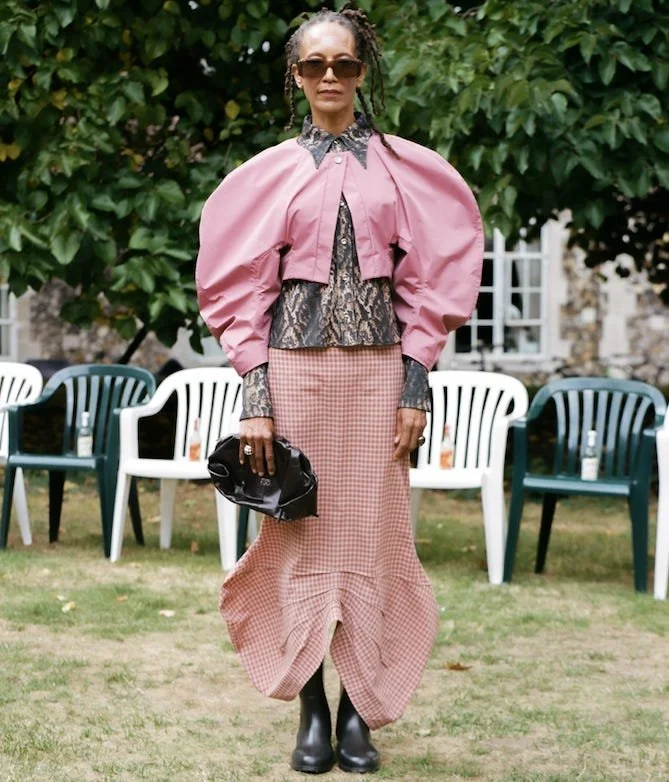
Credit: Maximilian Raynor
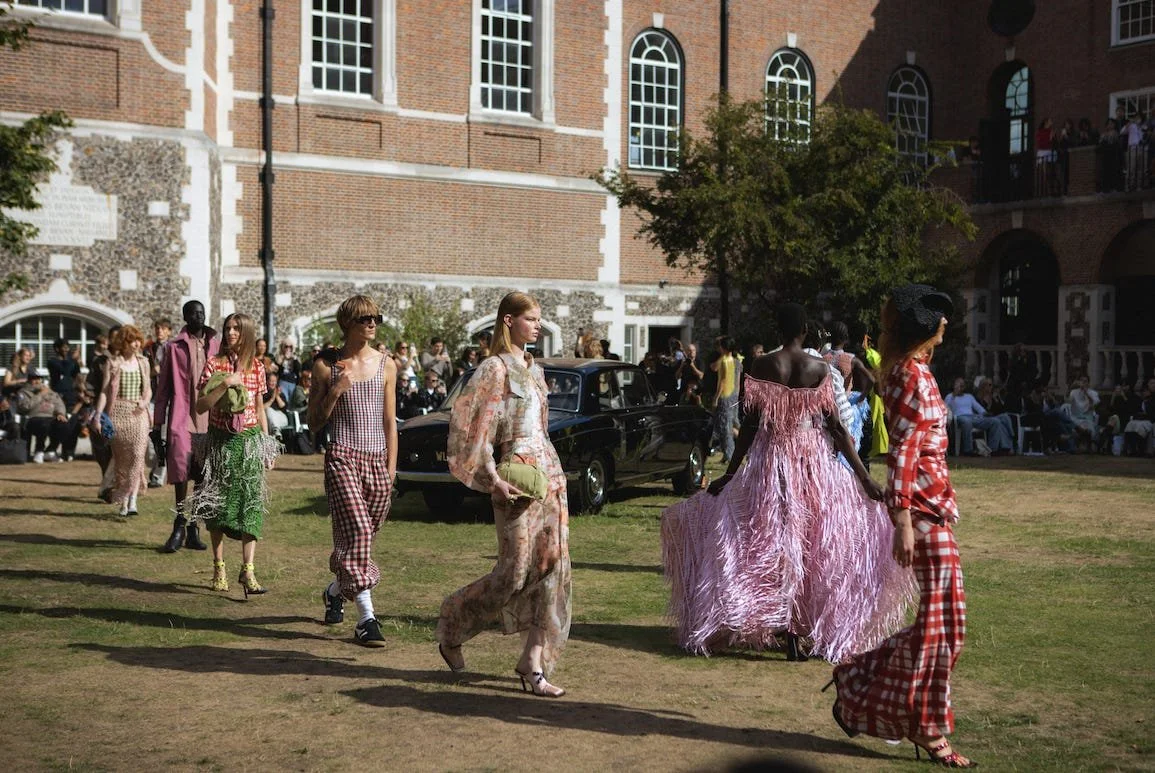
Credit: Maximilian Raynor
Were there any handmade skills, like knitting, sewing or costume-making, that you grew up making and creating? And if so, how does a love of craft and of making, inform your work as a designer?
I absolutely love crochet and we use a lot of it in my collections. There’s a sense of ancient human craft present in the act of looping and knotting yarn with a hook... simple and yet powerful. All the textiles I design explore a traditional technique, only subverted and played with to create something entirely new.
I know you collaborated with John Smedley, a fantastic British knitwear brand with a long history. And Gola, a British sportswear brand. What learnings came to you as a designer from working with heritage British brands as a new designer? How important is it do you think to work with British companies who continue to make in the UK? What do you think these collabs bring to your designs?
Working with heritage British brands like John Smedley and Gola has taught me that British heritage belongs in the narrative of innovation and reinvention. There’s something exciting about bringing a playful, subversive Central Saint Martins perspective to generations of craftsmanship and/or established British identities. Supporting UK manufacturing is incredibly important to me, particularly as traditional skills become increasingly endangered. These collaborations are an exchange of knowledge, proving that heritage needn’t be nostalgic, but can be reimagined for the future.
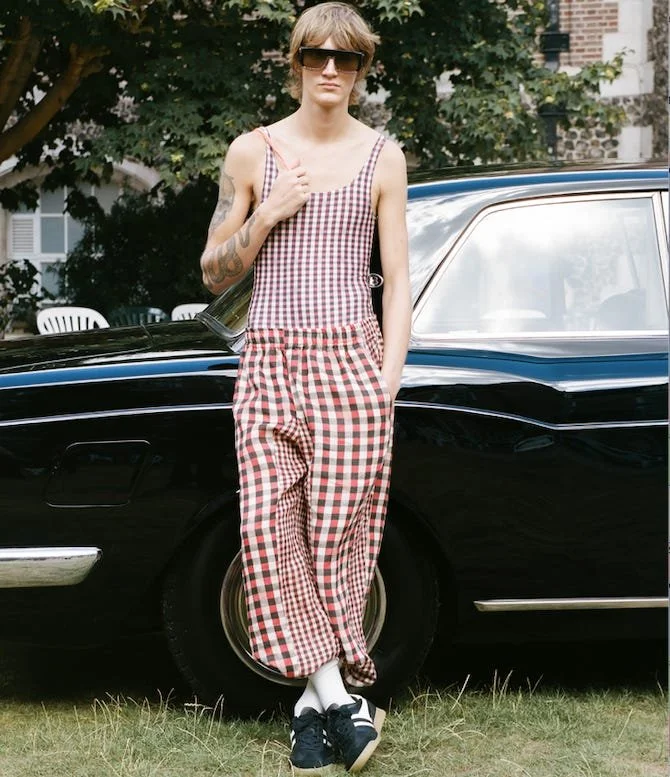
Credit: Maximilian Raynor
Your shows are theatrical, what are you drawing on as inspiration: is it literature, cinema, or historical figures. How does this theatricality inform your design process?
My inspiration comes from a collision of literature, cinema, history and the wonderfully eccentric characters of everyday British life. I’m fascinated by storytelling, particularly the tension between romance, humour and tragedy. I often begin with a narrative or imagined character rather than a garment, building their world through historical references, cultural observations and theatrical exaggeration. That character informs everything from silhouette and fabrication to styling and movement. For me, fashion is a form of theatre, and the runway is an opportunity to bring these stories to life. I want audiences to feel something, whether that’s nostalgia, amusement, discomfort or surprise.
“Supporting UK manufacturing is incredibly important to me, particularly as traditional skills become increasingly endangered. These collaborations are an exchange of knowledge, proving that heritage needn’t be nostalgic, but can be reimagined for the future.”
Edited by Meg Pirie