
New Series by Tamara Cincik
Credit:The King’s Foundation
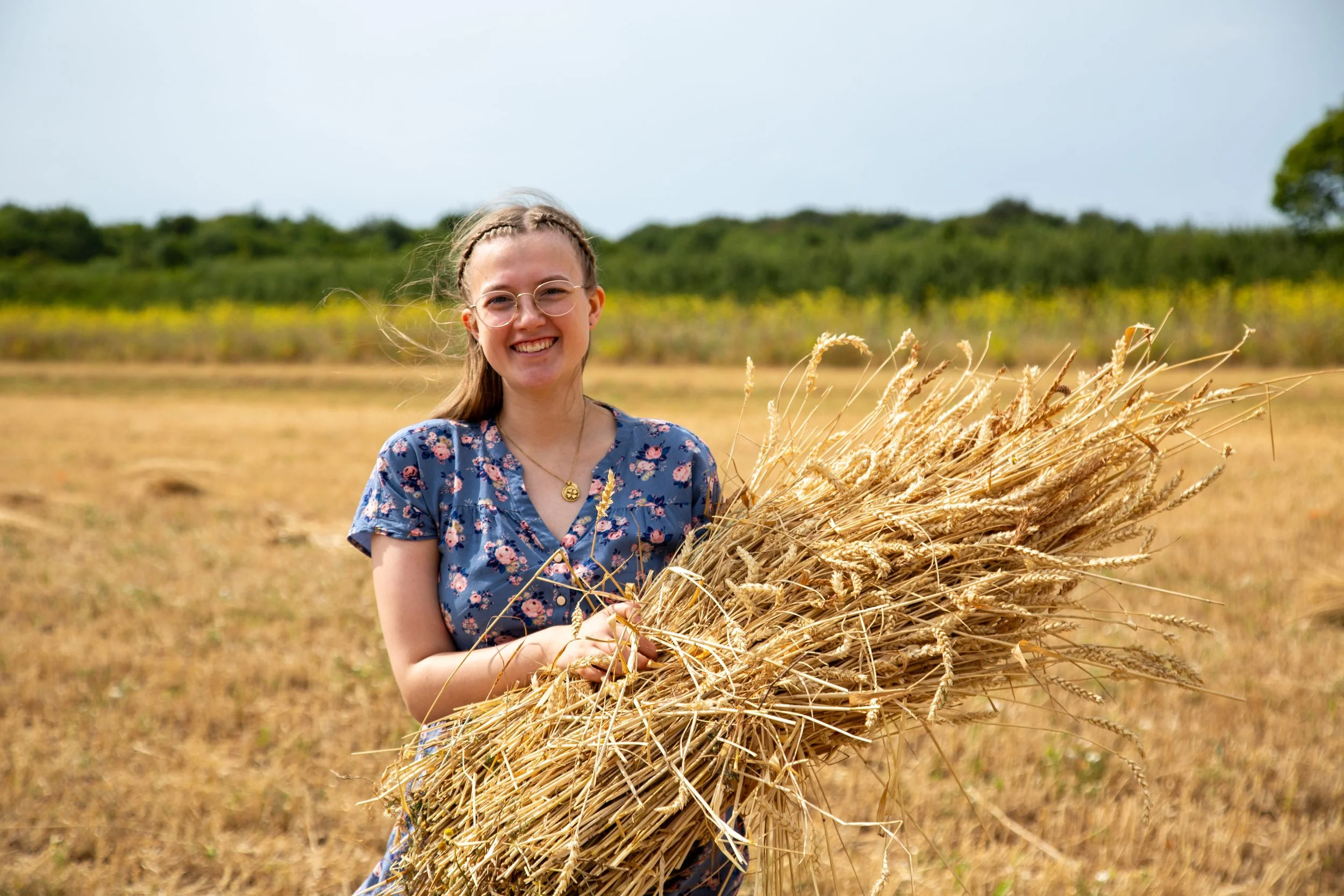
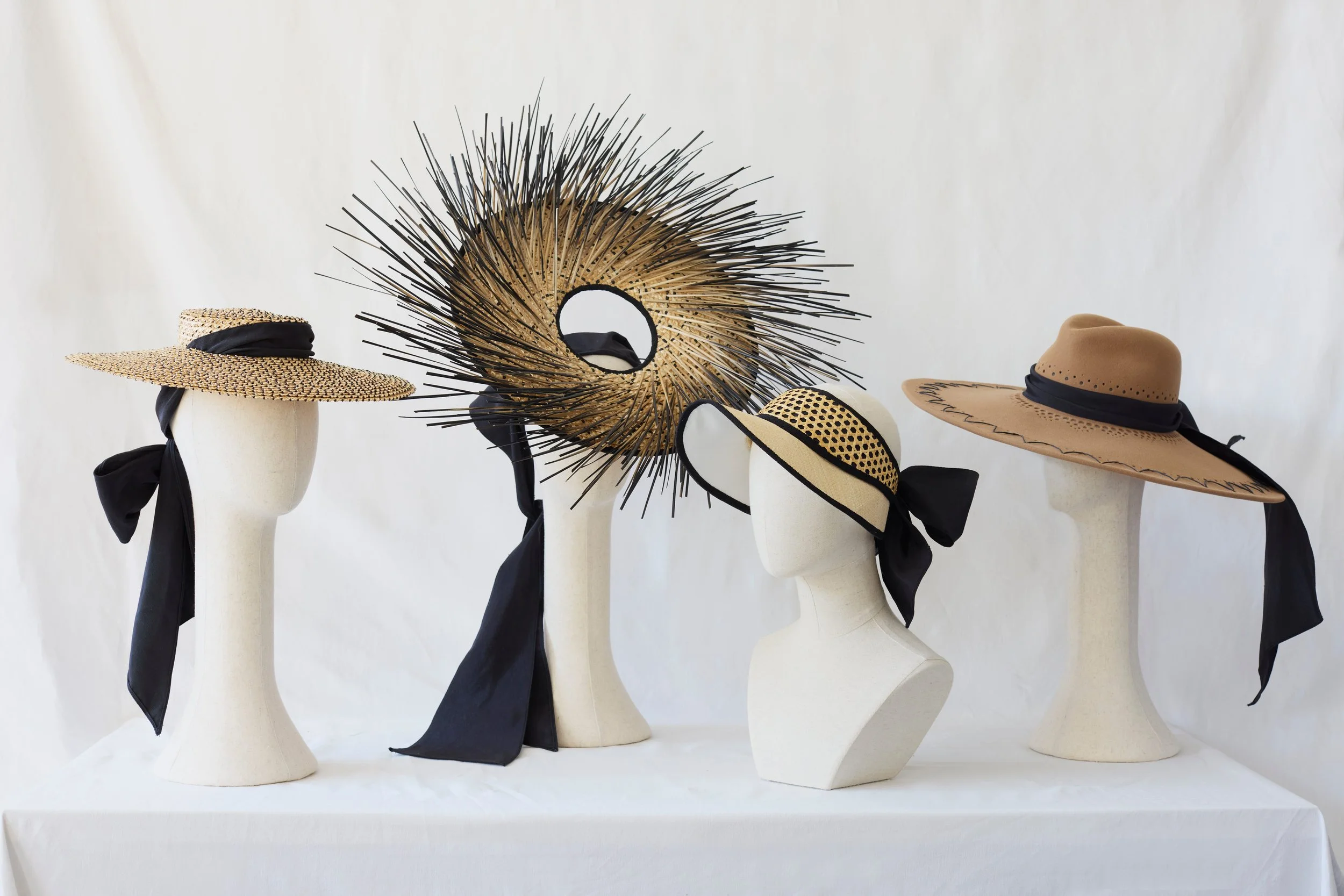
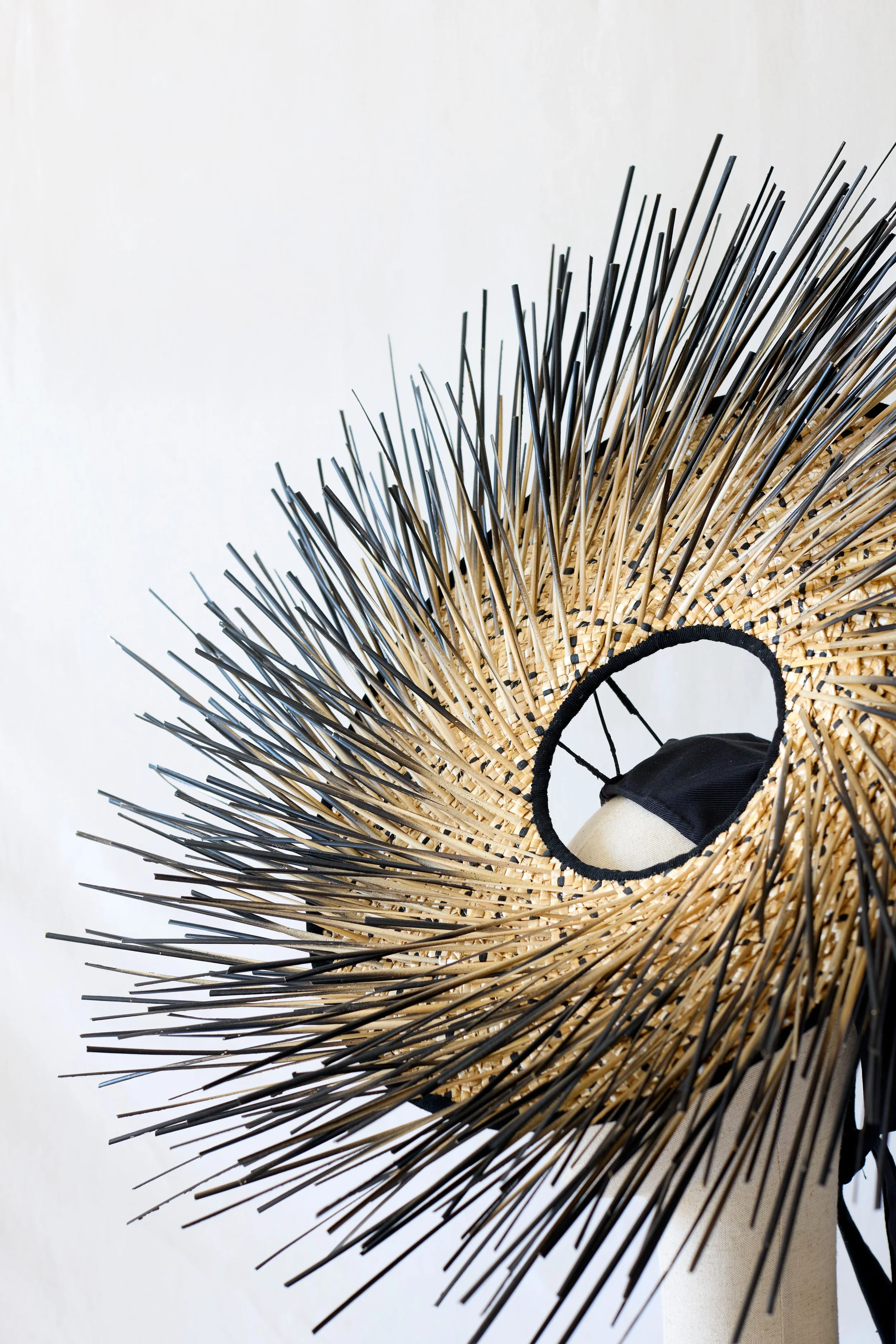
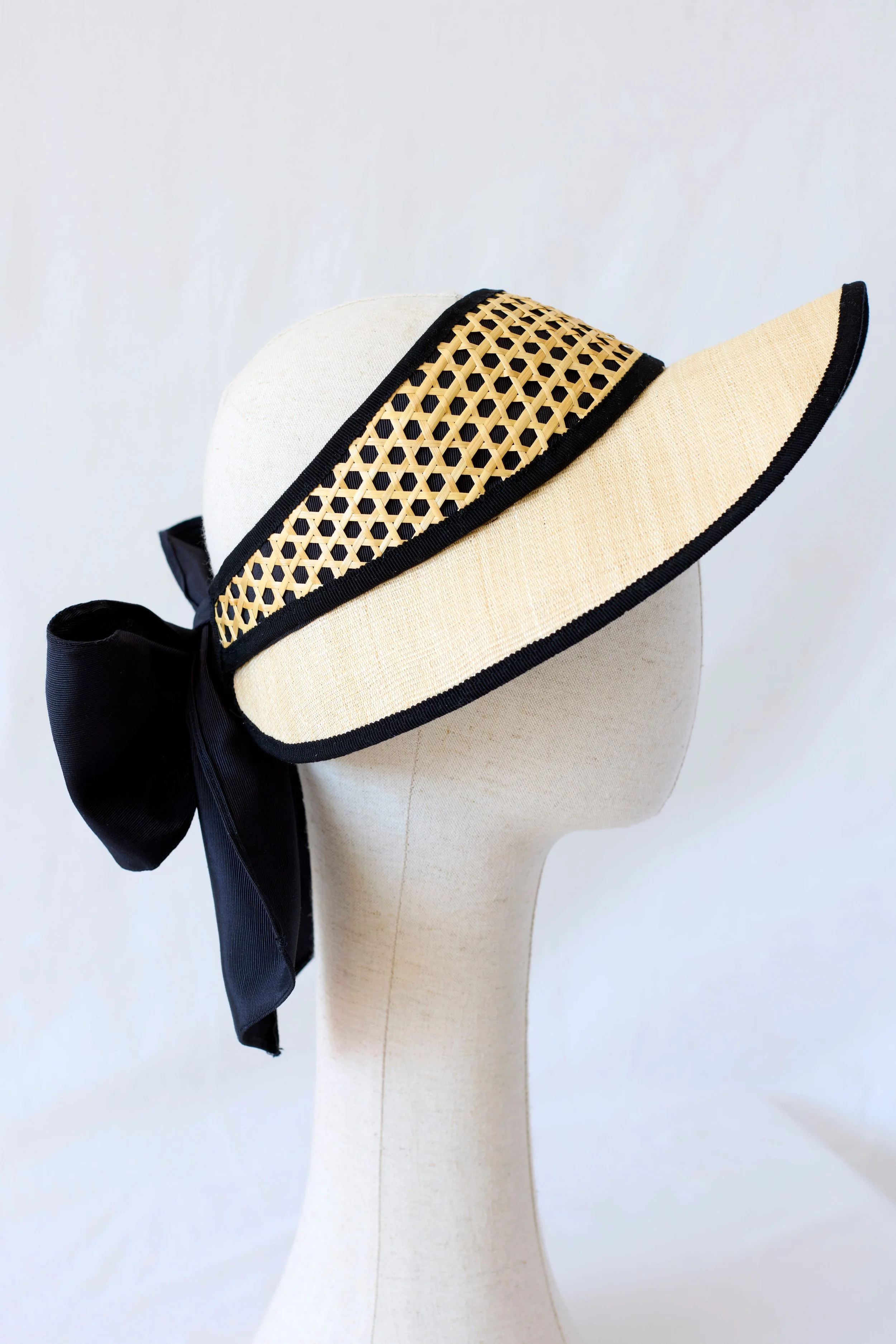
Emily Hurst is one of just seven hat plaiters left in the UK. This summer she harvested heritage Maris Widgeon wheat grown for her at Sandringham, the first fully traceable British straw she has worked with, as part of the CHANEL & The King's Foundation Métiers d'Art Millinery Fellowship in Partnership with Le19M. For the first in the ‘Craft the Catwalk’ series, Emily talks to Tamara Cincik at Fashion Roundtable about native fibres, slow craft, and the huge opportunity to give traditional crafts a sustainable and meaningful future.
Emily, firstly congratulations on the stunning hats you have created using Sandringham straw. Having seen them at close hand I think they are truly exceptional. I also love that you have worked with a native fibre. Maris Widgeon is a British-grown, heritage straw, so you’re working with a domestic fibre rather than an imported one.
What does it mean to work with straw from a specific place and a specific variety? How does it behave differently from the imported straws most of the industry relies on? And could you expand on the experience you had harvesting the straw at Sandringham?
Thank you so much! The straw that is used for hat plaiting has specific qualities. Unlike wheat grown for food, the varieties which were once used for the craft were grown for the stem as opposed to the ear. The stem needs to be hollow, with walls strong enough to hold their shape, but flexible enough to be plaited without breaking.
Because the traditional crafts that these wheat varieties were grown for are dying out, the wheat varieties that were once grown for them are no longer widely cultivated. In fact, many of the varieties once used for straw plaiting are now near impossible to source, and in many cases you simply cannot even find the seed anymore.
Because of this, I have, up until now, had to import straw that is partially prepared. This includes all my work up to this point, including my final collection with The King’s Foundation. Whilst this has allowed me to continue my work, I don’t always know its exact provenance. As I want to make my work as sustainable as possible, the lack of traceability and the additional carbon footprint that comes from importing it, is very frustrating. It is particularly galling because the conditions in Britain are so well suited to growing these varieties.
Straw definitely responds to the conditions in which it’s grown. The soil, climate, water, weather and the way it is harvested can all affect the quality. Because I previously have not known the exact origin of the straw I buy, the quality can vary quite considerably.
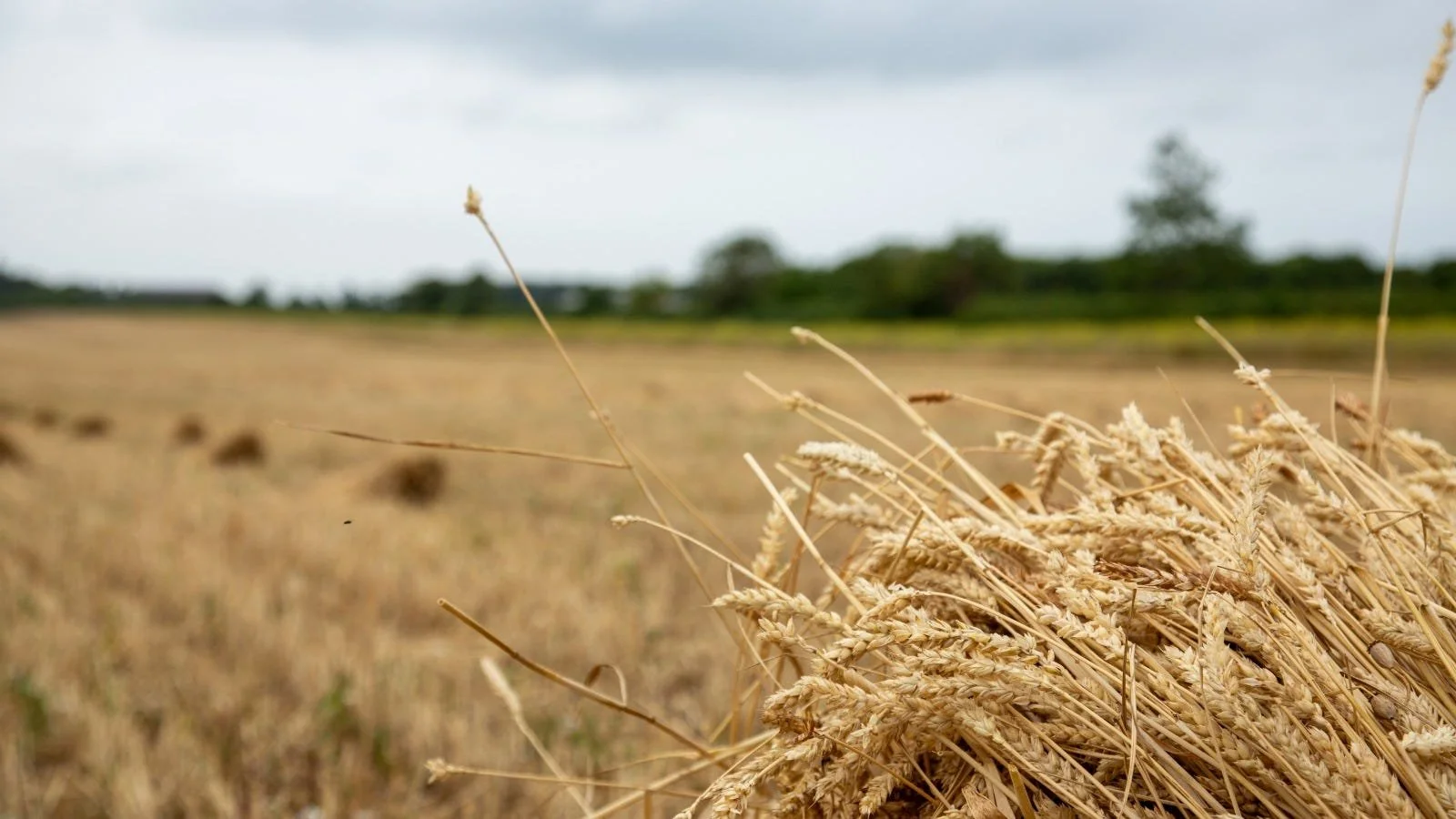
This year we harvested a field of Maris Widgeon, a heritage variety of wheat, that was incredibly generously grown by His Majesty King Charles III at his Sandringham Estate for my craft. Because of this, I know every stage of the straw’s journey. I know when it was planted, I have stood in the field it was grown in, I know when and how it was harvested, and how long it was left to dry in the field before being brought in. That level of traceability is invaluable for me as a maker, and I cannot wait to use this straw moving forward.
Speaking to His Majesty’s farmer at Sandringham, Ted, he told me about the importance of the relationship between the soil, the crops and the biodiversity at Sandringham. His Majesty is very knowledgeable about the impact of modern fertilisers and machinery on soil health, and there is a strong focus on minimising nitrogen levels and using rotational farming to continually improve the quality of the soil.
We were fortunate enough to be able to harvest the straw with a WW2 reaper binder – a small machine which cuts the wheat at the base, binding it into sheaves, and leaving the length of the stem needed for the craft completely undamaged. We could also harvest it at a very particular stage, just before the straw was fully ripe, which gives the stems greater flexibility and therefore makes it more ideal for plaiting. It was then able to dry naturally in the field during the glorious hot weather this summer, which has given it a beautiful pale gold colour.
These are all things I would otherwise be unable to do on my own. So, with enormous thanks to His Majesty, The King’s Foundation, and Farmer Ted for making it possible – it means that we have been able to control and understand every part of the process, which has resulted in straw of perfect quality that is completely traceable.
Credit: Gary Pearson
Fashion and regenerative systems are increasingly becoming a hot topic. Given the climate crisis, how resilient is native straw as a material do you think? How vulnerable are indigenous fibre supply chains, and what would a resilient one look like? Should farmers, growers and makers be working together more formally?
It is undeniable that there are some aspects of fashion which come at a cost to the Earth. Whether it be materials that do not readily break down, or the enormous waste created from fast fashion, I believe that now, more than ever, we need to think carefully about where our materials come from and how they are produced. Using British grown and British made materials wherever possible reduces the materials mileage, supports local jobs and infrastructure, and encourages the survival of traditional practices that may otherwise be lost. Natural materials are at the heart of this conversation.
Straw, in particular, is a vastly underrated material. The UK climate is well suited to growing wheat, and it is a practice that has been done for thousands of years. Despite the climate crisis, it will continue to be possible, due to it not requiring much water or nutrients to grow. According to the WWF, per kilogram of crop, wheat typically needs around 900 litres of water to grow. Compare this to cotton, which requires around 7,000-29,000 litres for the same amount, and you can see its value as a material in a world where drought is seemingly looking to be a more common occurrence.
The extra beauty of using the straw in craft, is that the part required is the stem and not the ear. This means that the grain can be harvested for seed, which can be replanted the following year, making it a naturally cyclical process.
Straw also benefits from many natural qualities. It has a sheen that used to be called ‘natural gold’, and it is strong thanks to its tensile strength when plaited. The wide variety of plait techniques means that one material can produce an enormous range of textures and effects. It is naturally breathable, UV resistant, water resistant and, at the end of a piece’s life, it can simply return to the earth rather than becoming waste. At the same time, we have examples of straw hats in the V&A museum dating back to the 1750s, which demonstrates that straw can also have a remarkable lifespan if cared for and preserved. It is that duality that makes it such a good alternative as a modern fashion material. Creating something that could last for generations, but could, alternatively, be put on a compost heap and simply return to the soil.
Credit: Carmel King
By building an internal supply chain, we can support farmers, craftspeople and manufacturers at every stage of the process, so everyone benefits. This is not only true of straw, but of many other natural fibres and fabrics, such as British wool. Where a material cannot be sourced or grown in Britain, I believe there is much value in seeking ethical and traceable suppliers as opposed to looking for a quick or cheap option.
The difficulty, as with all heritage crafts and processes, is that when demand for them dissipates, the practices behind them begin to disappear too. I was speaking with a farmer recently, who told me that if they were to sell the wool fleece from their sheep flock, they would automatically make a loss, and so they were having to either give it away, or simply find other ways of disposing of it. That surprised me enormously, given the qualities of wool, its versatility, and the extent to which it is used in fashion. But it all comes back to the same issue: if there is no viable demand, the supply chain cannot sustain itself.
As we lose the making skills, we also lose the processes and infrastructure which supports them. What was once an interconnected, primarily internal supply chain of farmers, tradespeople, craftspeople and manufacturers, where each stage supports the last, it becomes fragmented and thus leaves us reliant on materials from sources that may be much harder to trace. I believe that this is one of the reasons we have seen such a decline in making in general in this country. When the chain becomes economically unsustainable, it eventually becomes unsustainable for the maker too, and the whole cycle begins to break down.
In my opinion, the answer comes from reconnecting the stages. When farmers, processors, makers and so on, all support each other, you create a system that supports itself, where every part of the process has been considered and handled with care, from seed to finished piece, whilst supporting the skills and people that make it possible.
“It is not the fastest way of doing things. It is not instant, and it certainly is not always the cheapest. But I believe that is the entire point. Quality materials, traditional skills, and sustainable systems take time. And perhaps, it is time for us to take a step back and learn the value of that time again.” Emily Hurst
Credit: Carmel King
Your work embodies a slow-fashion mindset. I love that you taught yourself heritage craft skills, such as straw braiding and plaiting, skills that have almost disappeared in Britain. Who or what did you learn from, and how do we make sure this knowledge isn’t held by only a handful of people? Where do you feel that your King’s Foundation Fellowship fits in the wider skills pipeline?
I taught myself the craft of straw plaiting through two incredible books by Veronica Main MBE: Swiss Straw Work and Straw Plaiting. Veronica is extraordinary. The work she has done in her research, travelling the world, and documenting techniques that have previously never been written down before, is the reason I even knew the craft existed. Traditionally, these skills were taught from one generation to the next, which means that as the straw trade declined, so too did the knowledge of the techniques. Her books have become somewhat of a bible in the craft, so if anyone is interested in learning, they are absolutely where I would recommend starting. You can even begin by trying the techniques with strips of paper if you cannot get hold of straw immediately.
According to the Heritage Crafts Red List, there are only seven hat plaiters left in the UK, including myself. Some of these makers run workshops, and corn dolly making is also another way of becoming more familiar with the material. I also plan on running some workshops of my own in the future.
For me, one of the most important things we can do to make sure the craft survives is to avoid gatekeeping the knowledge and resources we do have. The more people who know about the craft, the more opportunity there is for these skills to grow, develop and evolve. Straw plaiting is an incredibly versatile skill, and its possibilities go far beyond hats, and indeed, it is not limited to just working with wheat straw.
The support of The King’s Foundation is also what led to me being able to speak to His Majesty about the issues surrounding straw supply, and thus led to his incredibly generous offer of the field at Sandringham to be grown specifically for my straw plaiting. However, what makes this whole project particularly special is the fact that the straw does not just benefit me and my craft. Because of the variety of wheat it is, the surplus is being shared with heritage mills, thatchers and other straw craftspeople, so this one field is supporting a whole network of traditional crafts. It has become this collaborative project where everyone can benefit from the same crop, and the material itself is helping to connect different makers and skills.
The King’s Foundation fellowship also allowed me to discover and learn about the 17 Guinea Straw Machines, which were designed in the 19th Century specifically for straw hat making. Lucy Barlow, one of our tutors, taught herself on these machines over years of trial and refinement, and her expertise has been invaluable to me on my journey. She was fundamental in helping me find my own machine after the fellowship, which we think is from the 1890s, and her work is now helping a whole new generation of milliners to start using the techniques in their own work and style.
Indeed, through the network of The King’s Foundation itself, I have been able to talk to the new cohorts of milliners and teach them some plait techniques, and I have also been able to collaborate with some of the students on the other fellowships that The King’s Foundation and CHANEL support. For example, I worked with the embroiderer Tamsin Lines, who took the offcuts and join ends from the straw plaiting I did for my final collection on the fellowship, and she incorporated them into her own final piece. She developed completely new ways of using what otherwise might be considered waste, creating incredibly intricate couture level embroidery from what is, to my craft, remnants.
To me, that is the future of heritage craft. It is not about freezing skills exactly as they are, it is about preserving them by giving them the opportunity to expand and evolve. By bringing networks of craftspeople together, through The King’s Foundation library of alumni and otherwise, by sharing materials and knowledge, and by allowing cross collaboration between disciplines, we can create new and exciting ideas that none of us may have dreamed of if we were working in isolation. That is how a craft survives, by making it relevant, making it known, and ultimately, used within the modern world.
Straw and plant fibres are part of living craft traditions worldwide, from toquilla in Ecuador to raffia and grasses across Africa and Asia. Equally as part of the The CHANEL and The King’s Foundation Métiers d’Art Millinery Fellowship in Partnership with Le19M, you went to Paris to study at the atelier of Maison Michel. How do you see your work in dialogue with those traditions and different approaches to craft and millinery? If you could create a Great British Textiles Revival, what would that look like?
My goal is to take the traditional and heritage skill of straw hat plaiting, which is critically endangered, and reignite interest in it by bringing it back into the modern world of fashion.
With my work, I don’t feel like I am trying to recreate techniques straw for straw, or to keep them alive by using them the exact same way that they were used historically. Instead, I see it as a continuation, the next part of the conversation. I am bringing the same skills that have been used by generations before me, but bringing them into a world of fashion that is entirely different from the one that they were working in. I am experimenting with how these techniques can be used today, whether that is for events like Royal Ascot, every day wear, or the catwalk, and to show that these traditional crafts can have a place in contemporary fashion without losing the history and integrity of the skills behind it.
If I could create a Great British textiles revival, it would encompass all of these elements. I would want to see a supply chain that supports the people at every stage of the process, from the material being grown right through to the finished project. I would want us to place a greater value on slow processes and the quality that comes from them, and to be more mindful of what we wear, what we use and what we buy. Ultimately, I would love to be able to say something is made in Britain, and know that that is genuinely true for every stage.
Sustainability would be at the heart of the revival, but not at the cost of style or creativity. For me, this means thinking about the entire life cycle of a product. Where the material comes from, who made it, how long it will last, and what happens to it when its purpose has been fulfilled. There is real opportunity to embrace the materials we have available to us in a way that is both environmentally responsible and still desirable.
But just as important would be the focus on the makers themselves. That was definitely one of the things that struck me most when I had the opportunity to work in the ateliers at Maison Michel during the fellowship. Le19M, where Maison Michel is based, is a huge collective of couture level makers, from millinery to embroidery, shoemaking, jewellery and so much more. The different houses collaborate and share knowledge, and the skill of the people working there is valued and is sought to be preserved.
I believe that this model is something we can learn from in Britain. From my personal experience, I have found some people still see craft as a lesser career, as opposed to a highly skilled profession. It is certainly not easy, I am still very early in my journey and have already come across some of the difficulties that come with trying to build a viable career in a traditional craft. But what really stuck me at Le19M, was the strength of the network around the makers there. They support one another, share expertise, and open the way for possibilities which altogether creates an environment in which craftsmanship is seen as a fulfilling and respected pathway.
In my opinion, that network would be an essential foundation to the revival. It would not be enough to simply preserve individual techniques. We need to create an environment in which people can learn them, develop them, and pass them on, because if creators support one another, then the value of the craft grows. It means that the crafts wouldn’t just be something that we are trying to save, but something that people would actively want to be a part of.
You only need to look at the number of crafts now listed as endangered or critically endangered to see what we are at risk of losing. Perhaps, in a world that is increasingly associated with instant production, and now the introduction of AI, there is more of an opportunity to rediscover the value of these slow crafts. Valuing not the speed, but the hands, the time, the imperfections and the person behind the object. That to me would be how I would want the revival to look. Not just recreating the past, but taking the skills, knowledge and history behind them and developing them to ensure they have a future.
Well done on all your achievements and your talent is clearly growing from strength to strength. As you start your own business, what would you like to see to support a talented young maker such as yourself, working with native fibres to build a sustainable and successful business?
The best thing that has come from starting my own business is the conversations that have come from it, and being able to introduce straw plaiting to people who didn’t even realise it existed. It is so important to me that the techniques survive, so any support for the craft, and any interest in having a go, makes the work behind it worthwhile.
Straw plaiting is slow by definition. A standard boater hat can take me 24 hours of plaiting before I can even begin to stitch it into the hat shape. Because of this, the price is higher than what you might buy off the peg, but it also means that every single piece of straw in that hat has been touched by me, selected for quality and shaped by hand. Every hat carries a part of the story, and the history behind the craft. The techniques that people were using hundreds of years ago are the same techniques I am using today, so each hat carries that story forward.
I am working hard to make my work more accessible, so more people can have a part of that story, whilst ensuring that those people involved in the process are supported too. I completely understand that not everyone can afford my work, but simply having conversations, coming to open days, and showing interest in hand crafts is also a form of support. It encourages me, and other craftspeople, to continue what we do.
In a wider sense, I would love to see the network I have spoken about start to emerge. When makers have the opportunity to share, collaborate, and support one another, then we create space for more exciting work, and for each other within the community.
I would also love to see native, natural fibres return to being the first port of call. We have the opportunity to respect and encourage the natural world around us, using what grows naturally and regeneratively to create beautiful things that can have the same impact within fashion, without having the same impact on the Earth. The more people that start using these materials in their own work, the more this will support those through the chain, and hopefully, the more opportunity to work with these fibres will emerge.
Ultimately, I would just love for crafts to become something that are respected, encouraged and protected throughout every stage of life. I think that starts with valuing creativity and the arts much more in education. Funding is being continually cut for these subjects, with greater emphasis being placed on STEM and more traditional academic pathways. Those subjects are incredibly important, but when the creative subjects are not given the same support alongside them, we devalue them and reduce the opportunities young people have to discover where their interests and talents lie.
Growing up, arts, textiles and dance at school were an important part of my journey. However, many of my friends at other schools in the area simply didn’t have access to those subjects. I believe every young person should have the opportunity to experiment, make and discover what they enjoy, without being made to feel like the creative pathways are somehow less valuable.
It is creativity that is the backbone of the world around us. Engineering, manufacturing, architecture, entertainment and fashion to name just a few, all depend on designers, makers and creative thinkers. Even as AI develops, it can only draw on human culture, creativity and work that already exists, often without consent from the artists themselves. Without crafts, all art, and the space to explore it, we would lose a huge part of what makes our society function. By returning to the idea of slow crafts, we have a huge opportunity to turn the tide for traditional crafts, not just to preserve them as part of our history, but to give them a sustainable and meaningful future.
Credit: Carmel King
“I would also love to see native, natural fibres return to being the first port of call. We have the opportunity to respect and encourage the natural world around us, using what grows naturally and regeneratively to create beautiful things that can have the same impact within fashion, without having the same impact on the Earth.” Emily Hurst