
by Sam Stuart
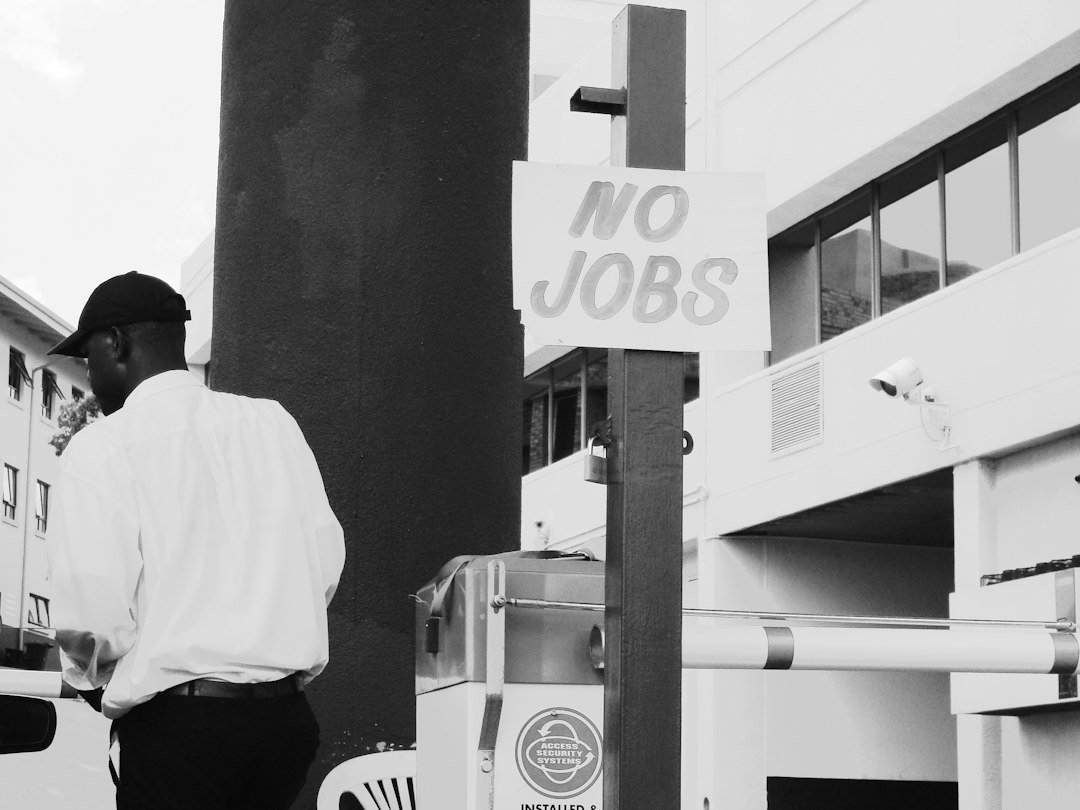
Photo by Hennie Stander on Unsplash
A.I. can [and is] hoover[ing] up entry-level work that once trained newcomers to the fashion industry. A basic income for creatives could be the fairest way to keep fashion open to people without existing wealth.
Try and picture the most junior person in a fashion studio, whose labour - as an archetype - has for decades been the unglamorous grunt work of pulling references and building moodboards, writing snippets of product copy and final touch-ups of shots. These are tasks which pay little and are not meant to last, but teach a person the trade as no course could. We have by now reached the phase of A.I. development and accessibility during which all of the above can be checked off, free or nearly-free of charge and in a matter of seconds, by software which will never need amorphous “onboarding”.
Alan Milburn’s independent report for the DWP on youth unemployment, ‘From a Welfare State to a Working State: a new settlement for the next generation’, was published this time last week. In it, he counts nearly one million young people (~one in eight) as outside education, employment and training, and finds that six in ten of those have never had a job. These are the now infamous “NEETs.” Sympathetic to their lack of cause, Milburn contends that the first rung of the career ladder has been ‘eroded’ and that nobody has cared to replace it. The rung he means is entry level, the rung of unpaid work and cutting one’s teeth.
How, then, now best to respond? As laid out in brief below, an appropriate solution– writing here at least on creative work–might be a form of basic income that lets people cling on to the ladder while it is repaired.
Milburn attributes the erosion to several older failures, chiefly a labour market that has ‘moved against’ the young and in which youth employment has fallen even as overall employment has risen. He perhaps hyperopically names AI as a further danger already visible on the horizon, remarking that automation is reshaping work faster than at any time in history, and he rightly criticises the recruitment habit of demanding experience for jobs that are meant to supply it, which reserves a first job for those who have already held one. Across industries, that habit has long been augmented by the unpaid internship, and A.I. now arrives at a rung that was already well-trodden and worn, where it will do the work of job removal with rather more efficiency than any recruiter has ever known or shown.
- Aside on class -
The Creative Industries Policy and Evidence Centre reports that the share of the creative workforce from working-class backgrounds has fallen from 25% to 21% since 2021, behind every other industrial strategy sector, and that working-class creatives face lower pay and less job security. About a third of the sector is self-employed, double the proportion across the wider workforce, an arrangement that suits employers well enough but suits those without a financial cushion rather less. Once the junior tasks have gone, those whose family savings can fund another year of attrition will battle on, and everybody else will take whatever job that pays the rent. A trust fund is, among its other virtues, an excellent way of financing an unpaid internship. This is hardly a sound basis on which to recruit a national creative workforce.
Milburn’s remedy to this malady is made in earnest and is commendable. Under his directions, every 18 to 24-year-old outside education, work and training would gain statutory entitlement to a route back in from the cold, backed by around £1.1bn a year of hiring incentives for employers that are hoped/expected to create 170,000 additional jobs and apprenticeships. The gross cost of this is £5.8bn a year by 2036-37, which he calculates as offset by £3.6bn of welfare savings and £2.4bn of extra tax revenue, alongside reduced benefit payments. The options on offer even include help with starting a business, which is as near as the plan comes to addressing the freelance working life on which fashion often runs.
Some of the limits of Milburn’s thinking run as follows. It is aimed at the under-25s and depends on employers creating a first job with a subsidy’s help, but a subsidy needs a job to attach to, which is precisely what software is now absorbing. The 28-year-olds, the freelance stylists whose commissions are drying up and income has dwindled, fall outside it altogether.
- Ireland’s answer -
So, an alternative. Ireland has already trialled a different course of action. In 2022 it began paying 2,000 randomly selected artists €325 a week, with a control group set alongside so that the effect could be measured. The Irish government’s cost-benefit analysis found €1.39 of benefit for every €1 of public money spent, at a net cost of just under €72m against a budget of €105m once tax receipts and welfare savings had been counted. Most cheeringly, recipients’ arts income rose by in excess of €500 a month while their earnings from other work fell by about €280, which is to say that they spent less time on the second job, and more on the one they trained for. The scheme became permanent from 2026, with places still allocated by lottery.
An honest account must make clear that this scheme covers a single sector, and that recipients say they cannot live on the payment alone. But it is also worth noting, without presuming to call it in any way causal, that Milburn lists Ireland among the countries performing substantially better than Britain on youth participation. It is a coincidence deserving of a footnote.
Why should Britain not run its own pilot of a few thousand places, allocated by lottery and designed from the outset so that applicants unable to show years of unpaid work are not screened out? (Elsewise the scheme could merely reproduce the filter it aims to remove. ) The recent-ish dispute over intellectual property strengthens the case. The government’s March report on copyright accepts that A.I. models could not learn without human creativity and that their outputs may compete with the very creators they learn from, and yet it simultaneously declines to reform copyright law until it is confident of the result and proposes, for now, not to intervene in the licensing market. That caution is defensible for some but while the argument continues, rent remains due, and a basic income would let the people whose work trained the machines stay afloat until it is settled.
A ladder, to borrow Milburn’s metaphor one final time, is of little use to anyone who cannot afford to stand at the foot of it, and if Britain wants its studios populated by more people than only those with money behind them, it is clear it will have to foot the bill to make the climb possible.
“A ladder, to borrow Milburn’s metaphor one final time, is of little use to anyone who cannot afford to stand at the foot of it, and if Britain wants its studios populated by more people than only those with money behind them, it is clear it will have to foot the bill to make the climb possible.”