
What does Manchesterism mean for Westminster?
Yesterday’s breaking news from No 10, that Prime Minister Keir Starmer would be stepping down, has opened the door for Andy Burnham MP to run as the next Prime Minister of the UK.
But, what might policies under Burnham actually look like?
In all likelihood Burnham’s premiership will lead to a significant strengthening and expansion of devolved government across the UK. After spending a decade as the Mayor of Greater Manchester, his policies are based on ‘Manchesterism’. This means transferring power, funding and decision-making away from Westminster into the hands of local and regional leaders.
At scale this might look like:
Public control over housing, energy, water, transport.
Re-investment in public assets and reinvigorating the high street.
Regional investment hubs.
National living wage floor (modelling this on Greater Manchester’s ‘Good Employment Charter’).
Radical tax reforms.
Where the resistance lies:
Devolving financial power will face institutional resistance.
Borrowing for public investment will be faced by market skepticism.
10 years on, Brexit remains a drag on the economy continuing to reduce the UK’s GDP potential, meaning Burnham is inheriting a tight budget.
With the Labour leadership race heating up and Burnham’s potential candidacy still the subject of speculation, the Fashion Roundtable team isn’t waiting to find out. We’ve compiled a wishlist of priorities that we want the next Prime Minister to champion for the UK fashion and textile industry.
Policy Impact Outside the Westminster Bubble.

“I have met both Andy Burnham and Keir Starmer and it’s clear both have a strong sense of duty, driven by hard work. If, as I have suspected for many weeks now, that Andy Burnham will be our next Prime Minister, I hope that his work on devolution is a benchmark of UK wide policy.
“Why? Because it’s clear that the 4 nations of the UK need more agency in the decisions impacting the lives of all of us across the UK and outside the Westminster bubble, if we are to see positive impactful change across the country.
“We also need to be honest 10 years on from Brexit of its dire impact on the economy and look to policies, both short and long term, which increase trade and revenue. I would start with reinstating tax free shopping, and continue to open opportunities for young people and creatives to work across the EU and vice versa, to remove barriers, to graduates already facing both high student loans, the growth of AI, and for creatives the positive reality of travel for work on both a cultural exchange and economic level. Anything which derails greater unity with the EU is at risk of impacting entrepreneurship – which is stagnant and creative career growth.” Tamara Cincik, Fashion Roundtable Founder and CEO.
Natural Fibres and Extended Producer Responsibility.
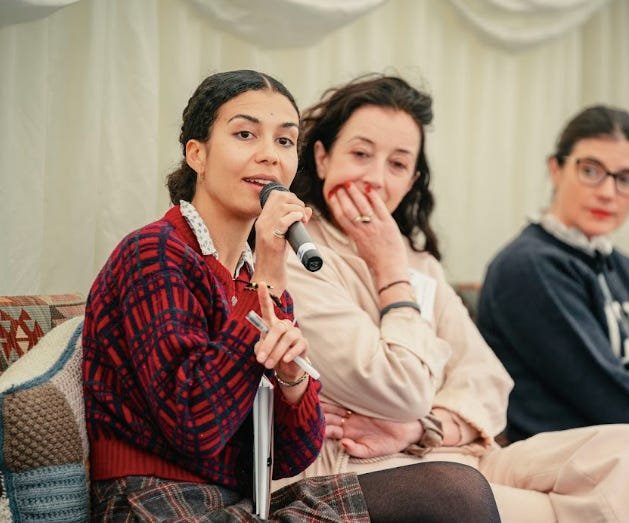
“With a new leadership, I would like to see more support for British wool and homegrown fibres. There is an increasing focus on circularity from DEFRA under the EU’s EPR scheme, which is focused on recycling as the primary environmental metric. My concern is that this will encourage synthetic fibres over natural fibres which follow a cradle-to-cradle life cycle assessment and biodegrade at the end of use. It is important that the government acknowledges biodegradability as an important metric as we address the impacts of climate change.” Harriet Fletcher-Gilhuys, Textiles Researcher at Fashion Roundtable.
Policies to Drive Local Regeneration and Sustainable Industry Growth.

“My hope is that the new Prime Minister will recognise that the fashion and textiles sector is not just cultural assets, but also vital drivers of manufacturing and employment within the UK.
“As onshoring becomes more attractive to British brands, the Government should look at public procurement systematically to stabilise domestic demand. This anchors infrastructure while keeping skills, social mobility, and innovation within local communities. Something that we have been championing as part of our work with the Fashion APPG (formerly Ethics and Sustainability in Fashion) for some time.
“Promoting a circular economy and the shift away from linear models is also a necessary step, but this must be met at a regenerative level – from soil health and better support for farmers, through to integrating reuse, repair, and recycling into regional infrastructure. Here, the Government must move quickly to align UK textile regulation with that of the EU, or risk falling behind both environmentally and economically.
“Rather than relying on punitive measures, the Government should seize the opportunity to reward brands with proven positive social and environmental contributions, particularly those that commit to manufacturing in the UK. Not only will this encourage positive action, but it will also place the UK at the forefront of sustainable fashion innovation.” Meg Pirie, Head of Sustainability and Regeneration Policy at Fashion Roundtable.