
One week in and over 100 signatories!
Sign our open letter calling for uniforms to be at the heart of Number 10 North
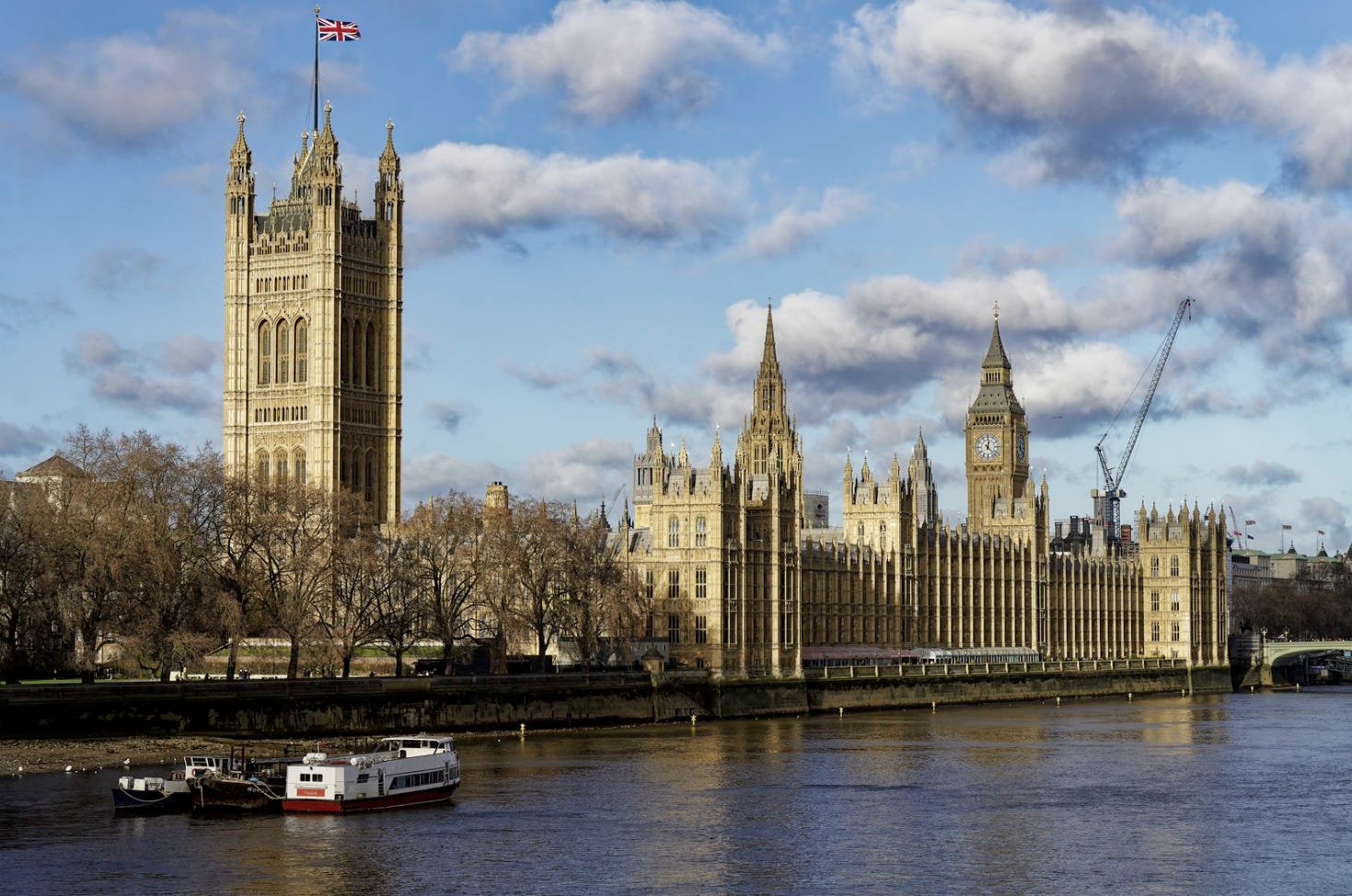
Houses of Parliament, January 16, 2023 by Eric Mak. Image Credit: Flickr
We are pleased to announce that we’ve secured more than 100 signatories in the first week of our open letter being published. We’ve had signatures from manufacturers, the fashion industry, the NHS and leading TV personalities including Ben Fogle, BAFTA nominated Presenter, Author, and Co-owner of Buffalo Systems, and Patrick Grant, Founder of Community Clothing, and the famous BBC series The Sewing Bee. We’ve also got a signature from Kate Fletcher, leading Research Professor, Author, Consultant and Design Activist, and Kate Hills, Founder of Make it British.
At this rate, our letter will be knocking on the door of Number 10 (North or South) in a matter of weeks. By adding your signature, you are lending your voice to a collective call for action, and demonstrating to the Prime Minister, and key policy makers that it’s time for change.
As part of this campaign we are doing an interview series, here is the first with Kate Hills, Public Procurement is the lever we aren’t pulling, but why?
If you want to share your experience in the manufacturing, and public procurement space, please reach out to us here.
BACK OUR SECTOR. ONSHORE OUR UNIFORMS.
Read the letter below:
Dear Prime Minister,
We are writing at the forefront of the UK fashion and textile industry, an industry that contributes £62bn to UK GDP and 1.3million jobs. However the full economic value and potential of the UK fashion and textiles industry in relation to public procurement has not been fully realised and this is a missed opportunity.
With a change in leadership we feel this offers promising opportunities, and aligns with our work and core values at Fashion Roundtable.
The Prime Minister’s words outside Downing Street reinforced issues that Fashion Roundtable have been working on for the last decade: decentralisation, reindustrialisation and public procurement, and rebalancing power away from Whitehall and towards the regions. These key policies tie in with Fashion Roundtable’s ethos of Policy. People. Place.
We particularly welcome the Prime Minister’s comments:
“We will take power out of here and carry it into every postcode in the land so that they can do more. And in doing more, build a new economy where we put life’s essentials back under stronger public control to make them affordable to you again. Re-industrialising Britain, using public procurement to back British industry.”
Public Procurement was recently raised by the now Secretary of State for Northern Ireland, Chris Bryant, during the February 2026 Westminster Hall debate on onshoring fashion and textiles, stating “it would be good if more of our British servicemen and women were dressed in British uniforms”.
Further, Patrick Grant’s evidence at the 2023 Localism Ethics and Sustainability in Fashion All-Party Parliamentary Group meeting organised by Fashion Roundtable highlights this very point, stating that Britain once employed 2.5 million people in textiles, and that reviving domestic demand could allow UK factories to re-employ laid-off skilled workers.
In fact, British manufacturing was once the backbone of our economy: we grew our own natural fibres, we made our own clothing and provided uniforms for defence, the NHS and frontline services. While the 2025 Defence Industrial Strategy pledges to back British business and transform procurement to support SMEs, its focus is weapons and AI systems, not the uniforms and protective equipment worn by frontline personnel. With defence spending set to rise from 2.7% of GDP in 2027 to 5% by 2035, this is a significant missed opportunity.
In this letter, we present two policy opportunities that recognise public procurement as a key policy lever for change which we would like the Prime Minister to consider. These are 1. the introduction of onshoring requirements in public contracts for textile goods, beginning with defence and NHS uniforms; 2. The establishment of a dedicated manufacturing and textiles task force to unify fragmented policy across DCMS, DBT, Defra, MOD, DHSC and the Cabinet Office.
We present the following evidence to support this below.
Covid Personal Protective Equipment: The Case Study for Policy Fragmentation.
For Fashion Roundtable, the pandemic remains the ultimate case study of the cost of policy fragmentation. The Covid Personal Protective Equipment (PPE) procurement scandal has left a long-term legacy. The July 2026 Covid Inquiry Report shows that £10bn of public money was wasted on substandard or over-ordered PPE from overseas. This highlights key systemic failures: a system which bypassed British manufacturers, did not take into account data from proven textile experts, and exposed the danger of total offshoring when goods were unusable.
During the pandemic our CEO Tamara Cincik, worked with the Emergency Designer Network as a key policy advisor, sitting in various meetings with Government, and sounded the alarm on the Government’s catastrophic failure to utilise domestic manufacturing for PPE. Despite a full mapping of the manufacturing supply chain of UK textile manufacturers to make the PPE locally, it was rejected by the government in favour of offshore manufacturers.
Public Procurement is the Lever We Are Not Pulling in the UK.
We have an extensive body of work in relation to public procurement.
This is evident in Fashion Roundtable’s Sector Vision Manifesto (2024) where we outlined clear recommendations including targeted support for UK manufacturing and on-shoring, a commitment to the British made, strengthening of public procurement, and an investment in UK manufacturing through consistent and secure orders.
This is also apparent through our recent briefing British Wool and the Farming Roadmap for 2050: Key Recommendations to Defra Ministers on the Farming Roadmap which came to the same conclusion: procurement of British wool and homegrown fibres for Government-funded projects and uniforms is a ready-made opportunity to deliver on the Roadmap’s own commitments.
Earlier this year, Fashion Roundtable published Policy Fragmentation and Place-Based Opportunity in UK Fashion and Textiles, in partnership with University of Birmingham’s Local Policy Innovation Partnership (LPIP) Hub, which evaluated the potential of the sector to create social mobility opportunities and drive sustainable economic growth.
The key finding of the research was that the biggest lever we have to support skills retention, inclusive growth and regional resilience is awarding public procurement contracts for textile goods to suppliers who manufacture onshore in the UK. The report also found that relatively modest reforms, including longer-term contracts, clearer forecasting, accessible contract sizes and improved payment terms, could significantly strengthen local value chains while delivering social value and value for money. The stability that public procurement contracts would provide would have far reaching impacts on factories, staff, and the communities they are a part of.
Our evidence also showed that the issue with keeping our factories open isn’t a lack of skills or capabilities but that fashion and textiles fall into a policy gap between creative industries and manufacturing, which has allowed the sector to fall behind our peers from other creative industries. This leaves the industry exposed to short-term policy interventions and weak coordination across national, devolved, and local levels.
Governments elsewhere are increasingly using procurement contracts to mandate circular production practices and bolster domestic manufacturing. France’s textile industry is a shining example. A study published by the Union des Industries Textiles found that products labelled “Made in France” capture up to 84% of the value created, compared to approximately 35% for imported goods. This starkly illustrates the economic benefit of domestic production and the massive opportunity for the UK economy.
We call on the Government to deliver cohesive, place-based industrial policies specifically through:
The introduction of onshoring requirements in public contracts for textile goods, beginning with defence and NHS uniforms;
The establishment of a dedicated manufacturing and textiles task force to unify fragmented policy across DCMS, DBT, Defra, MOD, DHSC and the Cabinet Office.
We request a meeting with the Prime Minister to discuss these opportunities before the ‘Number 10 North’ initiative details are finalised.
Yours Sincerely,
Tamara Cincik, CEO, Fashion Roundtable
Fashion Roundtable is fashion’s leading think-tank and change agency.
Follow the link here for our full list of signatories.