
Policy Briefing: What The UK-India Trade Deal Means For Fashion and Textiles
Cheaper imports, a squeezed UK sector, and an opening for luxury by Meg Pirie
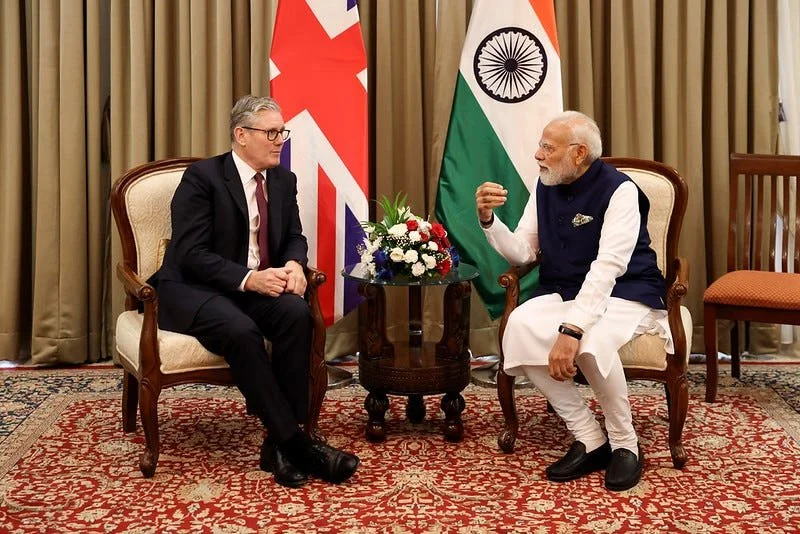
Prime Minister Keir Starmer meets Indian Prime Minister Narendra Modi for a bilateral meeting at Raj Bhavan. © Simon Dawson / No 10 Downing Street, Open Government Licence v3.0.
This week, nearly a year after signature, the UK–India Comprehensive Economic and Trade Agreement (CETA) enters into force. This is being cited as the UK’s most economically significant bilateral trade deal since Brexit and the most comprehensive agreement India has concluded with a G7 economy to date. Looking at the Government estimated projections, you can see why.
By 2040, the Government estimates a projected boost to bilateral trade of £25.5 billion a year, adding £5.1 billion annually to India’s GDP and £4.8 billion to the UK’s. The deal also stipulates a first for India through a standalone financial services chapter, securing market access worth £13.6 billion. Alongside the CETA sits the Double Contributions Convention, which exempts temporarily posted workers and their employers from host-country social security contributions for up to three years.
However, the deal hasn’t been without parliamentary scrutiny and the fashion and textiles sector stands to be affected. So for this week’s policy briefing we break down what the CETA could look like in practice.