
Op-ed: Jason Arday and the Price of Racialised Scrutiny
by Sharon D. Lloyd, Associate Professor and Deputy Director, Centre for Equity & Inclusion, London Metropolitan University; Chair and Co-Founder, FACE
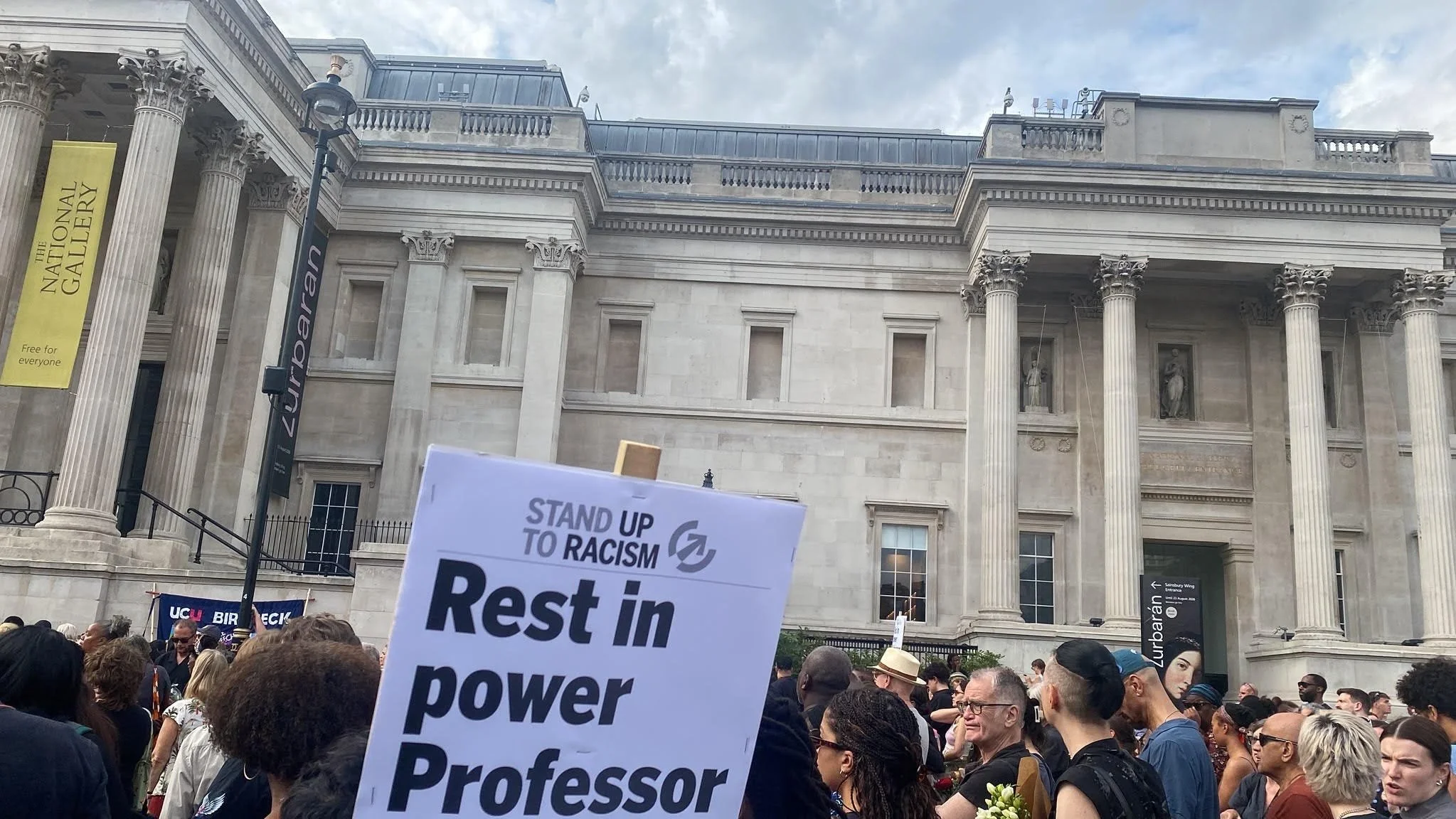
Credit: Sharon D. Lloyd
It is difficult to know what to say about the past few weeks. Many of us watched what happened to Professor Jason Arday with growing disbelief, anger and sadness. Since the news of his death, those feelings have become harder to put into words. Our thoughts are first and foremost with Jason’s family, friends and those closest to him, who deserve the space and dignity to grieve.
There is a danger that, in responding to the events of recent weeks, we allow them to become the story of Jason Arday. They were not. Jason was an academic, educator, author and public intellectual whose work reached far beyond his own institution. His journey through education, his scholarship and his commitment to widening access challenged assumptions about who belongs within the academy and who gets to succeed within it. The controversy that came to surround him should not be allowed to consume the life and work that preceded it.
Jason worked in higher education and what happened to him should concern those of us working across fashion, the arts and the creative industries. The dynamics we witnessed — racialised scrutiny, questions about who is afforded credibility, whose mistakes or perceived mistakes become defining, and who is permitted complexity — do not stop at the doors of a university. They are questions about race, power and belonging that our own sectors have been grappling with for decades.
We cannot and should not speculate about the circumstances of Jason’s death. But we can talk about what we witnessed before it, and we should. We watched a Black academic become the subject of extraordinary public scrutiny. Commentary gathered pace, a narrative took hold and a person increasingly disappeared behind the story being told about him. Allegations were repeated and amplified, fragments of information fed an increasingly fixed public narrative, and people who had never met Jason were forming conclusions about his character, his career and his worth.
At some point, scrutiny became spectacle. There seemed to be no proportionate endpoint, no point at which enough had been said, enough judgement passed or enough damage done.
What we witnessed was a witch hunt. We use that term deliberately. It describes the relentlessness with which Jason was pursued, the speed with which allegation became judgement and the diminishing space afforded to complexity, context or even basic humanity. Public scrutiny did not simply report on a story; it helped create and sustain a narrative in which Jason increasingly appeared to have no place from which he could respond without that response itself becoming further material for judgement.
“Public scrutiny did not simply report on a story; it helped create and sustain a narrative in which Jason increasingly appeared to have no place from which he could respond without that response itself becoming further material for judgement.”
Nor are we prepared to pretend that race was incidental to what happened. We know too much about the racialised scrutiny of Black people, and Black men in particular, to accept a supposedly race-neutral reading of these events. Black people are not afforded the same presumption of innocence, the same benefit of the doubt or the same permission to be complex, flawed or simply human.
Race shaped the conditions.
The question is not whether race mattered, but how it mattered. Race shaped the conditions in which Jason was judged: the assumptions through which his actions were interpreted, the credibility afforded to different accounts and the appetite for his public condemnation. A white academic would not have been subjected to the same racialised scrutiny. They would have entered that scrutiny without the weight of the stereotypes, assumptions and histories that attach themselves to Black men. That difference affects how behaviour is read, how doubt is distributed, how readily a person is believed and how quickly an allegation can become a judgement about character.
To pretend otherwise is not neutrality. It is to ignore what we already know about racism.
Jason’s treatment did not occur in isolation. Only months earlier, photographer, filmmaker and cultural leader Misan Harriman became the subject of an extraordinary concentration of hostile press attention. The Times and Telegraph reportedly published 14 pieces concerning Harriman within three weeks, amid calls for him to be removed as Chair of the Southbank Centre. Harriman subsequently complained to the press regulator IPSO about coverage in four newspapers, raising concerns including inaccuracy, harassment and discrimination.
The circumstances surrounding Harriman and Jason are different and should not be collapsed into one another. What concerns us is the pattern: the intensity of scrutiny directed towards highly visible Black people and the speed with which scrutiny can become a judgement of character. For those of us working in fashion and the creative industries, Harriman provides a particularly close point of recognition. Different sectors and different circumstances, but both cases require us to confront what can happen when Black people become highly visible, successful and publicly contested.
How this applies across the creative sector.
Fashion understands the power of images and narratives perhaps better than most industries. We know that representation is not neutral. We know that the stories told about people shape how they are perceived, and that repetition can turn an interpretation into something that begins to feel like fact. Those principles do not cease to apply when the subject is a Black person at the centre of controversy.
For Black people working across fashion, higher education, the arts and the creative industries, Jason’s treatment has been particularly difficult to watch because what we saw was painfully familiar. We know what it is to be looked at through a different lens; to have motives assumed; to have mistakes, perceived mistakes or allegations take on a significance they might not carry for others; and to know that the benefit of the doubt is not distributed equally. Once a narrative hardens, context becomes excuse, explanation becomes further evidence, silence becomes admission and speaking becomes defensiveness. There is no safe place left to stand.
Black professionals do not have the option of stepping outside race when they enter the workplace. Race can shape how we are perceived, how our behaviour is interpreted, whose authority is recognised, who is afforded the benefit of the doubt and what happens when we challenge the systems around us. Our individual experiences are not identical, but the racialised context is shared.
Over the past few weeks, many conversations between Black colleagues have happened privately: in WhatsApp groups, between friends and colleagues, in offices and in phone calls after work. There has been anger, but also exhaustion: the exhaustion of watching another Black person placed under relentless scrutiny, of recognising patterns we have seen before, and of wondering how much a human being is expected to withstand.
Let’s talk about weathering.
This is where we need to talk about weathering. Racism is not only experienced through incidents that can be easily named or recorded. Its effects are cumulative, carried through repeated experiences of being questioned, doubted, watched, underestimated or judged differently. A single experience might be dismissed as insignificant, but accumulation matters. These experiences build over careers and lifetimes, and they have consequences.
For FACE, (Fashion and Arts Creating Equity) this is not an abstract argument. Over the past six years, members of our community have trusted us with accounts of racism within education, fashion and the creative industries that have been heartbreaking to hear and, at times, profoundly angering. We have sat with people who have spent months, sometimes years, navigating internal complaints, HR processes and grievances; people whose careers and wellbeing have been profoundly affected by trying to have racism recognised; and people who have ultimately taken their cases to employment tribunals.
We will not tell their stories here; they are theirs to tell. Collectively, however, those experiences have shown us the distance that can exist between an organisation’s public commitment to racial equity and what it feels like to seek protection or redress within it. The person who has already experienced harm can find themselves carrying the burden of documenting it, proving it, explaining it, navigating the organisational response and somehow continuing to work through it.
Watching what happened to Jason touched something already known. It reminded us how quickly the person at the centre can become the problem, how difficult it can be to disrupt an established narrative, and how much an individual may be expected to carry while the organisations and systems around them continue to function.
This matters now.
This matters particularly now. Fashion, higher education, the arts and the wider creative industries are confronting significant economic and organisational pressures. At the same time, we are witnessing a wider retreat from equality, diversity and inclusion (EDI). Its value is increasingly questioned, its language contested and, in some organisations, the teams, programmes and infrastructure supporting it are being reduced or dismantled.
We should be clear about the consequences. When that infrastructure disappears, inequity does not disappear with it. The work moves elsewhere and too often it moves back onto those most affected. Black colleagues and others experiencing inequity are asked to identify problems, explain their significance, educate others and help organisations develop solutions to problems they did not create. Much of that labour is informal and invisible.
The irony is that the organisation is ultimately the beneficiary. Organisations capable of recognising inequity are better able to understand where their cultures and practices are failing, make better decisions and create environments in which challenge is possible without those doing the challenging paying a personal price. Equity is therefore not something organisations do for Black people or other marginalised groups. It is part of responsible leadership and accountability to everyone within an organisation.
That responsibility cannot be delegated to an EDI team, staff network, diversity lead or handful of committed individuals. They can provide expertise, evidence, challenge and support, but accountability sits with those who run organisations: boards, executives, creative leaders, editors, educators and others with the power to shape cultures and make decisions.
This brings us directly back to Jason. When someone becomes the focus of intense and racialised public scrutiny, who recognises what is happening? Who considers duty of care alongside reputation and process? Who challenges a narrative when assumptions begin to harden into accepted truths? Who has both the authority and the courage to intervene?
If commitments to racial equity mean anything, they must shape how organisations behave precisely at the moments when fairness, judgement and humanity are under the greatest pressure.
Media has an immense responsibility.
The media and social media have particular responsibilities too. Fashion and the creative industries operate within an extraordinarily powerful media ecosystem. We understand how quickly an image, headline or narrative can travel and how repetition shapes public perception. We have also become accustomed to watching people being publicly pulled apart in real time. A story gathers momentum, commentary multiplies and assumptions become certainty. Somewhere in the middle is a human being. We need to recognise when scrutiny becomes spectacle, when commentary becomes a pile-on and when the pursuit of a story loses sight of the person at its centre.
For FACE, this moment also requires us to look at the reason we exist. FACE was created in the aftermath of George Floyd’s murder in 2020, when organisations across fashion, higher education and the creative industries were making bold commitments to racial justice. There was urgency. People who had been talking about racism for years were suddenly being listened to, organisations promised change and, for a time, there was a sense that something fundamental might shift.
Six years later, we find ourselves asking painfully familiar questions about the treatment and humanity afforded to Black people. We are not drawing a comparison between two very different deaths. We are asking what happened to the promises that followed 2020. Which changes became embedded in the cultures and practices of our organisations? Which remained dependent upon particular individuals to keep pushing them forward? Which quietly disappeared when the hashtags faded and the urgency of that moment passed?
Racial justice cannot depend upon organisational attention spans. Nor should it depend upon those most affected by inequity continuing to do the heavy lifting required to make organisations fairer. If financial or political pressure leads organisations to weaken the structures that enable them to understand and challenge inequity while still relying upon Black and minoritised colleagues to undertake that work informally, the cost has not disappeared. It has simply been transferred from the organisation to the individual.
FACE.
FACE was created because we believed racial inequity across fashion, the arts and higher education was structural rather than incidental. Six years later, we still believe that. But this moment also requires us to acknowledge our own responsibility. We cannot only talk about racial equity when we are celebrating progress or when doing so is comfortable. We have to be prepared to speak when something is difficult, messy and contested. There is something deeply troubling if we can recognise racialised patterns privately but become hesitant about naming them publicly.
We have been here too many times before. We have had statements, commitments and promises to do better. The responsibility now has to sit with those who have the power to change the systems in which these patterns continue. That means leadership across our sectors. It means examining how Black people experience our workplaces, whose voices are believed, how people are treated when they become the focus of intense public scrutiny, how organisations respond to racialised hostility, and what duty of care actually means when a human being is under enormous pressure. It means having the courage to intervene before damage is done rather than reflecting on what went wrong afterwards.
Jason’s family deserves the dignity of not having strangers speculate about the circumstances of his death. Refusing to speculate does not require us to be silent about what we witnessed before it, nor about the wider conditions that made so much of it recognisable to Black people across our sectors.
Six years after FACE was created, we are still asking some of the same questions. This should concern all of us, because the responsibility for building equitable organisations does not belong to those who experience inequity. It belongs to the organisations themselves, and ultimately they have the most to gain from getting it right.
“The question is not whether race mattered, but how it mattered. Race shaped the conditions in which Jason was judged: the assumptions through which his actions were interpreted, the credibility afforded to different accounts and the appetite for his public condemnation. A white academic would not have been subjected to the same racialised scrutiny.”
You can find out more about FACE and the work they do below.
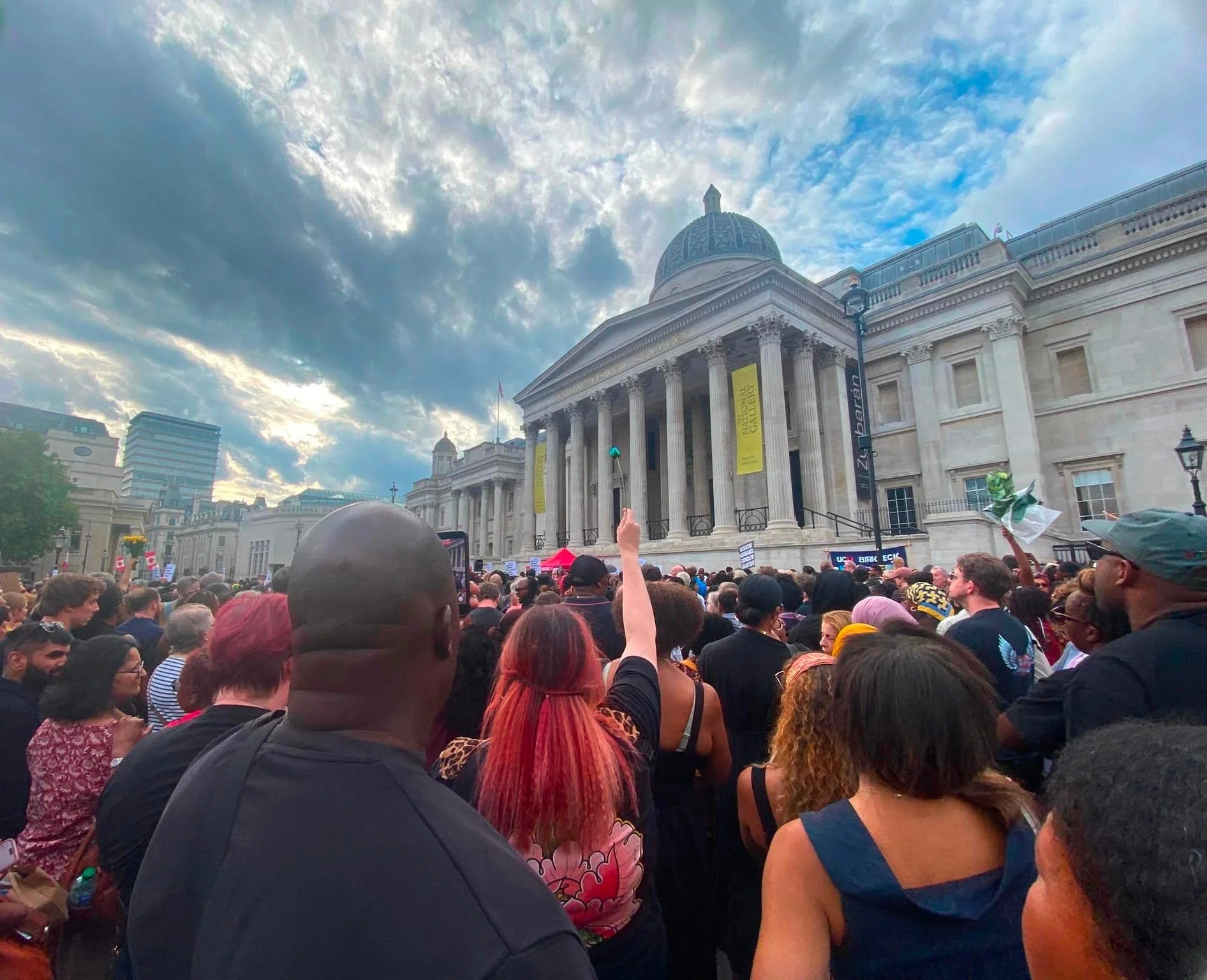
Credit: Sharon D. Lloyd