AI Hates Women - How Boring
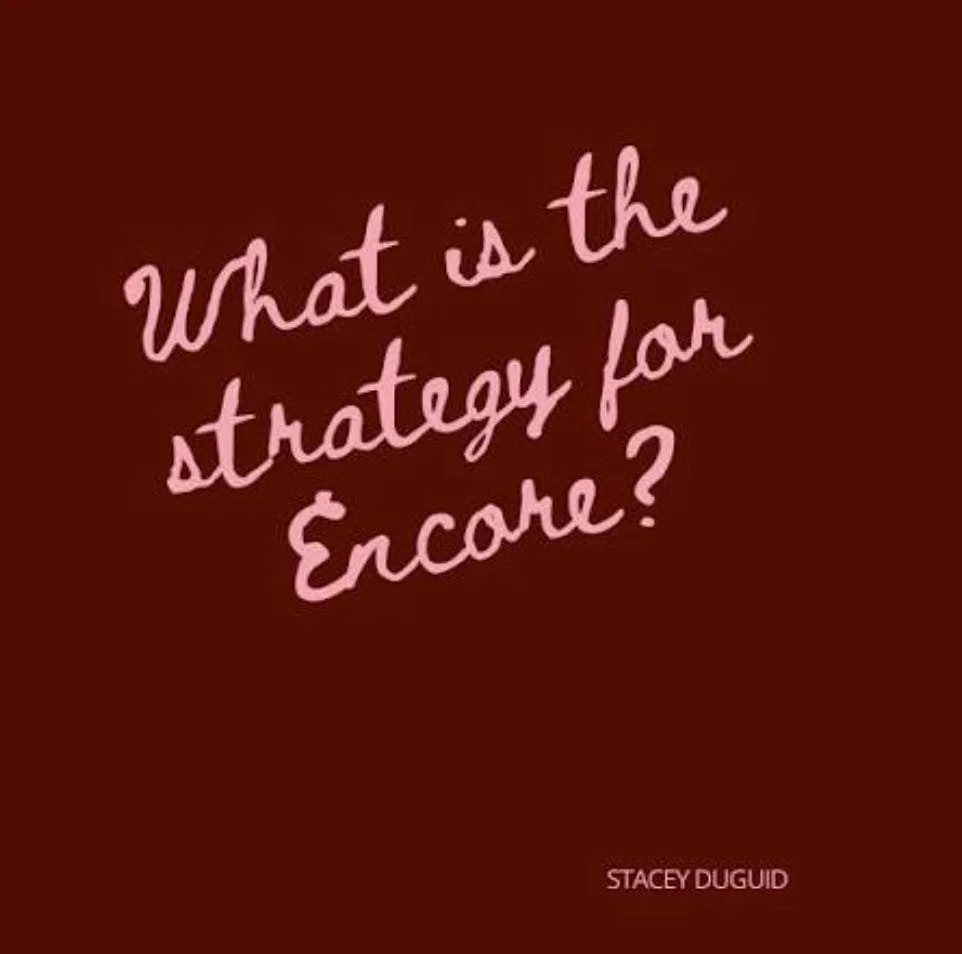
Stacey Duguid’s Encore Campaign has lifted the lid on AI bias against midlife women
I am writing this in the shade, outside at the gym, as the heatwave combined with extensive building works, a loud bassline of builder banter and full blast radio from 8am happening stage left next door, mean my usual WFH habit is literally unworkable. Around me is potential bedlam being made bearable by hard working women. Aqua-aerobics led by a woman in her sixties is happening in the outdoor pool, women are juggling summer holiday childcare, while men are taking long “business” calls with a cocktail side. The women who work at this gym are making this all flow without missing a beat. One woman, I am guessing in her late fifties, is serving cocktails and ice cream from an upgraded shed, another is silently sweeping the floor, while yet another is under an umbrella as life guard. The leadership of this gym is primarily men. So far so standard.
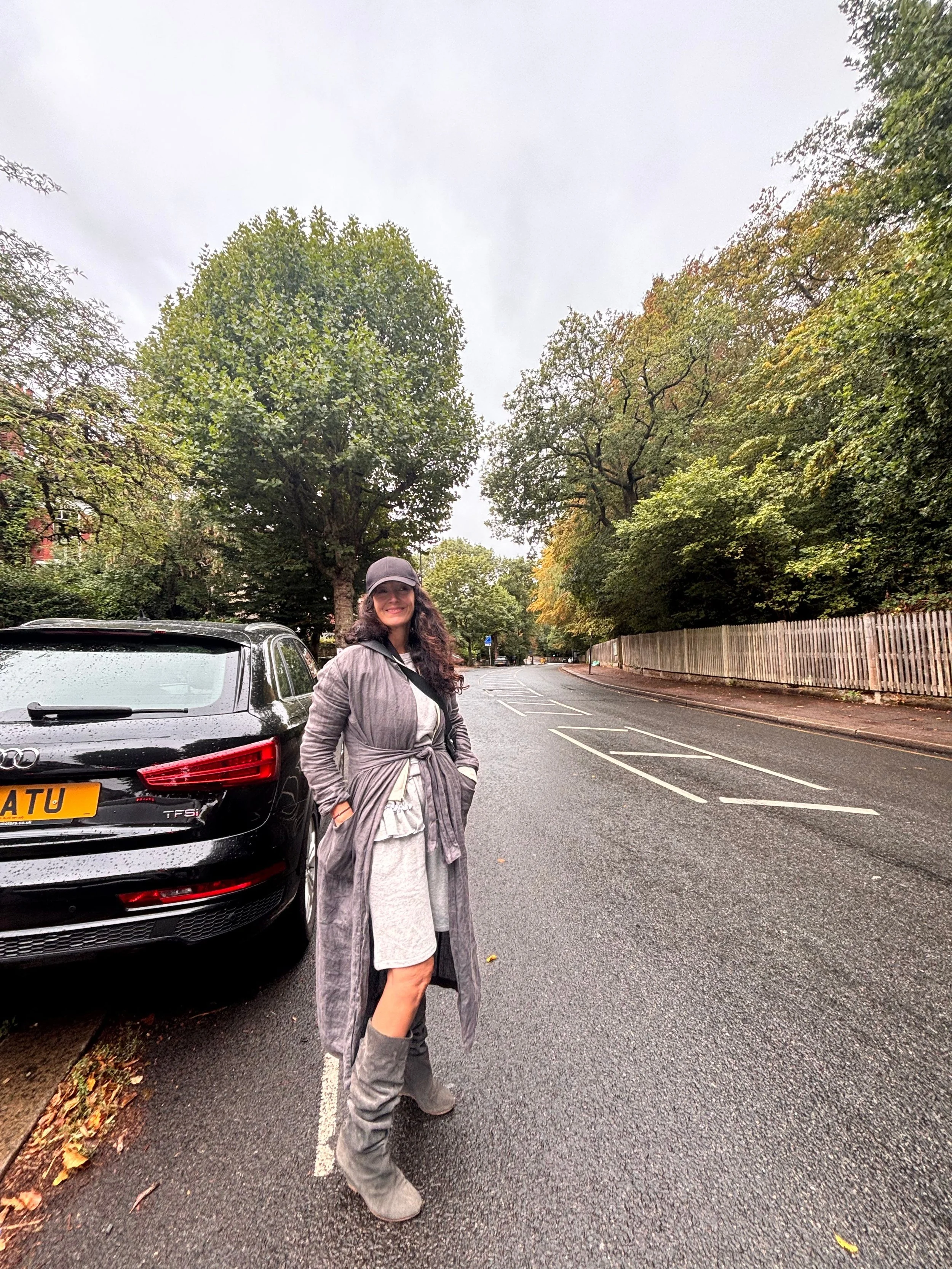
Tamara Cincik aka a midlife woman in what I now realise is my prime, Credit Jeremy Fusco
I was raised by a woman who at 19 was a mother, running a hairdressing salon, doing the accounts, my primary carer and cleaning our flat: the flat upstairs was a council owned flat on a precinct that came with the salon. My father, being Turkish, and more macho than metrosexual, had a somewhat light touch to domestic chores. Mum said of feminism, it was good, but it had given her two jobs: one in the workforce, the other at home. My “Aunty Raye” a few doors down who was a few years older, had 3 daughters I looked on as sisters. Aunty Raye was extremely creative and had trained to be an art teacher, but she had to give this up when she got pregnant. Women were not allowed to get a mortgage until 1975 and the passing of the Sex Discrimination Act. The likelihood of a woman of 19 being able to own a business and have a council flat is almost nil in today’s economy, as social housing was sold off in the 1980s, the great mistake was not to use that money to reinvest in building new housing. As day turns to night, it seems the perfect storm of Thatcherism with the great council house sell off has led us to the dearth of properties for millennials and Gen Z buyers; spiking prices, creating a housing vacuum which I know the Andy Burnham government is keen to address.
I am not writing this article about council housing however, an issue I have written about before. Nor am I here to write about working class aspiration, a subject I feel strongly about and have also written extensively about before. Today’s op-ed is about something which is happening in real time, to women up and down the nation. It is the eradication of women of a certain age from the workforce. The exhaustion of reinvention and the patriarchal overtone of AI and its lensing of experience in the workplace by women, as a reason to reject their job applications en masse, is what I am here to write about today.
A few weeks ago Stacey Duguid shared her story on Instagram. A woman who has successfully navigated a career in high-end fashion as a writer and fashion editor, already a rarity in that exalted universe as, like myself, Stacey is from working class roots, meaning she has had the balls to enter a world more debutante than dole line and work harder than any deb might do, just to be there. This is a very Gen X story and one I recognise personally, as in my last year at university, the first in my family to go, I decided I wanted to be a fashion editor and barely knowing anyone, worked my way in. And up. Now Stacey has, in recent months, applied for hundreds of jobs and barely even received a rejection letter. Stacey has spoken about “Botoxing” her CV: stripping out the dates, the decades of experience, anything that might tell an algorithm she is a woman in her forties or fifties, who has been doing this a long time. “AI holds a mirror up to society,” she has said. “It’s a reflection of our bias.”
In the early days of Fashion Roundtable, I agreed to chair a panel at the Labour Conference on bias in the “worldwide web”, with Diane Abbott MP as one of the panelists. I felt it was my duty to read hundreds of pages about online bias, algorithms and how they impact race, gender and discrimination. It struck a deep nerve, as I could see so clearly the pale, male, and stale lens which promoted a certain configuration of beauty, of success, of voices with agency. God, I thought how dull and how cliched. Several years later and all too quickly it seems what started with a sterile social media promoting skinny blonde influencers, itself menacing in its prejudice, has mutated. Who are these men running all this, and how out of touch are they with the key demographic impact of the women whose voices are being silenced? This has become something far worse. It’s the intentional unemployment and indeed catatonic rejection of women in their intellectual and professional prime. The UK’s female unemployment rate has risen from 3.5% in 2023 to 4.6%. Women over 50 are meant to be a success story: there are 4.5 million of us aged 50 to 64 in employment, we are the fastest-growing group in the UK workforce, and the average age of leaving work has crept up from 60 in 1986 to over 64 today. We were told to have kids, juggle the muddle of expensive childcare and careers, and we did. If that didn’t work, we pivoted, we retrained, we bought into the work harder and you will succeed mantra. We even took on the NHS around their dire dearth of a menopause strategy, and won. The first generation to break so many glass ceilings, but this is not a glass ceiling,;this is a bot saying you are too old, you don’t fit our image of success, you are a reject.
Unlike a human HR recruiter, there is no room to appeal to AI. The iTutor Group in the US was found to have configured its hiring software to auto-reject women over 55 and men over 60; a $365,000 settlement followed. A figure which sounds a lot but it is really in c-suite terms? I don’t think so. Should we be shocked that Amazon had to scrap a recruiting tool that had taught itself to downgrade any CV containing the word “women’s,” because it had been trained on a decade of CVs from a male-dominated industry. IBM was found to have built systems that reduced the number of workers over 40 in its pipeline. Google had to intervene when its own hiring algorithm was found to be ranking female applicants lower for technical roles, having learned its preferences from years of male-favouring hiring history.
These examples are all mirrors, not into an Alice in Wonderland world of magical opportunity, but trained on the limited patriarchal paradigm, and now automating that world at a speed and scale no HR department of humans ever could. A researcher at Cambridge, Dr Eleanor Drage, has been blunt about it: the fear that AI is quietly sidelining experienced women from the job market is not paranoia, it is pattern recognition. Stanford researchers, meanwhile, have found the bias goes deeper than the hiring tools themselves: the very image and video libraries used to train today’s AI systematically under-represent older women in visual depictions of high-status, well-paid work. So even before a CV is scanned, the machine has already decided, from millions of images, what a “senior professional” looks like. It rarely looks like the woman making cocktails and cleaning up with a smile, or running the aqua-aerobics class, all of whom I’d wager have run entire households, budgets and teams that would humble half the men on their “business” calls by the pool.
And then there is menopause, the midlife reality all women face, which employers still treat as a footnote, rather than a workforce policy issue, despite roughly 13 million women in the UK being peri- or post-menopausal at any given time. Close to 1/3rd of the entire female population. The Fawcett Society found 77% of women rated at least one symptom as “very difficult,” and one in ten left a job altogether because of it. Four in five said their employer had done nothing: no information shared, no staff trained, no absence policy in place. So women are not only fighting an algorithm trained to prefer youth. They are fighting a workplace culture that has barely built the scaffolding to let them stay. That is despite my generation lifting the lid on the deathly silence about the menopause. As Carolyn Harris, the MP who has done so much to tackle menopause and the workplace, said to me on our Front Row to Front Bench podcast, “I don’t know what I thought was happening, I thought the menopause happened to everyone else.” Now we have a menopause industry worth an estimated $19bn in a menopausal wellbeing gold rush.
Given all the work I have supported on representation and inclusion, we need to ensure that visibility and weight is added to BAME women, women with disabilities, women raising disabled children, and Muslim women, all of whom are not living a milder version of this issue. Muslim women in the UK have an employment rate of around 28%, against roughly 69% for British women overall, and are 71% more likely to be unemployed than Christian women with the same education and language proficiency, evidence that this is not a skills gap, it is a discrimination gap. Muslim women make up 65% of all economically inactive Muslims in this country, and researchers have specifically flagged the wearing of a headscarf as a further, compounding barrier that AI screening tools are neither designed nor audited to catch. Ethnic minority women more broadly face what researchers call an “ethnic penalty” independent of qualifications, with Pakistani and Bangladeshi women facing the steepest of all; and Muslim women have been found to experience a pay gap of 22.4% against Christian men, the widest of any religious group measured. Disabled women, meanwhile, make up 27% of all women in the UK, some 9.3 million of us, and the disability employment gap, already stark at 53.1% versus 81.6% for non-disabled people, widens further with age: around two in three disabled people aged 25 to 34 are in work, compared with fewer than half of those aged 50 to 65. Put simply, being a woman, being older, being disabled and being from a minoritised community, and you are not facing one issue of bias, you are facing multiple, often built from the same discriminatory training data, none of them visible, none of them appealable, all of them presented to you as simply: no reply when you submit your application.
At Fashion Roundtable, I have consistently hired women with disabilities, from marginalised communities, BAME backgrounds, and myself chose to keep my Muslim surname when I got married to a non-Muslim. I see within my team an organisation that is stronger for that. My researchers go on to hold amazing careers, some in politics, some in PR, some in corporate, some in the charity sector. My former content editor (whom I never met in person, nor spoke to on the phone as we worked on reasonable adjustments inline with her disabilities together), is now a celebrated author with a major publishing house. My fashion director is now at a major global publication. It was my gut that hired those women and rarely has my gut failed me. I refuse honestly to back down to an automated system so grey, so limited, and so narrow in its definition of what experience looks like, and who we should hire. I know that we are smashing glass ceilings with the work we do here, and I know it is exhausting. I made the decision several years ago to be my own boss, as when I have been recently headhunted for roles which match my skills and experience, each time I have realised I would be fixing a mess I did not make, made by an outgoing CEO who had steered the organisation into an iceberg I could see all too clearly on the horizon. My pivot, my choice.
So what does this mean for women in the midlife of their career? I feel we need to see an open discussion about human resources, the clue in the word human, how we hire, and what we believe is valuable in a team, or a leader. We need to redefine success away from a very narrow definition, we need to use AI to make life easier, not as another pillar of a system which systematically limits the majority, to show it for the flawed fallacy it is.