
The Thread Connecting Number 10 Downing Street, Procurement & British Heritage
by Meg Pirie
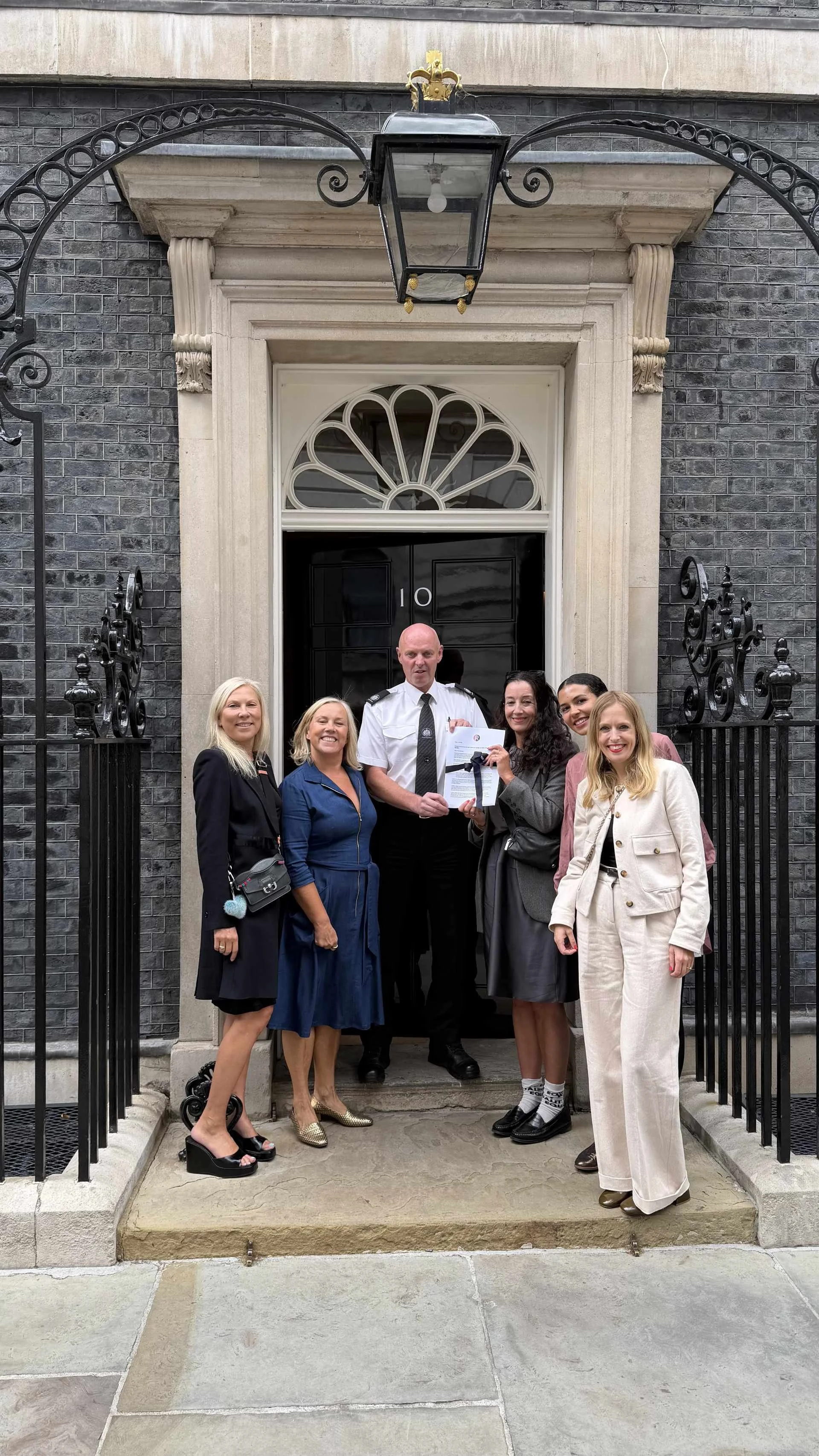
From left to right. Natalia Cassel, Comms Partner at Fashion Roundtable, Kate Hills, Founder of Make it British, Tamara Cincik, CEO of Fashion Roundtable, Harriet Fletcher-Gilhuys, Textiles Researcher at Fashion Roundtable and Megan Pirie, Head of Policy at Fashion Roundtable
London Fashion Week kicks off today, holding a glossy spotlight on British fashion for the next week. But behind the veneer, those who actually make the clothes are struggling.
This isn’t to dismiss London Fashion Week and the incredible designers that show – they are world class, innovative and celebrate British heritage and craft in a way that makes those of us who work in fashion, well, proud to be British.
But peel back the layers and you would see that British manufacturers, who were once the backbone of the British economy, are being let down by massive underinvestment and a systemic lack of regular business. This is at odds however with what manufacturers can actually do here in the UK.
Fast fashion has set the bar very low on price. Over the past few decades, this has accelerated to such a point where British manufacturers have struggled to keep up. Quality and care have been gradually swapped for cheap and fast, and British natural fibres switched for petrochemicals. And where once the Government procured at home, keeping regular orders for NHS and defence uniforms within the UK, the lever was somehow pulled on this too, with an agenda for the cheapest price, thereby moving procurement contracts overseas.
This has had a domino effect on transparency, as low prices tend to. Meaning that contracts are awarded based on where the supplier is registered, not necessarily where the goods are manufactured. A loophole which lets UK-registered companies win public contracts while the actual manufacturing and jobs that come with it move offshore. A pattern which Emma McClelland, one of the co-founders of Knitster summed up best in one of my early interviews:
“I don’t think that makes any sense to me because it discourages people and companies from making it in the UK. What happened to investing here? I don’t get it. I think for the greater good we should be made here. Invested in skills right from the farm, you know?”
The pandemic was perhaps the ultimate case study for this scenario in practice. The July 2026 Covid Inquiry Report found that £10bn of public money was wasted on substandard or over-ordered Personal Protective Equipment (PPE) from overseas. This highlighted key systemic failures: a system which bypassed British manufacturers, overlooked data from proven textile experts, and exposed the danger of total offshoring when goods were unusable. Conversely, the same inquiry found that Scotland’s £102.7m investment in domestic PPE suppliers generated £66.7m of additional gross value added (GVA) and 1,400 jobs, with 88% of Scotland’s PPE made domestically by 2021.
I initially intended to write at length about procurement in the UK, having become a bit of an expert, over recent months with our open letter campaign.
The letter which we delivered to Number 10 Downing Street yesterday calls on the Government to introduce onshoring requirements for public textile contracts and establish a dedicated manufacturing and textiles task force to unify fragmented policy across varying government departments. It hit a nerve amongst frontline workers, manufacturers and the general public with over 1,200 signatories and counting!
But something else struck me during the course of the research. Behind each interview, there was a thematic thread of British heritage and craft. Behind each brand, a determination to continue making quality garments on British soil, to support British jobs, skills and local infrastructure. Behind each wage, a social impact trickled its way through the local economy, benefitting each and every person it touched.
Over the past few weeks I have scaled the country from Scotland to Wales, from Blackburn to the Black Country, in a quest to uncover procurement’s connection to British heritage. What I stumbled upon is a sector steeped in heritage and the people and skills ready to take on procurement contracts across the country. What I share here is simply a snapshot.
Circling back to Scotland’s example of GVA, I set up an interview with Mark Hogarth, Brand Ambassador at Harris Tweed Hebrides. The day before I had walked my local high street in my hometown in Wales, now peppered with pound shops and vape stores. I had recently discovered a black and white photograph of the same street, showing quite clearly that quality British heritage and craftsmanship were once the norm.
Dialling in from Scotland, Mark Hogarth talks to me anecdotally about just this. He tells me of a woman in his charity cycle ride for several years, who came each time in a Strathclyde Regional Council for Greater Glasgow Health Board coat. Mark said:
“She would come every year with her state issued Strathclyde Regional Council for Greater Glasgow Health Board uniform, which was a beautiful blue NHS Harris Tweed coat. That was an example of something that was going to last. It was deemed to be smart and appropriate, fit for purpose, and provided a little bit of authority and elegance as well.”
What’s particularly unique about Harris Tweed is that it is protected by law under the The Harris Tweed Act 1993. To count as genuine Harris Tweed, the cloth must be handwoven by islanders in their own homes in the Outer Hebrides, from pure virgin wool that has itself been dyed and spun in the Outer Hebrides. Cloth that meets those standards is certified with the Orb trademark.
Analyse this deeper and you will find a real-world example of protecting where and how something is actually made, not just where the company selling it happens to be registered. The legacy of this is that the Harris Tweed industry generates £16.8m in GVA and supports 520 jobs across Scotland, with £11m and 370 jobs concentrated in the Outer Hebrides, proof that protected, place-based British manufacturing can still punch well above its weight. On place-based opportunity, Mark said:
“The legacy industry, the embers if you like, whether you’re Private White in Manchester, Harris Tweed Hebrides, Fox Brothers down in the Southwest, the beautiful thing about textiles is it’s so spread out, it’s naturally devolved.”
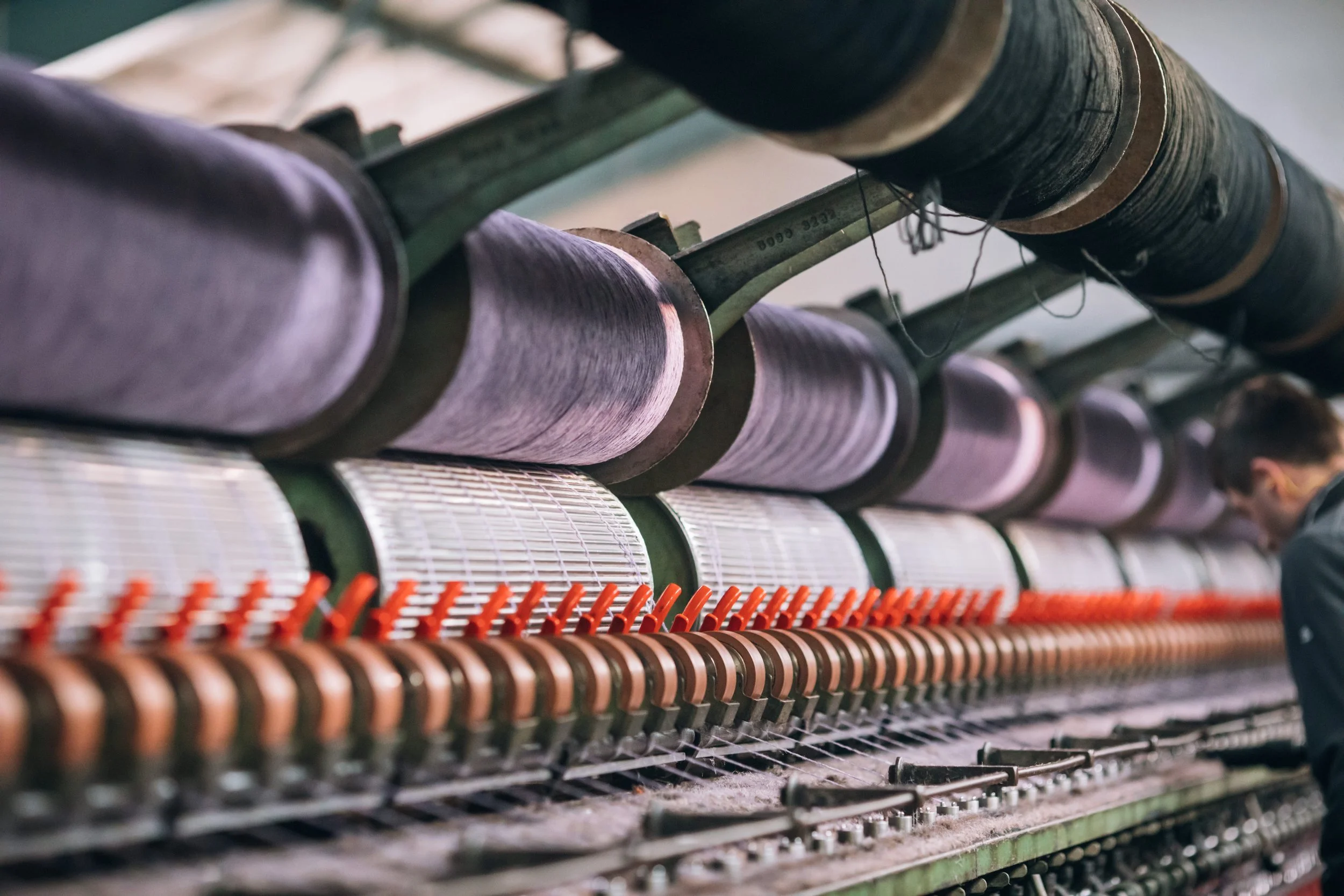
Credit: Harris Tweed Hebrides
This story is still ringing in my ears, when I speak with Eifion and Amanda Griffiths, the retired owners of Melin Tregwynt, one of the last working mills in Wales. Where over 200 mills once stood, around 4 remain. Although retired and out of its day-to-day operations, they remain tireless advocates for double-cloth weaving.
Unlike Harris Tweed, Wales has limited protection for its heritage textiles. Although the UK has ratified the 2003 UNESCO Convention for the Safeguarding of Intangible Cultural Heritage, double-cloth weaving has made it onto the Heritage Craft’s ‘Red List’ of endangered crafts. Craft is not only a vital form of cultural expression, it also houses tacit knowledge, mediating senses and memory specific to place, identity, and language. When crafts are lost, impacts are two-fold. The first, and perhaps the most obvious is the loss of technical skills. The second, is slightly harder-to-quantify, this part comes down to the thoughts, senses and memories tied to the craft itself. What struck me with this example, is that you cannot recover skills like this easily, once the living practice is gone, it’s gone.
Perhaps what’s always impressed me about Melin Tregwynt is how they have invariably been forward-looking, supporting young apprentices and skills from the very start. As I speak to them, I remember my first visit to the mill on the Pembrokeshire coast, a white mill that stood out stark against the local Welsh landscape. They said:
“The number of mills that are surviving in Wales are few and far between, so there isn’t a critical mass of industry knowledge.”
When I asked what they would show the Prime Minister if he walked in tomorrow, they spoke to identity first.
“We would emphasise the unique nature of it, and the fact that it’s on the red list. We would also talk about culture and community identity, because in Wales we have things that are actually very symbolic of what that means.”
During our call, they speak passionately about investing in apprentices and young people, from Sean who started as a barista, then entered an apprenticeship in the mill, and has now become a team leader and an Employee Ownership Trust trustee director, to Murray, their new Interim MD, who they hope will bring the best out in the young team, and unlock this knowledge for future generations.
They told me about their old Japanese agent, who used to tell the story of the mill to every single customer before he’d sell them a yard of cloth, “his customers prized authenticity.” That instinct, they tell me, got lost for a while, but is coming back now, through food, slow fashion, and in the growing distaste for a throwaway culture.
None of this holds up though if the Government keeps chasing the cheapest price. If Melin Tregwynt closed tomorrow, the skills that are housed within it would be lost and its skilled workers who are central to its business would be displaced. Luckily Melin Tregwynt continues in a strong business position. But that isn’t true for everyone.
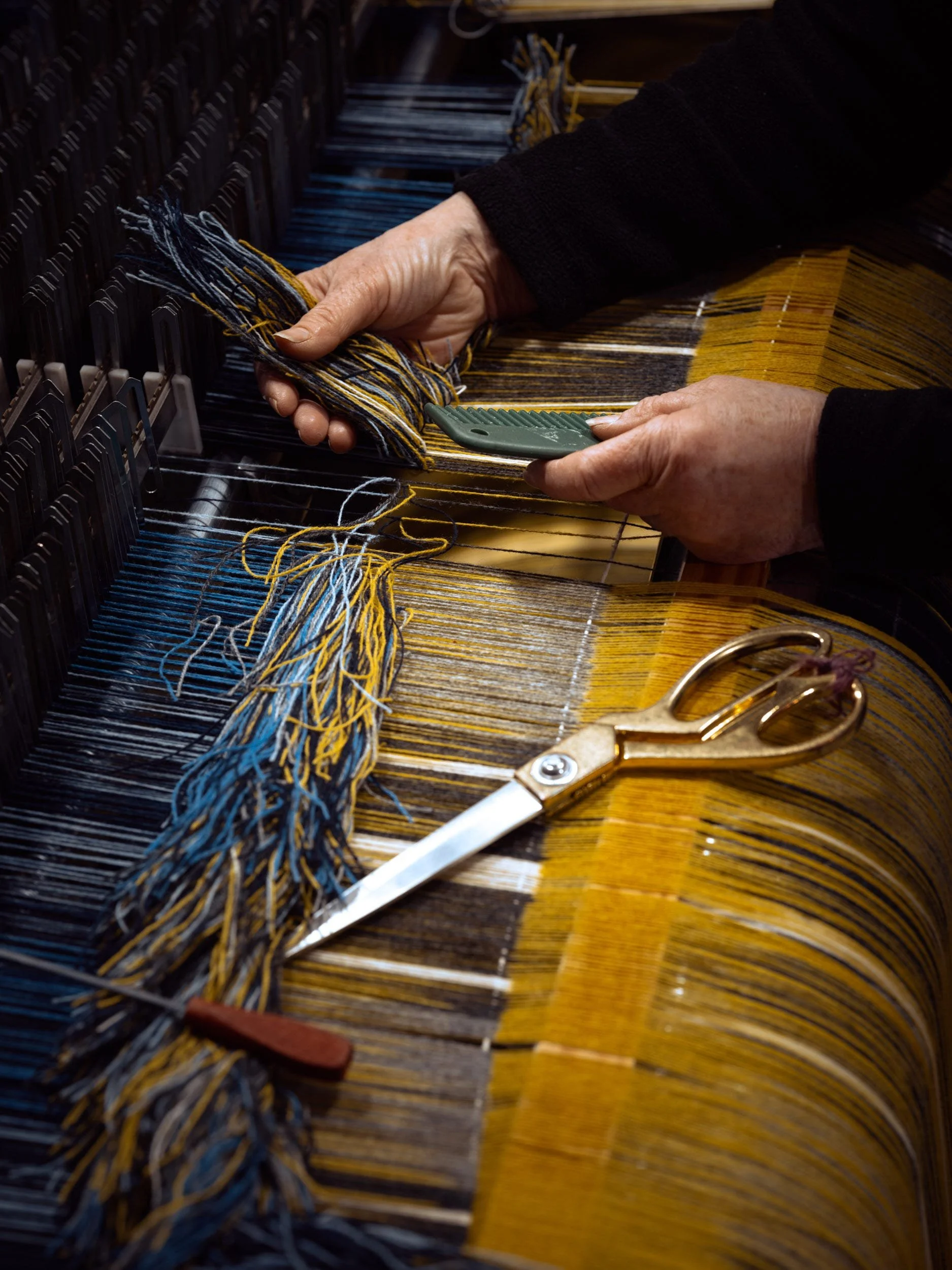
Finn Beales and was taken as part of an Audi presentation
I think back to my interview with Patrick Grant for our monthly book club, who rescued Cookson and Clegg, in Blackburn, after it lost 95% of its business overnight when a military contract went offshore. Patrick told me:
“The reason I ended up buying the clothing factory I bought was because it had been a supplier to the British military and when they decided to move all of their production offshore that company lost 95% of its business overnight. We saved a bunch of money by making uniforms somewhere cheap but we’ve also put a massive load of people on the dole. Is that a good outcome? No is the answer.
“This is 50 people that I’ve been working with for years who are probably going to end up on the scrap heap because what other textile jobs are there for them to go to? I didn’t want that to happen.”
In fact many of the people that were working at Cookson’s in 2015 are still working there now 11 years on. Community Clothing punches above its weight in terms of social impact, Patrick tells me that it has created over 650,000 hours of work and supports close to 2,000 jobs across the factories they work with.
Another person who jumped in to save a British factory is Ben Fogle, who last year bought Buffalo Systems in Sheffield. The brand had proudly been made in Sheffield since 1979 and since taking over the brand, Ben said:
“We have doubled our staff, injecting much needed jobs into the local economy, but all that has come at cost to our profit margin and it is incredibly difficult to compete with cheap overseas production.
“As a Brit, I feel a proud responsibility to our great nation. I want to be part of the change. Elevating and celebrating British manufacturing and providing even more work opportunities for the local economy.
“But to do this, we need the help, support and policy of government. We were lucky enough to have been visited by the then Defence minister, John Healey. Now as Chancellor of the Exchequer I hope that he will champion small businesses like ours and ensure they can stay and thrive in places like South Yorkshire.
“The Prime Minister has committed to making the hard hat as aspirational as the graduation hat, but we need action more than catchy words.”
Behind these companies are individuals that have stepped in to save British manufacturing, because they see the value it provides not only through work opportunities, but also to the surrounding local economy. When I worked with our economist, she found that redirecting even £33.1 million in NHS and Ministry of Defence (MOD) overseas uniform spend back to the UK would generate £25 million a year in economic value, proof that what these individuals are doing on a small scale is exactly what could work at a national level also.
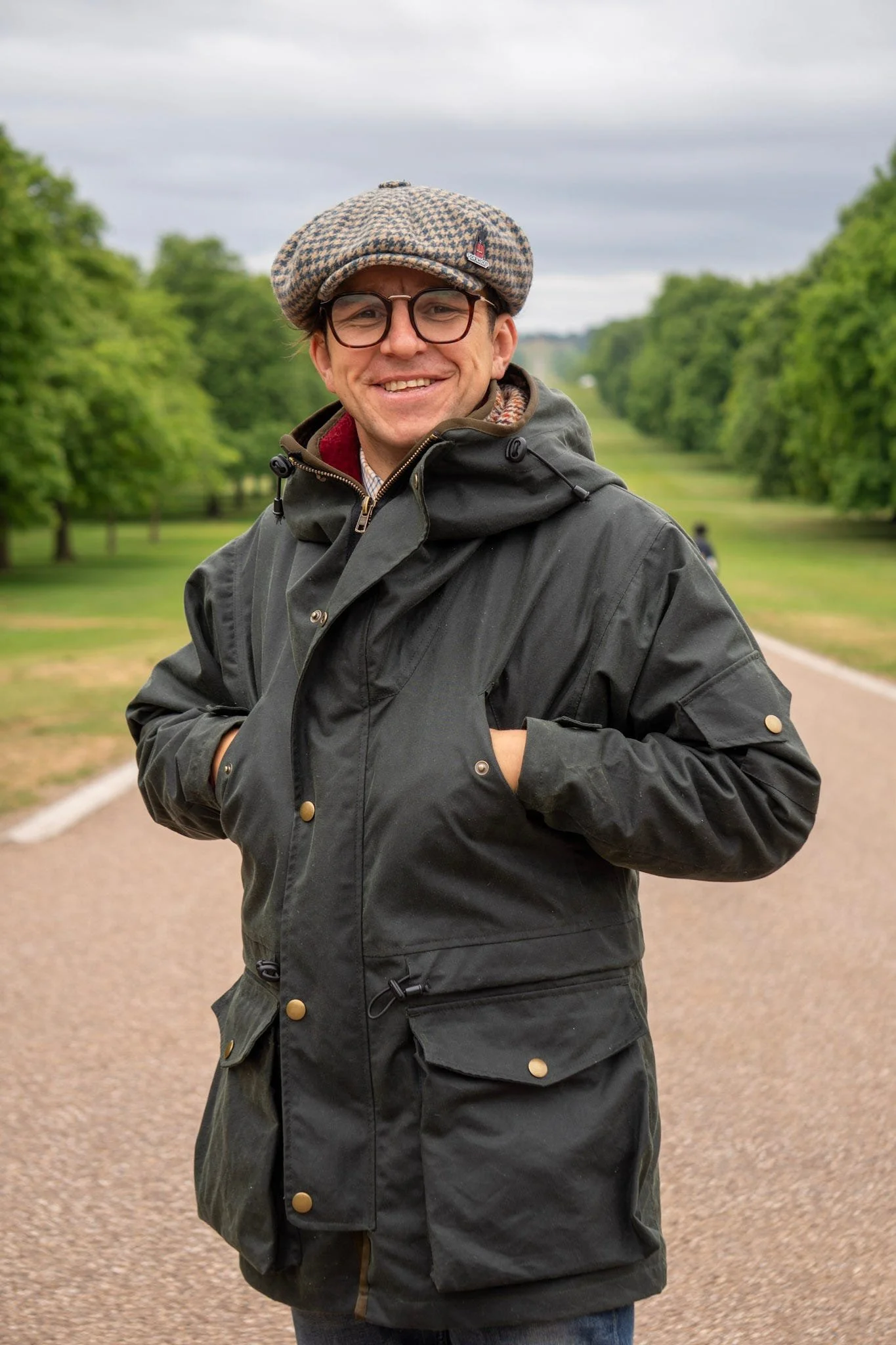
Image credit: Lockwood Clothing
In the Black Country, Jacob Lockwood, a former veteran who now makes British-made kit through his company Lockwood Clothing, tackles the built-in obsolescence in MOD uniforms. Jacob told me:
“The Army has long been under-funded and I think most soldiers would agree that some of the equipment simply isn’t of the quality that troops deserve. But when the budget isn’t available, the lowest price option is usually chosen. At times during my time in the Forces I bought my own equipment and I know others that do the same.
“That’s why our focus is so heavily on quality, durability and producing clothing that’s truly fit for the purpose it’s being used for. It’s not good enough for the waterproofing to stop working after six months, or for the garment to start fraying and becoming worn within a year. I take it as a huge compliment of our quality that some soldiers are buying our clothing and we are absolutely confident that it will serve them as they serve us.”
Jacob can give a 10-year guarantee on his jackets’ workmanship, he says, “because I’m right by the factory, I check in and can comfortably put my name to their work.”
Like many British manufacturers, Jacob is building his brand’s heritage on much smaller margins than those manufacturing overseas, because it’s all British made. Jacob made a new oath of allegiance to the British economy much like his oath of allegiance to the crown when he joined the military.
“Someone early on said, you’ll never do it all made in Britain. It’s not possible. So I sort of said, well, watch me, pal.
“I could have started this company overseas and I would be in the hundreds of % margin, whereas I barely struggle to get to a 50% margin. On paper this business should not work on my margins, yet it is working. It would be much easier for me to send it abroad, but I don’t want to, because I’m bloody patriotic.”
As we wrap up, Jacob says, “I don’t know if you could put a cheeky little footnote saying Mr. Burnham, Jacob Lockwood wrote to you and he looks forward to your response.”
Directly correlating with Prime Minister Andy Burnham’s push on a new Government rule PPN 026, which changes how social value gets scored on whether the supplier creates good British jobs and skills, I can’t help thinking back to the Harris Tweed district nurse’s coat.
What was so poignant about this was that a public body, funded by the taxpayer, decided that a uniform worth wearing for decades was worth commissioning from a mill that would build in quality and not obsolescence. Building on the other examples, this knowingly builds resilience into communities as well. PPN 026 in action.
This is ultimately what our open letter campaign boils down to. Heritage is often accused of being nostalgic, but this goes far deeper. The ask is simple: to buy things which will last, from those in the country who can make them, while supporting local communities. The race to chase the cheapest price, has as Jacob says, left our servicemen and women in sub-standard uniforms and this was echoed by our NHS workers during Covid.
This connection to heritage is not about protectionism either, asking a contract to state that an ostensibly ‘British company’ doesn’t silently mean ‘made somewhere else’ would be a good first step. Because, as the Harris Tweed coat goes to show, making British is a choice and one this Government can make again.
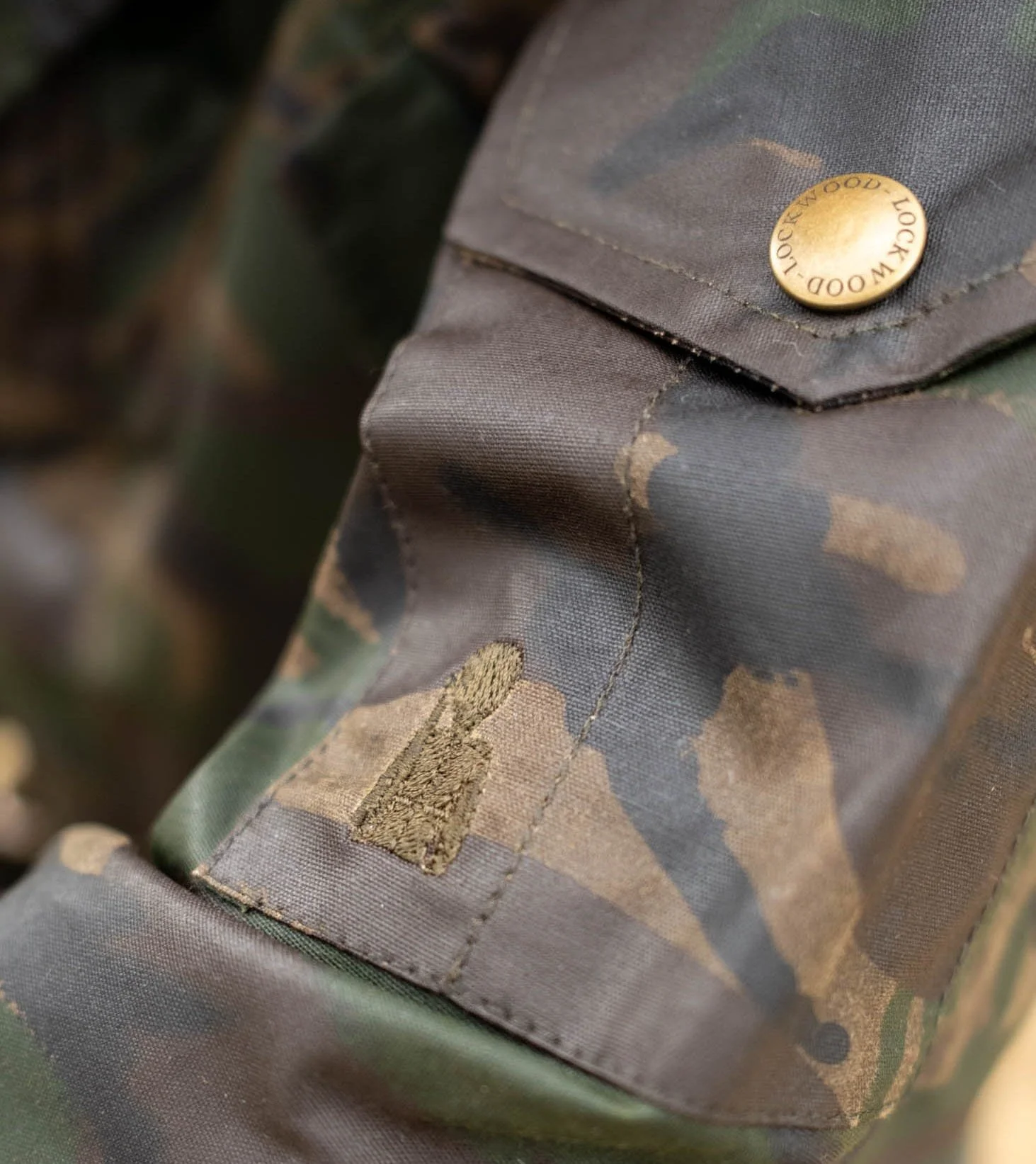
Image credit: Lockwood Clothing
Fashion Roundtable’s open letter was hand delivered to Number 10 Downing Street yesterday.
Signed by over 1,200 people including Ben Fogle and Patrick Grant, it calls on the Government to introduce onshoring requirements for public textile contracts and establish a dedicated manufacturing and textiles task force. Read the letter and sign here.