
Fashion Roundtable team deliver their highly successful open letter to the Prime Minister, Andy Burnham.
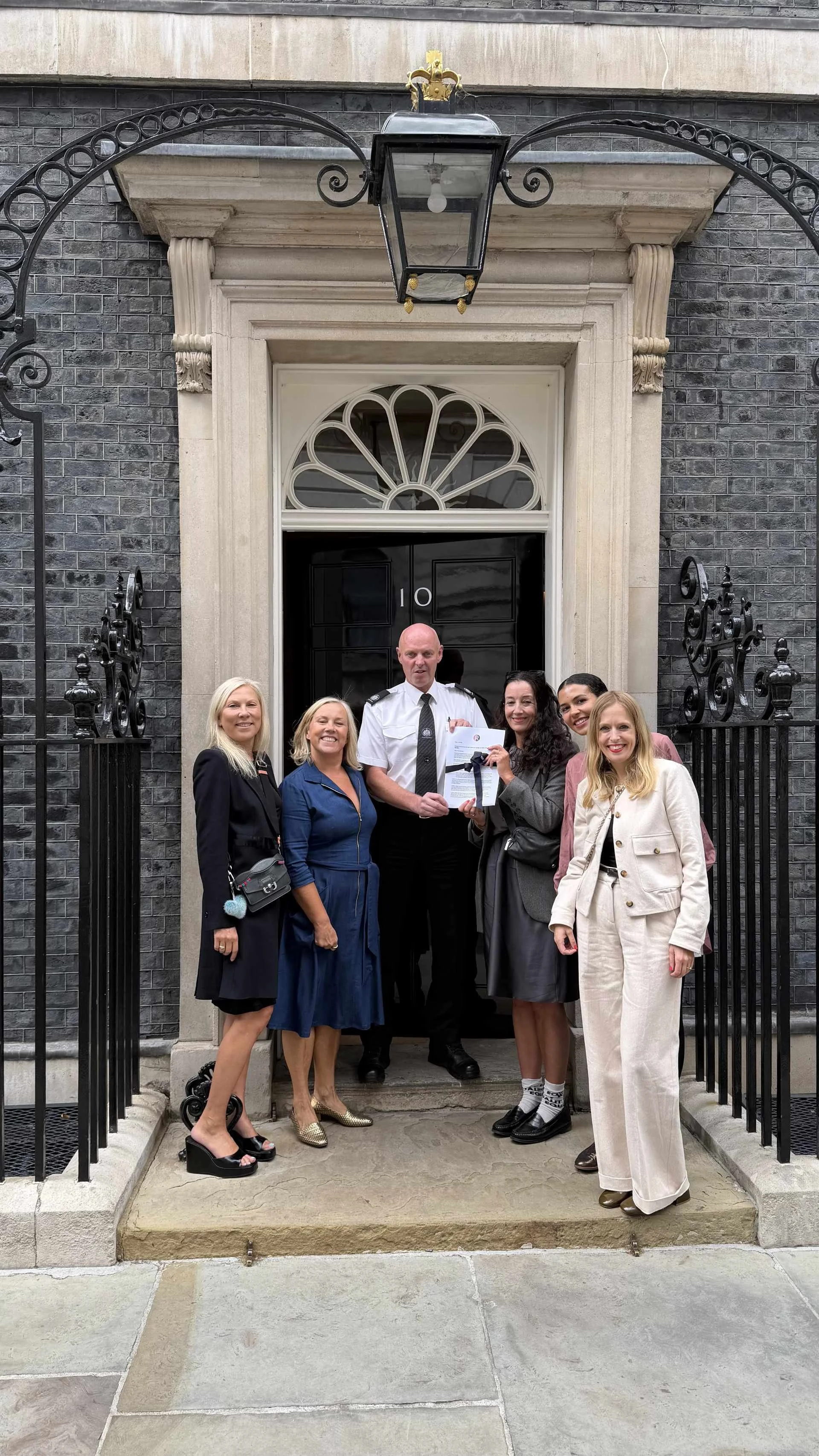
From left to right. Natalia Cassel, Comms Partner at Fashion Roundtable, Kate Hills, Founder of Make it British, Tamara Cincik, CEO of Fashion Roundtable, Harriet Fletcher-Gilhuys, Textiles Researcher at Fashion Roundtable and Megan Pirie, Head of Policy at Fashion Roundtable.
PRESS RELEASE
For immediate release——London, 16th September 2026, Number 10 Downing Street
The day before London Fashion Week, the Fashion Roundtable team gathered on the steps of Number 10 Downing Street to deliver their highly successful open letter to the Prime Minister, Andy Burnham.
The timing is deliberate. As London Fashion Week prepares to celebrate British design, manufacturers capable of making British uniforms are being locked out of public contracts by a system that defines a company as British based on where it's registered, not where it manufactures.
Signed by over 1,200 stakeholders across manufacturing, the NHS and the fashion and textiles industry, including Ben Fogle – Presenter, Author and Co-owner of Buffalo Systems, Patrick Grant – Presenter, Author and Founder of Community Clothing, Kate Hills of Make it British, and Margaret Ann Macleod, CEO of Harris Tweed Hebrides.
The letter raises awareness of the pivotal role that British manufacturers play in supporting skills retention, inclusive growth and regional resilience, under the right conditions. The letter requests a meeting with the Prime Minister before the details of the Number 10 North initiative are finalised, calling for public procurement contracts for textile goods, beginning with defence and NHS uniforms, to be awarded to suppliers who manufacture onshore in the UK and a dedicated textiles taskforce to unify fragmented policy.
The Government's own Covid Inquiry found that £10bn of public money was wasted on substandard, overseas-sourced PPE during the pandemic. Conversely, the same inquiry found that Scotland's £102.7m investment in domestic PPE suppliers generated £66.7m of additional economic value and 1,400 jobs, with 88% of Scotland's PPE made domestically by 2021. The Government also has a new mechanism, PPN 026, that already rewards contractors for creating good British jobs. The tools exist, but they're just not being applied to textiles.
In attendance at 10 Downing Street:
Tamara Cincik, CEO of Fashion Roundtable and Founder of The Great British Wool Revival.
Megan Pirie, Head of Policy at Fashion Roundtable.
Harriet Fletcher-Gilhuys, Textiles Researcher at Fashion Roundtable.
Kate Hills, Founder of Make it British.
Natalia Cassel, Communications Partner at Fashion Roundtable.
Read the open letter and its most up-to-date signatories: here
About Fashion Roundtable: Fashion Roundtable is a think-tank and consultancy that bridges the gap between the fashion industry and governments. It builds active partnerships with industry experts, business leaders, and sustainable innovators. Developing independent evidence-based insights, research, and reports, with a focus on social-purpose driven solutions, to ensure impactful change happens at local, national and international scale.
The letter reflects a decade of Fashion Roundtable’s tireless work on decentralisation, reindustrialisation and public procurement, captured perfectly in its ethos of positive solutions across Policy. People. Place.
Fashion Roundtable is a not-for-profit, non-partisan, independent voice. Its expert team is drawn from fashion, industry, economics, academia and policy.
The call is grounded in evidence: Fashion Roundtable's April 2026 report, Policy Fragmentation and Place-Based Opportunity in UK Fashion and Textiles, produced with the University of Birmingham's Local Policy Innovation Partnership Hub
Media contacts to request interviews via:
Natalia Cassel, Comms Partner, natalia@casselconsultancy.com
Assets can be accessed via: LINK
Tamara Cincik, CEO at Fashion Roundtable:
“Public procurement is the key to unlock vital business opportunities for UK manufacturers.
This in turn would support the wider sector, as it would give businesses a vital lifeline in the stabilisation of orders from public procurement, to then boost the onshoring of clothing for brands from the high street to London Fashion Week, where far too much is made overseas.
“The other key point is that onshoring would allow the UK to ensure regulations and safeguards are in place for workers across the supply chain. Given the utter fiasco of the PPE scandal where £10bn of our money as taxpayers was wasted on unusable products made offshore, that seems to be a win-win for business and industry across the UK. Something I am sure Andy Burnham wants to achieve.”
Meg Pirie, Head of Policy at Fashion Roundtable:
“We’re very interested to explore how the new PPN 026 Social Value Model will work for textiles. At the heart of our campaign are British heritage, craftsmanship and skills. Harris Tweed Hebrides is a fantastic case study for how its business supports GVA jobs across Scotland and the Outer Hebrides, proof that protected, place-based British manufacturing can still punch well above its weight.
“Every £1 we redirect to British manufacturers generates 76p of total economic impact here at home – supporting jobs, skills and infrastructure across the regions.”
ENDS