
Fashion Roundtable team deliver their highly successful open letter to the Prime Minister, Andy Burnham.
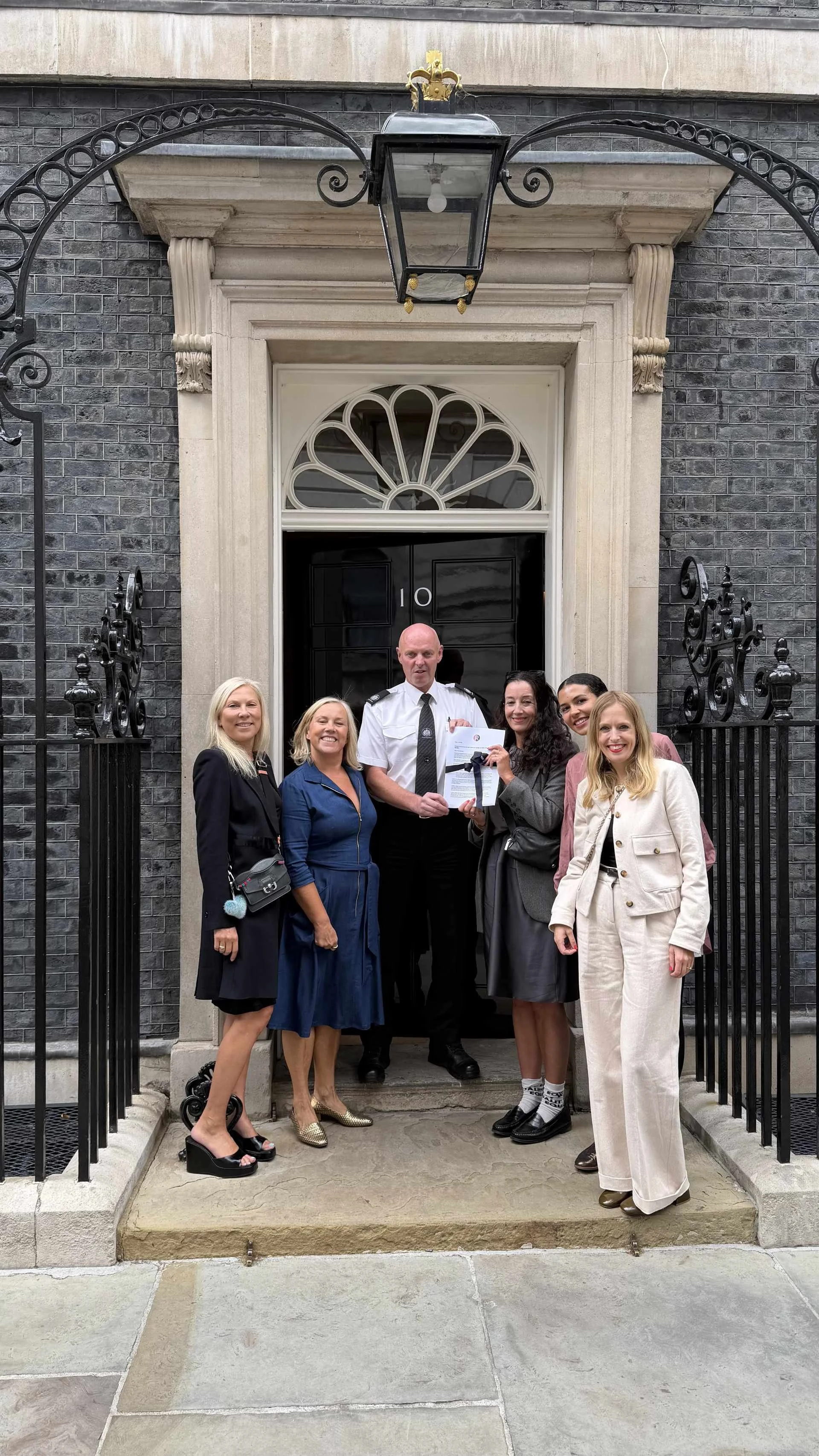
From left to right. Natalia Cassel, Comms Partner at Fashion Roundtable, Kate Hills, Founder of Make it British, Tamara Cincik, CEO of Fashion Roundtable, Harriet Fletcher-Gilhuys, Textiles Researcher at Fashion Roundtable and Megan Pirie, Head of Policy at Fashion Roundtable.
PRESS RELEASE
For immediate release——London, 16th September 2026, Number 10 Downing Street
The day before London Fashion Week, the Fashion Roundtable team gathered on the steps of Number 10 Downing Street to deliver their highly successful open letter to the Prime Minister, Andy Burnham.
The timing is deliberate. As London Fashion Week prepares to celebrate British design, manufacturers capable of making British uniforms are being locked out of public contracts by a system that defines a company as British based on where it's registered, not where it manufactures.
Signed by over 1,200 stakeholders across manufacturing, the NHS and the fashion and textiles industry, including Ben Fogle – Presenter, Author and Co-owner of Buffalo Systems, Patrick Grant – Presenter, Author and Founder of Community Clothing, Kate Hills of Make it British, and Margaret Ann Macleod, CEO of Harris Tweed Hebrides.
The letter raises awareness of the pivotal role that British manufacturers play in supporting skills retention, inclusive growth and regional resilience, under the right conditions. The letter requests a meeting with the Prime Minister before the details of the Number 10 North initiative are finalised, calling for public procurement contracts for textile goods, beginning with defence and NHS uniforms, to be awarded to suppliers who manufacture onshore in the UK and a dedicated textiles taskforce to unify fragmented policy.
The Government's own Covid Inquiry found that £10bn of public money was wasted on substandard, overseas-sourced PPE during the pandemic. Conversely, the same inquiry found that Scotland's £102.7m investment in domestic PPE suppliers generated £66.7m of additional economic value and 1,400 jobs, with 88% of Scotland's PPE made domestically by 2021. The Government also has a new mechanism, PPN 026, that already rewards contractors for creating good British jobs. The tools exist, but they're just not being applied to textiles.
In attendance at 10 Downing Street:
Tamara Cincik, CEO of Fashion Roundtable and Founder of The Great British Wool Revival.
Megan Pirie, Head of Policy at Fashion Roundtable.
Harriet Fletcher-Gilhuys, Textiles Researcher at Fashion Roundtable.
Kate Hills, Founder of Make it British.
Natalia Cassel, Communications Partner at Fashion Roundtable.
Read the open letter and its most up-to-date signatories: here
About Fashion Roundtable: Fashion Roundtable is a think-tank and consultancy that bridges the gap between the fashion industry and governments. It builds active partnerships with industry experts, business leaders, and sustainable innovators. Developing independent evidence-based insights, research, and reports, with a focus on social-purpose driven solutions, to ensure impactful change happens at local, national and international scale.
The letter reflects a decade of Fashion Roundtable’s tireless work on decentralisation, reindustrialisation and public procurement, captured perfectly in its ethos of positive solutions across Policy. People. Place.
Fashion Roundtable is a not-for-profit, non-partisan, independent voice. Its expert team is drawn from fashion, industry, economics, academia and policy.
The call is grounded in evidence: Fashion Roundtable's April 2026 report, Policy Fragmentation and Place-Based Opportunity in UK Fashion and Textiles, produced with the University of Birmingham's Local Policy Innovation Partnership Hub
Media contacts to request interviews via:
Natalia Cassel, Comms Partner, natalia@casselconsultancy.com
Assets can be accessed via: LINK
Tamara Cincik, CEO at Fashion Roundtable:
“Public procurement is the key to unlock vital business opportunities for UK manufacturers.
This in turn would support the wider sector, as it would give businesses a vital lifeline in the stabilisation of orders from public procurement, to then boost the onshoring of clothing for brands from the high street to London Fashion Week, where far too much is made overseas.
“The other key point is that onshoring would allow the UK to ensure regulations and safeguards are in place for workers across the supply chain. Given the utter fiasco of the PPE scandal where £10bn of our money as taxpayers was wasted on unusable products made offshore, that seems to be a win-win for business and industry across the UK. Something I am sure Andy Burnham wants to achieve.”
Meg Pirie, Head of Policy at Fashion Roundtable:
“We’re very interested to explore how the new PPN 026 Social Value Model will work for textiles. At the heart of our campaign are British heritage, craftsmanship and skills. Harris Tweed Hebrides is a fantastic case study for how its business supports GVA jobs across Scotland and the Outer Hebrides, proof that protected, place-based British manufacturing can still punch well above its weight.
“Every £1 we redirect to British manufacturers generates 76p of total economic impact here at home – supporting jobs, skills and infrastructure across the regions.”
ENDS
Public Procurement is the Lever We Are Not Pulling in the UK: The Call for British-Made Uniforms To Be at the Heart of Number 10 North
Public Procurement is the Lever We Are Not Pulling in the UK: The Call for British-Made Uniforms To Be at the Heart of Number 10 North
For Immediate Release:
London, 31st July 2026 – Fashion Roundtable and signatories from across the UK fashion and textiles industry, including Ben Fogle, Presenter, Author and Co-owner of Buffalo Systems, have written an open letter to the Prime Minister, Andy Burnham, calling for public procurement contracts for textile goods, beginning with defence and NHS uniforms, to be awarded to suppliers who manufacture onshore in the UK.
The letter asks for a meeting with the Prime Minister before the details of the Number 10 North initiative are finalised, arguing that procurement is the fastest and most practical way to deliver on the commitments that the Prime Minister made outside Downing Street around decentralisation, reindustrialisation and rebalancing power away from Whitehall and towards the regions.
The signatories call on the Government to deliver cohesive, place-based industrial policy specifically through:
1. The introduction of onshoring requirements in public contracts for textile goods, beginning with defence and NHS uniforms;
2. The establishment of a dedicated manufacturing and textiles task force to unify fragmented policy across DCMS, DBT, Defra, MOD, DHSC and the Cabinet Office.
The call is grounded in Fashion Roundtable's recent report Policy Fragmentation and Place-Based Opportunity in UK Fashion and Textiles (April 2026), produced in partnership with the University of Birmingham's Local Policy Innovation Partnership (LPIP) Hub.
The report also highlighted that the barrier to keeping UK factories open is not due to a lack of skills or capability, but that fashion and textiles fall into a policy gap between creative industries and manufacturing, which has allowed the sector to fall behind our peers from other creative industries. This leaves the industry exposed to short-term policy interventions and weak coordination across national, devolved, and local levels.
It identified that the biggest lever we have to support skills retention, inclusive growth and regional resilience is awarding public procurement contracts for textile goods to suppliers who manufacture onshore in the UK.
Tamara Cincik, CEO of Fashion Roundtable, said:
“During the pandemic I saw a total fiasco in the procurement of vitally needed PPE. Kate Hills and I were asked by the then government to attend regular calls on public procurement and it was clear to both of us that the right hand did not know what the left hand was doing, and this is all avoidable if public procurement is brought back onshore. Not only for the job and income it brings back to Britain, but also to ensure greater transparency, reduce waste and stabilise British manufacturing.”
Kate Hills, founder and CEO of Make it British said:
“The single biggest ask is a British-made requirement in public contracts for textile goods, starting with defence and NHS uniforms, and crucially it must specify where products are manufactured, not just where the winning company is registered, otherwise the work will carry on going offshore through UK-based middlemen. If the Prime Minister means what he said outside Downing Street about using public procurement to back British industry, this is how he can prove it to the UK fashion and textile industry.”
The letter reflects a decade of Fashion Roundtable's work on decentralisation, reindustrialisation and public procurement, captured perfectly in its ethos of Policy. People. Place.
ENDS
Notes to Editors
Media contacts:
Meg Pirie, Head of Policy and Partnerships, Fashion Roundtable, meg.pirie@fashionroundtable.co.uk
Natalia Cassel, Comms Partner, natalia@casselconsultancy.com
Tamara Cincik, CEO of Fashion Roundtable is available for interviews.
The Fashion Roundtable reports mentioned:
Policy Fragmentation and Place-Based Opportunity in UK Fashion and Textiles (April 2026), Fashion Roundtable with the University of Birmingham LPIP Hub. Fashion Roundtable’s Sector Vision Manifesto (2024) where we outlined clear recommendations including targeted support for UK manufacturing and on-shoring, a commitment to the British made, strengthening of public procurement, and an investment in UK manufacturing through consistent and secure orders.
To sign the letter: Please follow the link here to the Google Form.
About Fashion Roundtable: Fashion Roundtable is fashion's leading think tank and change agency, and the only organisation dedicated to reimagining a creative and responsible fashion industry. Its team, drawn from fashion, industry, economics, academia and politics, delivers independent, evidence-based research and policy roadmaps for the sector, including its Sector Vision for fashion and textiles. Fashion Roundtable is a non-partisan and independent voice.
Read the open letter below:
Dear Prime Minister,
We are writing at the forefront of the UK fashion and textile industry, an industry that contributes £62bn to UK GDP and 1.3million jobs. However the full economic value and potential of the UK fashion and textiles industry in relation to public procurement has not been fully realised and this is a missed opportunity.
With a change in leadership we feel this offers promising opportunities, and aligns with our work and core values at Fashion Roundtable. The Prime Minister's words outside Downing Street reinforced issues that Fashion Roundtable have been working on for the last decade: decentralisation, reindustrialisation and public procurement, and rebalancing power away from Whitehall and towards the regions. These key policies tie in with Fashion Roundtable’s ethos of Policy. People. Place.
We particularly welcome the Prime Minister’s comments:
"We will take power out of here and carry it into every postcode in the land so that they can do more. And in doing more, build a new economy where we put life’s essentials back under stronger public control to make them affordable to you again. Re-industrialising Britain, using public procurement to back British industry.”
Public Procurement was recently raised by the now Secretary of State for Northern Ireland, Chris Bryant, during the February 2026 Westminster Hall debate on onshoring fashion and textiles, stating “it would be good if more of our British servicemen and women were dressed in British uniforms”.
Further, Patrick Grant’s evidence at the 2023 Localism Ethics and Sustainability in Fashion All-Party Parliamentary Group meeting organised by Fashion Roundtable highlights this very point, stating that Britain once employed 2.5 million people in textiles, and that reviving domestic demand could allow UK factories to re-employ laid-off skilled workers.
In fact, British manufacturing was once the backbone of our economy: we grew our own natural fibres, we made our own clothing and provided uniforms for defence, the NHS and frontline services. While the 2025 Defence Industrial Strategy pledges to back British business and transform procurement to support SMEs, its focus is weapons and AI systems, not the uniforms and protective equipment worn by frontline personnel. With defence spending set to rise from 2.7% of GDP in 2027 to 5% by 2035, this is a significant missed opportunity.
In this letter, we present two policy opportunities that recognise public procurement as a key policy lever for change which we would like the Prime Minister to consider. These are to 1. the introduction of onshoring requirements in public contracts for textile goods, beginning with defence and NHS uniforms; 2. The establishment of a dedicated manufacturing and textiles task force to unify fragmented policy across DCMS, DBT, Defra, MOD, DHSC and the Cabinet Office.
We present the following evidence to support this below.
Covid Personal Protective Equipment: The Case Study for Policy Fragmentation.
For Fashion Roundtable, the pandemic remains the ultimate case study of the cost of policy fragmentation. The Covid Personal Protective Equipment (PPE) procurement scandal has left a long-term legacy. The July 2026 Covid Inquiry Report shows that £10bn of public money was wasted on substandard or over-ordered PPE from overseas. This highlights key systemic failures: a system which bypassed British manufacturers, did not take into account data from proven textile experts, and exposed the danger of total offshoring when goods were unusable.
During the pandemic our CEO Tamara Cincik, worked with the Emergency Designer Network as a key policy advisor, sitting in various meetings with Government, and sounded the alarm on the Government’s catastrophic failure to utilise domestic manufacturing for PPE. Despite a full mapping of the manufacturing supply chain of UK textile manufacturers to make the PPE locally, it was rejected by the government in favour of offshore manufacturers.
Public Procurement is the Lever We Are Not Pulling in the UK.
We have an extensive body of work in relation to public procurement.
This is evident in Fashion Roundtable’s Sector Vision Manifesto (2024) where we outlined clear recommendations including targeted support for UK manufacturing and on-shoring, a commitment to the British made, strengthening of public procurement, and an investment in UK manufacturing through consistent and secure orders.
This is also apparent through our recent briefing British Wool and the Farming Roadmap for 2050: Key Recommendations to Defra Ministers on the Farming Roadmap which came to the same conclusion: procurement of British wool and homegrown fibres for Government-funded projects and uniforms is a ready-made opportunity to deliver on the Roadmap's own commitments.
Earlier this year, Fashion Roundtable published Policy Fragmentation and Place-Based Opportunity in UK Fashion and Textiles, in partnership with University of Birmingham’s Local Policy Innovation Partnership (LPIP) Hub, which evaluated the potential of the sector to create social mobility opportunities and drive sustainable economic growth.
The key finding of the research was that the biggest lever we have to support skills retention, inclusive growth and regional resilience is awarding public procurement contracts for textile goods to suppliers who manufacture onshore in the UK. The report also found that relatively modest reforms, including longer-term contracts, clearer forecasting, accessible contract sizes and improved payment terms, could significantly strengthen local value chains while delivering social value and value for money. The stability that public procurement contracts would provide would have far reaching impacts on factories, staff, and the communities they are a part of.
Our evidence also showed that the issue with keeping our factories open isn’t a lack of skills or capabilities but that fashion and textiles fall into a policy gap between creative industries and manufacturing, which has allowed the sector to fall behind our peers from other creative
industries. This leaves the industry exposed to short-term policy interventions and weak coordination across national, devolved, and local levels.
Governments elsewhere are increasingly using procurement contracts to mandate circular production practices and bolster domestic manufacturing. France’s textile industry is a shining example. A study published by the Union des Industries Textiles found that products labelled “Made in France” capture up to 84% of the value created, compared to approximately 35% for imported goods. This starkly illustrates the economic benefit of domestic production and the massive opportunity for the UK economy.
We call on the Government to deliver cohesive, place-based industrial policies specifically through:
1. The introduction of onshoring requirements in public contracts for textile goods, beginning with defence and NHS uniforms;
2. The establishment of a dedicated manufacturing and textiles task force to unify fragmented policy across DCMS, DBT, Defra, MOD, DHSC and the Cabinet Office.
We request a meeting with the Prime Minister to discuss these opportunities before the ‘Number 10 North’ initiative details are finalised.
Yours Sincerely,
Tamara Cincik, CEO, Fashion Roundtable
Fashion Roundtable is fashion’s leading think-tank and change agency.
Signatories
Merged List (Alphabetical)
Signatories (1,203)
A Thomas
A Dolding
Abigail Webb, Administrator, Insurance (trained textile designer)
Adam Cummins, Simplex Knitting Company
Adam P
Adam Payne, Business Owner
Adjoa Taylor, Fashion Entrepreneur
Adrian Bernascone
Adrian Matthew, Business Development Manager , Manufacturing Technology Centre
Adrian Powell, Local Government
Adrian Swift, Plants Operations Manager, Simplex Knitting Company UK
Aileen MacKinnon, Retired,
Alan Dibble, Fashion and Textiles Lecturer , Glasgow Clyde College
Alan Goodey
Alan Walker, Retired
Alerted McWade
Alex Kocheta, Consultant Surgeon, TRFT
Alexander Aucken, Director, Dynamic Perspectives Ltd
Alexander Wills, Director, Fashion Formula Ltd
Alexis Piper
Alice McAnulty, Head of Strategy, The Ready House
Alice Robinson, Director, British Pasture Leather
Alison, Costume Designer, Film
Alison Beesley, Designer, Corporate Workwear
Alison Burch
Alison Carlin, Co Founder, Manchester Fashion Movement CIC
Alison Halsall , Textile Designer,
Alison Lewin
Alison Walmsley
Alison Williams, Retired nurse , Nil
Alison Yarushin
Alix Coombs, Strategic Consultant, Fashion Roundtable
Allana McGowan, Designer & Maker, LannyxStudio
Alyson Dickson, Retired
Amanda Griffiths, Trustee, Melin Tregwynt
Amanda Jones
Amelia, Student, UAL
Amelia Twine, Founder, A Single Thread CIC
Amy Cowell
Amy Yeates, Swing Dresser
Andrea Courtney, Managing Director, Courtney & Co Button Makers
Andrea Parry, Development Coach, University of Salford
Andrea Sinclair, Artist, Art in the Park
Andrea Wilson, Managing Director , Support UK Manufacturing Ltd
Andrew Edgar
Andrew Filarowski, Technical Director, Society of Dyers and Colourists
Andrew French, Director, Castle Forbes Collection Ltd
Andrew Fullalove, Telecommunications Manager, Network Rail
Andrew Heffer, Fabrication Manager,
Andrew Hogley, CEO, British Wool
Andrew Paul Cook, Retired,
Andrew Somers
Andrew Voysey
Andy Dobson, OpEx/Lean Consultant - Operations & Supply Chain, Lean 4 Business
Angela Conder, City Councillor, Gloucester City Council
Angela Dobbins, Health Visitor,
Angela Grayson, Small Business Owner, Breakfast Cafe
Angela Grayson
Angela Lawlor, Managing Director, UK Manufacturing Festivals
Angela Proud
Angela Walker, Self Employed Seamstress
Angharad Mars-Jones, Radiographer, Betsi Cadwaladr Trust
Anita Crossley, Case Administrator
Anita Ledger Fogarty, Retired
Anita Moyes, Head of Fashion Buying ,
Anita Whittle, Sales Assistant / Sewing Machinist
Ann Price
Anna , Maker, Bridal Maker
Anna Ashmore, Teacher
Anna Coipell, Director, NOAC Ltd
Anna Deal, Delivery Driver, GSF Cat Parts
Anna Gill
Anna Godley, Student Nurse, NHS
Anna Hodgson, Startup Founder, Dog Forbid
Anna MacKenzie Hall, Sustainability Consultant , S. I. Partnership Ltd
Anna Malkin
Anna McFadyen, CEO, Mozzie Cozzie Ltd
Anna Smith
Anne Fontenoy, Designer Dressmaker and Visual Artist, Anne Fontenoy
Anne Pargeter
Annette Fielding
Annie Purdy, PhD Footwear Design for Resale researcher , Design School Kolding
Anthony Eccleston, Retired, Private
Anthony McMullen
Aoife McHugh, Founder and Sewist
Arjun, Researcher
Arlene Bowers
Arlette Monkewitz
Arti , Business owner
Arun Nair
Asanga Herath, Senior Manager, Burberry
Ashley Stocks, Warp Knit Production Manager , Simplex Knitting Company Ltd
Ashton Payne
Audrey Robbins, Sewing Machinist , Woodlodge Silks
Aurelie Vogt, Dresser,
Barbara Jones, Retired College Deputy Principal,
Barbara Steadman
Barbara Viggers , Retired Civil Servant, Civil Service
Barnabe Jeanperrin
Barry Head, Business Development Director, Stretchline Group
Beatrice Espinosa, Designer/Business owner, Beatrice Espinosa Bridal
Ben Fogle, Presenter, Author and Co-owner of Buffalo Systems,
Benjamin Murley , Owner, Threadworks, FairForm
Bernadette Gosling, Archivist & Owner , NipperLegacyCollection
Berney Sharp, Deputy Director , Gov
Beth Pagett, Research Fellow in Circular Textiles, Nottingham Trent University
Beth Tasker
Betty Leader, Retired
Bev Whittaker, Retired
Beverley Follett, Retired ,
Beverley Kendall, Retired Lecturer,
Bobbie Blackman
Bonnie Middleton, Owner/Director, Bonnie Tartan Limited
Bonny Cummings, Head of Product, The Learning Lab
Brad Lane, Head of Product , EE/BT
Bridget Todd, ,
Bronmai Jones , Retired, Private citizen
Brydie Raybould-Cridge, Quality Control,
C Faulkner
C Lloyd Brown, Compliance Officer, Ampleforth College
Callum MacKinnon, Retired
Cameron Saul, CEO, BOTTLETOP and #TOGETHERBAND
Camilla Holter
Camille Moriarty
Cara Littlewood
Cara MacDowall
Carl Chinn, Social historian
Carla Risdon, Director, Risdon & Risdon
Carly Carolan
Carol McPhearson , Local Council Employee
Carol Milton, Retired
Carol Pringle, Retired
Carol Sproul, Business owner, LC Equestrian
Carole Boulton, Retired Teacher
Carole Milburn, Business Owner
Carole White
Caroline Bruce, Small Brand Owner, Caroline Bruce
Caroline Downey, Executive Director, Women Working Worldwide
Caroline King, Brand Director, K H Home Furnishings Ltd
Caroline Kyte
Caroline Martucci, Finance Officer,
Caroline Oriokot, Fashion Brand Founder , Amayi Rose (UK)
Caroline Read, Veteran,
Caroline Vitalini
Carolyn Ziha, Divisional Purchasing Director , Bunzl Safety & Workwear
Caron Kirkham, Retired
Carry Somers, Author, Activist, UN Expert Consultant, Fashion and Textiles, League of Artisans
Caryn Franklin, Writer, Broadcaster, Commentator, FACE Fashion and the Arts Creating Equity
Catherine
Catherine , Garment technologist,
Catherine Barclay
Catherine Barrsc, Business Owner
Catherine Bedford, MD, Dashel Helmeta Limited
Catherine Bilton, Director, Blackshore Clothing Ltd
Catherine Eckersley, Administrator, NHS
Catherine Hough
Catherine Millar, Teacher, School, Manchester
Catherine Owen , Display Assistant , Primary School
Catherine Rynham , Recruitment Director , The Source Technical Ltd
Cathy Harris , Textiles Teacher
Catrin Jones
Catrin Whitehouse
Celia Craven
Celia Thornley, Head of Skills & Training, UKFT
Celina Sykes , Lecturer
Charanjit Biring, Director,
Charles Ross, Lecturer, Royal College of Art
Charles Wood, World President, The Textile Institute
Charlotte Alexander , Designer, Elyan
Charlotte Briddon, Executive Assistant , John Smedley Ltd
Charlotte Broady, Marketer and Designer,
Charlotte Jesty, Finance Business Analyst ,
Charlotte Owen, Midwife, NHS
Cherylyn Robinson
Chinazo Ufodiama, Brands Strategist & Communications Advisor,
Chloe Chapman, Seamstress, Avie Fabrics
Chloe Hall, Director, Brand Farra Ltd
Chloë van Raalte, Sales & Business Development Manager, Collier Webb
Chris , Retired,
Chris Aiken, Vice President, Quality, B&W Fiberglass
Chris Curran, Business Development Technical Sales, Technical Textiles
Chris Galtry, Director, Equi-Jewel by Equi-Jewel.co.uk
Chris Green
Chris Trimby, Design Consultant , Field Service Design
Chris Welton
Chris Young, Managing Director, Simplex Knitting Company Ltd
Chrisi Robertson, Fashion and Textiles Tutor for Apprenticeships , Textile Centre of Excellence
Christian McTear
Christian Murphy, CEO, Albion Knitting Company
Christina Haigh , Marketing Manager, UK & Europe , John Wood Group
Christina Scott
Christine Elson, Retired,
Christine Entwistle, Retired, Hobby Sewing,
Christine Jackson , Retired
Christine Megson MBE, Director, Megson Management Ltd
Christine Paine
Christine Stockton
Christophe Convert, Managing Director, Convert Design
Christopher Smith, Account Manager, Epson UK
Cindy Berman, Public Procurement & Human Rights Expert,
Claire
Claire Bowen , Retired Teacher , Borders Community Sewing Club
Claire Hester
Claire Percy , Creative Director , Roots and Reverie Interiors
Claire Powell, Owner, Woolplay
Claire R You , Nursing Assistant , NHS Lothian
Claire Roddis
Claire Sibbald, Programme Manager, NHS Health Care Trust
Claire Smith
Claire Whelan
Clare Coghill
Clare Padfield, Fashion & Textiles Lecturer , Coleg Gwent
Clare Phipps, Senior Liaison Officer , RELM Construction
Clare Press, Fashion Journalist,
Clare Preston
Clare Stockley, Occupational Therapist, NHS
Claudia Oliver, Sole Trader , Falcieri Designs
Claudia Simms Abram, Chief Brand Officer, DEPLOY
Claudia Williamson
Coco Baraer Panazza , CEO , Cocoon
Colin Freestone , Retired , None
Conrad Quilty-Harper, Editor, Dark Luxury (http://darkluxury.news)
Corrie Fearon, Engineer, Renishaw
Cozette McCreery, Fashion Consultant and BA Fashion Design Tutor, Freelance
Cynthia Bowes
Cynthia Miles
Cyprian DeCoteau , Creative Director, PEOPLE Cyprian DeCoteau
Daniel Hunter, Gardener ,
Daniel McLavey, Registered Nurse/Activewear Founder, Hero’s Thread Ltd
Daniela Magnoni , Facilities Supervisor, NHSPS
Daphne Llewellyn, Retired,
Darren , Overend,
Darryl Vides, Professional Photographer, Darryl Vides Photography
David
David
David Barr, Director, RLB Purchasing Consultancy
David Brooks, Retired Land Agent,
David Fyles
David Middleton , Manufacturing Director, Bonnie Tartan Limited
David Miles
David Wallace, IT Project Manager ,
David Williams, M. Director , Stoll GB Ltd - Knit design studio
David Williams , Retired , Retired Civil Servant
David Wilson, Production Director, Simplex Knitting Company ltd
Dawn Calder, Retired,
Dawn Pepper, Curtain Maker,
Dawn Stockley, Retired,
Deanne Wallace, Designer , ELWIN
Deb Bamford, Historical Natural Dyer, The Mulberry Dyer
Debbie Flint , Assistant Accountant and Credit Control, John Smedley Ltd
Debbie Hill
Debbie Humphreys, Whippet Clothing Maker , Redhound for Dogs
Debbie Worboys , Retired, Former Company Owner,
Deborah, ,
Deborah Barker, South East England Fibreshed
Deborah Clements
Deborah Munns
Deborah Perry, MAPPA team, Ministry of Justice
Debra Cook, Tailor, Self Employed
Debra Mcdonagh, Retired,
Deirdre McKay, Professor of Sustainable Development, Keele University
Deirdre Williams, Textiles Consultant, Stitch Saves Nine
Della Nelson, Fashion Designer & Consultant,
Denise Evans, ,
Denise McFall , Retired Nurse
Denise Read
Di Kendall
Dian-Jen Lin, Co Founder, Post Carbon Lab
Diana Todd , Historian, Self Employed
Diane Rogers , Textile Artist/Designer ,
Diane Wisdom, Director
Dianne Lee
Dillian Warman, Retired,
Dolly Gwilliam , Home Help
Dominic McNally, LightSummit
Dominic Mills, Self Employed
Donna Bennett , Business Manager (Owner)
Donna Sykes, Bowmer Bond Narrow Fabrics
Dr Elizabeth Gaston , Associate Professor Fashion, Northumbria University
Dr Graham Clayton, CEO, Society of Dyers and Colourists
Dr Heather McLaren Hall, Engineering and Fibre Arts, University of Leeds
Dr Jema Hewitt, Lecturer in Fashion , De Montfort University
Dr Joshua Schwieso, Retired University Lecturer, Formerly UWE Bristol
Dr Patsy Perry, Reader in Fashion Marketing, Manchester Metropolitan University
Dvora Shomer, Photographer, Dvora Photography
Dvora Shomer
Edward Howe, Director, Green Dog
Edward John Purvis, Retired
Edward Langham
Edward Pattison
Edward Sexton, Owner, Glencroft
Eifion Griffiths, Trust Director, Melin Tregwynt Employee Owned Trust
Elaine Ratcliffe, Retired
Elaine WIllock , Retired
Eleanor Coombs , Fashion Designer , Coco der Mer
Eleanor Houghton , Writer and Historian , Self Employed
Eleanor Pritchard , Account Executive, Eco Age
Elena Crehan-Jones , Course Leader BA (Hons) Fashion + BA (Hons) Textiles , Arts University Bournemouth
Elisabeth Braddock , Director, PITTCH Clothing
Elizabeth Archer, Soft Furnishings and Upholstery Manufacturer, Corporate Workwear
Elizabeth Bennett , Engagement Volunteer
Elizabeth Bonfield , Executive Mentor , Skills 4
Elizabeth Brown, Senior Research Engineer, Manufacturing Technology Centre
Elizabeth Davey, Owner, Creative TranslationWorks
Elizabeth Harrison
Elizabeth Leith
Ellen Bradbury , Clinical Specialist Nurse, NHS
Ellen Franks, Founder of UK Designed and Made Home and Lifestyle Brand for Mums and Children, Whinnie and the Whimsicals
Elliot, Director, Suppy Sphere
Elly, Creator, Self Employed
Elspeth Rai, Physiotherapist , NHS
Emily Button
Emily Chalmers, Stylist, Author, Shop Owner, Caravan Style
Emily Penn, Founder, eXXpedition CIC
Emily Wright, Footwear Consultant
Emma, Accessory Designer, That Devine Feeling
Emma, Technician , Education
Emma Atkinson, Civil Servant , Civil Service
Emma Drummey
Emma Farrington
Emma Leech
Emma Lundholm
Emma McClelland, Director, Knitster LDN
Emma Miles
Emma Newman , Senior Finance Officer , University of Portsmouth
Emma Pallant, Clothing Designer, Freelance
Emma Woods, Retired, Private
Enid Goldthorpe, Retired
Erica Overend
Erin Harrison
Erma Miles
Estelle Roome
Esther Gibbs
Ethne Attlee, Designer, Big Heart Company
Eva-Maria Santner, Designer and Entrepreneur,
Evgenia Yakushina , Principal knowledge Exchange Fellow, NMIS
Ewa Recko, HK Supervisor
F Morgan
Felicity Papendieck
Fiona Cartledge , Consultant , Self Employed
Fiona Coombs, Fashion Lecturer, Bath College
Fiona Copper
Fiona Davis, Mother, Datanews Ltd
Fiona Glasgow, S&C Coach,
Fiona Hanson , Retired
Fiona Hanson , Administrator
Fiona Lees, Retired ,
Fiona Lewis, Teacher,
Fiona Martin , Retired Lecturer
Fiona McRuvie , Self Employed
Fiona Raley, Farmer,
Fiona Wallace, Consultant, Training
Fleur Britten, Journalist,
Frances Atkinson, Charity Worker
Frances Forsyth
Frances Turner, Senior Lecturer in Marketing and Entrepreneurial Skills for Fashion & Textiles, Bath Spa University
Francesca Oxbury
Francesca Snow, Craft Maker, Hopes Rainbows
Frank Gainey
G Armstrong
Gail Foster, Company Director , Vintage at the Tower
Gail Pennington , Team Leader Sewing Department
Ganesh Prasad
Garry Kerr
Gary Carter, Managing Director, Optify Group
Gary Stevens
Gemma, Police
Gemma Brooke
Gemma Daly, Retired,
Gemma Gratton, CEO, Manchester Fashion Week
Geoff Stocker, Head of Brand, Geoff Stocker
George Lyle
George Wright Ctext FTI, Managing Director , M Wright and Sons Ltd
Georgina Boulter, Colour Standards Sales Manager, VeriVide Ltd
Georgina Davies
Georgina King Smith
Geraldine Lambe
Gill Mason
Gill Taylor
Gillian Moore , Seamstress
Gillian Scott, Founder , Tuluk
Gina Carter
Gina Patrick, Business Owner, Unique Antique Shop
Glenda Partridge, Finance Manager, Agriculture
Glenn Jones
Glenys Gallagher , Concerned Member of the Public, Public
Glynn Alwyn-Jones, , Parkers
Goug Wilcox, Managing Director, Keturah Brown Ltd
Grace S, ,
Gracie Hicks , Director for Enterprise, Training & Production , Stitches In Time / FabricWorks
Graham Davison
Graham Dobson, Textile Consultant, Dobson Textile Consultancy
Graham Hudson , MD, MG Textiles Ltd
Graham Kingett , Purchase , Nissan
Greer Ford, NHS Receptionist , NHS
Greg Naylor, Doctor, NHS
Greg Wood, CEO, Illuminet Solutions
Habiba , Designer Maker
Haf wyn Pritchard
Haifa Varju, Parent & Small Business Owner
Hannah Smith, Pharmacist
Harriet, Computational Fashion Researcher,
Harriet Fletcher-Gilhuys, Textiles Researcher, Fashion Roundtable
Harriet Sanderson, Project Lead, Ramco UK, Operation Upcycle
Harry Bhavsar, Director, Chemical Textile Industry
Harry Major, Co-Founder, Wizard Works Limited
Hazel Burford
Hazel Heron , Retired Teacher
Heather Allen, Project Manager
Heather Beard, Chartered Surveyor
Heather Martin, Course Leader BA Fashion Design, Arts University Plymouth
Heather Wilcock, QA Manager, Retired
Heidi Barker
Heidi Clark, Entrepreneur
Helen Anderson
Helen Boden Colebourn , Garment Technologist, HBC Technology
Helen Brimelow, Head of Technical Accounting,
Helen Bristol, Director, Skibz Ltd
Helen Butt, Lecturer in English for Academic Purposes, University of Leeds
Helen Clarke
Helen Craig, Retired,
Helen Knott, Retired,
Helen Linder, Teacher
Helen Little, UK Sales Manager, Pennine Labels Ltd
Helen Lord
Helen MacDonald
Helen McGowan, Production Consultant,
Helen Morris , Partner, The Stencil Library
Helen Parry, Accounts Manager, National Weaving
Helen Smith
Helen Snell, Surface Pattern Designer, 20th Century Cloth
Helen Stanwell, Owner , Dare to Tread
Helen Thomas , Sewist and Mender
Helen Tonks MBE, Director, Hydraulics Online Ltd
Helen Wooldridge , Communications Consultant
Helen Yardley, Designer, Woolworks Ltd
Helena
Helena Penkul , Self Employed ,
Helene Berman , Managing Director , Charles Gray London Ltd. - 50 years Manufacturing in the UK
Hema Patel , Lecturer,
Henrietta Sherwin
Hilary Chambers, Retired, NA
Holly Mills-Zivanovic, Fashion designer
Holly Morris, Professor of Healthcare Textiles and Consultant Hand Surgeon , University of Huddersfield and Pulvertaft Hand Centre
Hon Pong Wong, Creative Director, Material Researcher & Visiting Academic, Loom Loop London
Howard, , Commitment Clothing Ltd
Howard Voyce, Print Project Manager, Ivo Textiles (Digital and Screen Printers)
Iain Wilson, Nurse, NHS Scotland
Ian Burden , Sales Director
Ian Henderson
Ian Mitchell, Director, Tibard Limited
Ian Thompson, ,
Ian Whiteford, Chair of the Board, Sustainable Fibre Alliance
Ian Whitworth, Manufacturing and Systems Engineer
Ilyas Payel, Director , Edward Taylor Textiles
India Fallon, Business Engagement Manager, WRAP
Ineta Joksaite , Founder, DeLoop
Ingrid Heskett , Technical Tutor Fashion & Textiles , University for the Creative Arts
Irena McArthur James
Iris Henderson, Retired,
Isabella Garigue, Head of Operations, Laurent Garigue Partnership
Isabelle Randall, Founder, Fashion Designer and Tailor, isabelleRANDALL
Isla Bissbolissian , Director
Isobel Bowditch
Ivor Stanley
J Langley, Retired,
J Waugh , British consumer, None
Jack Rowbottom
Jacky Knight , Retired, Ex NHS
Jacob Lloyd , Director, National Weaving
Jacqueline
Jacqueline Fox, Retired , Former machinist for Burtons Tailoring
Jacqueline Hampson, Business & Marketing Consultant , Freelance
Jacqueline Williams, Homemaker , None
Jacqui Breading
Jacqui Dodds
Jacqui Wilkinson, Retired,
James Devonshire, News Editor , The Manufacturer
James Hanna , Director , Hanserve
James Laxton, Managing Director, Laxtons Specialist Yarns
James Macbeth, Managing Director, 10 Recruitment
James Olley, Manager , Ethically Sourced Products LTD
James Talbot, Director, James Talbot Coaching
Jamie O'Neill, Albion
Jan Carter, Retired Designer, The Foreign & Commonwealth Office
Jane Barrett, Teacher,
Jane Conway, Retired , NHS
Jane Croxford, Retired
Jane Hawkes, Retired
Jane Lanario, Designer / Owner, Mabel Sheppard
Jane McCann, Functional Clothing Designer (CText FTI), Independent Consultant
Jane Michie
Jane Moore, Retired Nurse, NHS
Jane Ozmus , Retired
Jane Phasouli
Jane Reynolds, Journalist, Freelance
Jane Rylands
Jane Sarah Brindley
Jane Sutton
Jane Weston
Jane White, Retired,
Janet Dolan, Retired,
Janet Glover, Director , Fresh Interiors
Janet Gold
Janet Kolle, Regional Manager UK
Janet Masterman
Janet Middleton , Shoe Designer, Starchild Shoes
Janet Robinson , IEPA , Skills & Education Group
Janet Stubbs, Retired ,
Janet Timmis, Technical Garment Designer,
Janet Wilde
Janet Wilson (CText FTI), Chair, London & SE England Section, Textile Institute
Janette Gaunt
Janice Beaumont, Retired ,
Janice Williams , Civil Servant , HMLR
Janine Gaylard-Baister, Textile, Design & Technology Teacher
Jarek Budarkiewicz , Retired Teacher, Home
Jasmine DuPlessis , Student ,
Jason Leung, Project Manager, NHS
Jason Renwick, Dyer,
Jatin Patel, Founder - Creative Director , Kalikas Armour
Jay Paniker, Consultant Hand Surgeon
Jayne Adamson
Jayne Bass
Jayne Hatton,
Jean Bergonzi, ,
Jean Buchanan-Brown
Jean Ross-Timmes, Curriculum Leader - Fashion & Textile Department, Morley College London
Jeanette Kenny, Accounts Assistant,
Jeffrey Gilbert, Retired,
Jekaterina Samsonova , MSc Student,
Jemima Quin-Harkin, Stylist and Brand Owner, Parasol Rose & Mim Quin-Harkin
Jemma Cooper, Sales Director, Headwear Manufacturer
Jen Cary, CEO, Elemental Gardening
Jenni Wood, Self Employed ,
Jennie Edwards, Doctor, GP for OOH in Powys and Shropshire and Speciality Doctor for Hereford Sexual Health Clinic
Jennifer Bonner, Small Business Owner, A Wing and a Bear
Jennifer Burns, Freelance Designer, Jennifer Burns freelance
Jennifer Cattell, Retired,
Jennifer Fullalove , Senior Therapy Assistant, LTHTR (NHS)
Jennifer Holroyde
Jennifer Hughes, General Manager, Transicon Ltd
Jennifer Jenkins, Seamstress, Own Business
Jennifer Wilde, Technical Tutor, Arts University Plymouth
Jenny King , Director, Jenny King Embroidery Ltd
Jess, Manager,
Jessica Dean-Percy, Recruitment Director, Bowmay Consulting Ltd
Jessica Pick, Designer, Self Employed
Jessica Pick
Jill Bowers-Jupp
Jill Savage
Jim Hearnden , Enterprise Technologist , Dell Technologies
Jim Osborne , Business Development , Conntex
Jo Darnbrough , Sales Manager , Timex UK
Jo Groves
Jo Storie, Design Consultant, Jo Storie Design Consultancy
Jo Stroud
Joanna Brinkman , Director, Pots of Style Limited
Joanna Murray, Co founder , Stix and Co
Joanna Rendell
Joanne Clarke , Retired Nurse
Joanne Fitton, ,
Joanne Jong , Director , Yulan Creative
Joanne Riley, ,
Joanne Rogers , Chef, McDonald's
Joanne Sealy , ,
Joanne Sennitt, Partner, Scion Investment Group LLP
Joanne Wiggins , Administrator , Electrical Services
Jocelyn Whipple, Fashion Consultant , The Right Project
Jodi Muter-Hamilton, Director, Other Day & Fashion Roundtable Board Member
Joe, Warehouseman/Furniture Fitter, Heatons
Joe Garcia, Consultant Orthopaedic Surgeon, Chesterfield Royal Hospital
John Eccleston
John Green, Simplex Knitting Limited
John Horner, Chairman, British Fashion Model Agents BFMA
John McNally, Retired, Chair of Ethical and Sustainable Fashion APPG
John Oated, Retired, Retired from Industry
John Richardson, Owner Consultant
John Swift , CEO, Alucast Ltd
John Young, Author,
John Young
Jojo Kemp, Creative Director , Jojo Hats London
Jonathan May, Surgeon, CHRFT
Jonathan Michie, Researcher, Soane Britain
Josephine Buss, Fabric & Collection Development ,
Josephine Pickett-Baker, Business Partner , Complete Fab
Joshua Fleck, Tech Lead, Cleo AI LTD
Josie Lewis , Head Gardener
Joti Reehal, Sales Manager, Autumn Down Ltd
Judith Bates , Retired,
Judy, Head of Operations , Securitas
Judy Abbott , Florist , Tiger Lily Flowers
Judy French, Director, Castle Forbes Collection Ltd
Judy Marshall, Retired,
Judy Phipps
Jules Fallon, Designer and Business Owner, The Cloth Cutter
Julia Keens
Julia Knox, Retired, Home
Julia Stenton
Julian Hinds, NHS worker, Health Hero
Julian Vogel, Partner, ModusBPCM
Julianna Connick
Julie Bottomley
Julie Clark, , Retired
Julie Dale
Julie Davis
Julie Forester
Julie Hallas, Adult Learning Manager,
Julie Hanson, MD, Daniel Hanson Partnership
Julie James , Dressmaker,
Julie Knapton Butler
Julie Lewis , NHS Receptionist
Julie Porter, Clinician, NHS
Julie Taylor , Embroidery Artist and Tutor, Julie the Stitch
Julie Walton, Foot Health Practitioner
Juliet Moleta , Educator,
Juliet Robinson , Health Visitor, NHS
Juliette Ward
Julius Arthur, Business Owner, House of Quinn
June McTear , Teaching Assistant ,
June Swindell, Textile Designer and Manufacturer , salt.
Junko Tajima, Director, Junko Tajima Ltd
Justine Bennett
K, Head of Customer & Social Value,
Karen Bannochie, Retired, Daughter of Founder of Peter Storm Waterproofs in Nottingham
Karen Bell, Self Employed , Publishing
Karen Britton, Knitter, Karrie Knitwear
Karen Brown, ,
Karen Moores, Retired Teacher,
Karen Pyke, ,
Karen Relf, Baker, Thrift View Bakery
Karen Taft , Account Clerk , A&A
Karen Weingaertner , Retired, NHS
Karin Hawkes , Retired
Karin Paynter, Director
Karina Sinnott, Buyer
Kat Paylor-Bent , Adaptive Fashion Designer , Seated Sewing
Kate Fletcher, Professor of Sustainability, Design and Fashion Systems, Manchester Metropolitan University
Kate Hills , Founder, Make it British & Fashion Roundtable Board Member
Kate Johns, Book Keeper,
Kate Moore , Head of Faculty - Design & Technology, Friern Barnet School
Kate Scott, Medical Herbalist and Shepherdess, The Drovers Daughter & Lincoln College
Kate Spence, Professional Clinical Lead , East Coast Community Health Care CIC
Kate Turnbull , Botanical Dyer and Educator , The Secret Dyery
Katharine Dugmore
Katherine Beattie , Team Manager Adult Social Care, Local Authority
Katherine Gartside, Teacher
Katherine Hippam , Customer Service Advisor
Katherine Maylin , Tailor
Kathrina LeQuelenec, Domestic CEO
Kathryn Day
Kathryn Maund
Katie , Laundry Assistant , Oldercare
Katie Blackwell
Katie Doherty, Senior Product Specialist & Advisor (Fashion Production & Trims), YKK Europe
Katie Goodchild, Vineyard Operations Manager , Tom Bunting Vineyard Management
Katie Savage , Designer/Manufacturer , Atelier
Katrina Armstrong , Retired,
Katrina Sparshott , Retired Theatre Nurse,
Katy Letch, Chartered Surveyor,
Kay Stevens
Kay Symons, Senior Leather Artisan, Swaine
Kayleigh Isaac, , HM Forces
Keith Turner, CTO
Keith Wheeler, Freelance Pattern Cutter,
Kelly Burton , Advanced Healthcare Scientist , NHS
Kelly Mason , Carer,
Kenneth Craig, Retired,
Kerry Kosak , Retired,
Kerry Orton, Managing Director,
Keziah Luxmoore, Sales & Partnerships Manager, The Trampery
Kim Costar, Lead Nurse Preassessment , Private Hospital
Kimberly Bailey, Tech Delivery Lead
Kira Ashcroft, Design Consultant , Self Employed
Kirsten Hill Nixon, Custom Camera Bag Maker, Self Employed
Kirsty Brookes , Managing Director ,
Kirsty Glynn , Founder , Well Cool Clothing Ltd
Krissy Mann, Open to Work,
Laura, Maths Teacher, School
Laura Crawford , Director , Machinery and Manufacturing
Laura Douglas, Textiles Teacher at Secondary Level,
Laura Gibson, Associate Director, Sancroft International
Laura Hepples, Global Senior Manager, Coty
Laura Ingram
Laura Jones
Laura McCarthy, Retired
Laura Moore
Laura N Young, Director,
Laura Vodden
Laura Ward-Ongley MBE, CEO, EXEAT
Laurence Craddock, Retired Teacher,
Laurie Perkins, Business Development & Advisory Manager
Lavinia Fernandes , CEO , Symolem
Lavinia Pasquali
Leanne Condliffe, Self Employed, Indie-Go Crafts
Leanne Mills, Accountant
Lee Tulfer
Lesa Gird, Head of Product Development RTW, Alfred Dunhill
Lesley Grimsdall, Retired, Retired
Lesley Mason
Lex Wood, Costume Designer
Lilly Mandarano, Nurse, St George's
Linda Donbavand, Retired,
Linda Lewis, Committee Member HTS and Chair UK Northern Region SDC , Huddersfield Textile Society and Society of Dyers & Colourists
Linda Lomas , Quilter, Linda Longarm Quilt Magic
Linda Mackie, Principal Teaching Fellow, University of Southampton
Linda Marshallsay, Retired,
Linda Powell , Lecturer, Morley College
Linda Stanton, Self Employed, Nest Cumbria
Linda Wing, Senior Lecturer, Fashion Contour, London College of Fashion, University of the Arts London
Lindsey Harrison , Senior client relationship manager
Lisa, Retired, Nursery Manager
Lisa Barry, Art Tutor, Llanover Hall Arts Centre
Lisa Gilbert, Fashion Designer, Pattern Cutter, Seamstress & Lecturer , Yorkshire Born & Thread
Lisa Kettell, Director,
Lisa Morelli, Managing Director, 4Couture
Lisa Morton , Technical Manager, Hush
Lisa O’Sullivan , Costume supervisor , Blackburn international
Lisa Thomas, Sewing Machinist, Wearwell UK Ltd
Liz Evans
Liz Harper, Sales & Marketing Manager , Mitchell Interflex
Liz Mant, FD,
Liz Roscoe, Communications Consultant , Lenzing
Liz Williams, Aesthetician, Self Employed
Lois Winfield, Retired Textile Design & Development Manager, Baby Sector
Loraine Rutt , Artist , Self Employed
Lorna Chambers, Retired Teacher,
Lorna Decamps
Lorna Wilson
Lorraine Carroll
Lorraine Matthews
Lorraine Mitchell, Designer / Teacher, Lorraine Mitchell
Lorraine Purchase, Textile Designer, Rosie Dog Design
Lorraine Webster, Retired ,
Lorraine Wilson
Lorralee Dobrijevic , Retired,
Louanna Winch, Governance Officer, Family Fund
Louise Barker, Sales , Fabric shop
Louise Dickson, Creative Director , Tillsworth Ltd
Louise Hepworth
Louise Mitchell-Banks , Process Improvement Manager, Nucleus
Louise Morton
Louise Nicolson, Director, Gordon Nicolson Kiltmakers
Louise Payne
Louise Perry, Director , Alite
Louise Solomon, English Teacher, Private
Louise van Heerden
Lucie Harrild, Corporate Sustainability Professional and Responsible Fashion Founder, Comhla
Lucinda O'Reilly, Founder, The International Trade Consultancy
Lucy, Ceramicist, Self Employed
Lucy
Lucy Carr Seaman, Managing Director, Seenin Ltd
Lucy Hooper, ,
Lucy Kay, Tailor, The Pesky Partridge
Lucy Walker, Founder, DRYRZ
Luke McTear
Lynda Bathgate, Health Visitor, NHS Scotland
Lynn Matthews
Lynne Harrison, Retired Teacher,
Lynne Kyty, Retired Technician , MMU Fashion Department
Lynne Wildon, Retired,
M Smith
Maggie Foyle, Retired,
Maggie Watson, Radiographer , Betsi Cadwaladr University Health Board
Malcolm Featherstone
Mandy Cooper, Bridal Seamstress, Self Employed
Margaret A Macleod, Chief Executive Officer, Harris Tweed Hebrides
Margaret Hopley, Finance director
Margaret Turner, Retired
Margaret Weaver, Retired
Margarita Todorova , Sample Cutter
Maria , Designer
Marie Jones, Lecturer in Fashion Design Management , UAL
Marie Taylor , Retired NHS, NHS
Marilyn
Marilyn Willis , Textile designer/Maker/Teacher, Marilynscreativethreads
Marina Blackburn, Knitwear Designer, Textile Dyer, Marina Skua
Marina Goodwin
Mark, Project Manager, Pavegen
Mark Fisher, Account Manager, Nottingham Label Company
Mark Frazer
Mark Garner
Mark Randle, CEO/Technical Director, Galaxius Systems Ltd
Mark Walker, Owner, Footwear Designer, J-walk ltd
Mark Warman, Founder,
Mark Weymouth, Managing Director, PLUS Automation Ltd
Marko Matysik, Freelance , Haute Couture
Martha Distin Webster, Teaching Assistant
Martin
Martina Staps
Martyn Wright, Senior Business Consultant, Duckett’s Trusted Advisors
Marva Holder, Owner, Style2perfection Boutique
Mary Faulks
Mary Gilleece , Senior Garment Technologist ,
Mat Brown, Head Of Ecom, Buying & Merch, Universal Works
Matthew Atkinson , Teacher , Stirling Council
Matthew Brooke, Managing Director ,
Matthew Kamisher Koch , Consultant, Datos
Maureen Jenkins
Maurice Hitchen
Maxine Blakemore , Retired,
Maxine Pratt
Maxine Singleton, Owner/Manager , MC Textiles
Maxine Wells, Owner and Founder, Intimate Apparel Samples
Meg Birks, Orthopaedic Surgeon , Sheffield Teaching Hospitals NHS Trust
Megan Carter, Designer
Megan Graham
Megan Pirie, Head of Policy, Fashion Roundtable
Melanie, Quality & Production Technician, Openhouse Products Ltd
Melissa Brown
Merri Foros, Clinical Endoscopist , NHS
Mervyn John Hughes
Michael Conway , Chairman , Clothes2order
Michael Cusack, Chief Sustainability Officer, ACS Clothing Ltd.
Michael Gray, MD, Regray Textiles Ltd
Michael Plews
Michael Short, Portfolio Delivery Manager, Multinational Alcohol Manufacturer
Michael Trowbridge, CFO, The Trowbridge Analogue
Michaela Platts, Creative Design ,
Michala Fawthrop, Stay at Home Military Wife,
Michelle Allan, Director, The Embroidery Shop Ltd
Michelle Black
Michelle Peacock
Mick Cheema, General Manager, Basic Premier Ltd
Mike Godfrey, ,
Mike Hanson, Managing Director , HCM Engineering
Mike Harding , CEO , Notjust clothing
Millie Lowe, Furrier, Millie Scott Studio
Milo Carter Hepplewhite, Product Developer, Burberry
Mimoza Arnott, Tailor, MDesigns
Mindy Sawyer, Retired ,
Mircea Bucur, Head of Engineering , LightSummit
Miss S Hutchinson, , RISA (UK) Limited
Mohammad Shahid Nawaz , CEO, Mugwort LTD
Molly Edis
Monika Jakubiak, Fashion Design Consultant
Morrigan Palmer Brown, Roaring Mouse Clothing
Mrs Hartfield
Mrs J Symons, Retired NHS nurse, NHS
Mrs Jack, Retired
Mrs Nicola Sims, Civil Servant
Ms Pom Basi , Fashion Designer, Freelancer
Muna Dilling , Director, I Design Ltd
Muriel Hough, Charity Worker , Northampton Mencap
Nagendra Prasad, Consultant Anaesthetist , NHS
Nancy Adamek
Nancy Macleod, Retired,
Naomi Smith, CEO, Best for Britain
Natalie Binns, Buying and Sourcing Consultant, Better Fashion Consultancy
Natalie Carroll
Natalie Crane, Student,
Natalie Grant , Fashion Director , House of Baukjen
Natalie Warner
Natascha Mozley, Costume Technician , Tash Makes Costumes
Natasha Francis
Natasha Nickson, Partnerships Manager, Soil Association Certification
Nathan Page
Neil Cockerill, Managing Director, Zipex UK Ltd
Neil Kelly, Private Individual
Neil Terry, Quality Manager
Nell Conron
Neo Chatyoka, Founder
Niamh Carr, Machinist,
Nicholas Morley, Owner, Faering
Nick Miles
Nicky Hancock , Designer and Retailer, Homeward Studio
Nicola, ,
Nicola Collis , Care Team Leader, CareSouth
Nicola Mansfield , Senior lecturer , University of Westminster
Nicola Payne , Beauty Therapist, Self Employed
Nicola Webster, Owner/Designer, Nicky Web Designs
Nicole Ballantyne
Nikki Ramsden , Proprietor, Care
Nina Precious , Retired
Niso Stannard
Oliver Baird , Self employed
Oliver Greenaway, Solicitor,
Oliver Scutt, Legal Director , Bates Wells
Olivia Brabbs, Commercial Photographer
Olivia Shave, Researcher, Soil.ED
Olusola McKenzie, Director, Greentechfashion
P Marsden , Retired , Art and Pottery
P Pentecost, Milliner/Owner, Just Seven
Pam Gerretsen , Administrator
Pamela Freeman , Business Owner , Blossomo
Pat Ramsell, Director, Providing Independence Ltd
Patricia Howell
Patricia McNamara , Retired Sewist
Patricia Morrell
Patricia Winkler
Patrick Grant, Founder, Community Clothing
Patrick Scally, Executive Director, Hackney Wick and Fish Island Community Development Trust c.i.c.
Patsy Pearce
Paul Britton, Business Development Manager, Textile Centre of Excellence
Paul Crow , Managing Director , Yorkshire Engineering Services Ltd
Paul Foulkes-Arellano , Non-Executive Director , Manchester Fashion Week
Paul Hughes, Energy Consultant , PLH Utilities
Paul Murphy
Paul Newberry, Sales Manager, Heathcoat Fabrics Ltd
Paul Scott-Davies, Company Director, Eastwick Plant Centre ltd
Paul Wallis, Project Engineer
Paula Byrne
Paula Wilson, Creative Director, Fashion Delivered
Pauline , Retired Nurse, NHS
Pauline Brookes
Pauline Thornton, Police Sgt (Retired), Police
Peggy Moore
Penelope Boylan, Retired Fashion Designer, Individual
Penelope Chamberlain , Retired,
Penelope Walker, Founder, Barbrusa Social
Penny Ware, Seamstress, Self Employed
Perri Lewis , CEO , Mastered Studios
Petra Postlethwaite, Co-owner, Wolford Wood
Phil Baldock
Phil Whyte, Company Director, Freddies of Pinewood
Philip Raley, Farmer,
Philippa Chawner , Founder & Designer , Philippa London Ltd
Philippa Mitchell , Artist, Self Employed
Phill Mason, Lead Engineer, Needles and Pins Aerospace
Phyllida Nash
Pippa Gillard, COO, Elm Tree Textiles
Polly lythall, BDM,
Pollyanna Charnley
Pom Lampson, Director,
Poppy Piggot
Priscilla Morris, Web Designer ,
Professor Dilys Williams, Emerita Professor UAL, University of the Arts London
Professor Richard Murray , Emeritus Professor, MMU, Manchester Fashion Institute, MMU
Rachael Beevers, Farmer’s wife , T E Beevers Farmers Ltd
Rachael Haslam, , None
Rachel Clark, Director, Ammonite Consulting
Rachel Gildea
Rachel Hales, Director, LO Tailoring Ltd
Rachel Holland , Designer , Rachel Holland Ltd
Rachel Kinnaird, Thoughtful Enthusiast and Caretaker, Coming Next
Rachel Livett
Rachel Morrish , Director , R E Morrish
Rachel Street , Business Analyst , Self Employed
Rachel Thomas
Rachel Ward, Producer
Rachelle Atkin, Head of Marketing , Arville Textiles Ltd
Rathan Jeyapalan, Orthopaedic Consultant, Chesterfield Royal Hospital
Raven Carter, Home Engineer, Head of House
Rebecca Baddeley , Director , The Dressing Rooms Bridal ltd
Rebecca Beech, Senior Lecturer in Marketing , Oxford Brookes University
Rebecca Jones, Sonographer , Betsi Cadwaladr University Health Board
Rebecca Peacock
Rebecca Sayer, Production Manager and Director, Superlove
Rebecca Smee, Staff Nurse, NHS
Rebecca South
Reina Simpson, Machinist,
Rena Chauhan, Owner , Sublimation Print UK Ltd.
Renee Bedell, Menswear Consultant,
Rhiannon Harradine, Owner / Founder, Harradine's Country
Richard Chamberlain , Retired
Richard Cotsford, Director,
Richard Higgott
Richard Ince, Director, James Ince & Sons (Umbrellas) Ltd
Richard Lothholz, Director of Operations, LightSummit
Richard Mendham, Founder, The Coram Group Limited
Richard Mills, Retired,
Richard patch, Director, HPUK Group Ltd T/A Manufacturers Hub
Richard Simms, CEO RDS Property Services , RDS Property Services
Richard South, Quality Engineer, Honeywell
Richard Whitehouse
Rita Sohal, , Earthbound UK Ltd
Ro Richardson , Medical Secretary , Royal Devon University Healthcare Trust
Rob, Director,
Robert Hoare, CEO, Watts & Co Ltd
Robert Temple, Private , Individual
Robert Trinder
Roberta Barlow
Rochelle Tracey, National Account Manager, Laxtons
Roger Williams , Chairman
Rona Bates, Consultant Anaesthetist, UHDB
Ros Studd, Founder, Repair What You Wear
Rosa Fior, , Antigone Creative Studio
Rosalind Kirwin , Proprietor , Newlook Dry Cleaners
Rosalind Linter, Homemaker,
Rosamund Ward, Clothes Designer, specialising in UK Manufacturing,
Rose Rees
Rosemarie Mitchell, Designer and Teacher, Just a Designer
Rosemary Gornall, Ex civil servant, None
Rosemary Johnson, ,
Rosie Morrison, Charity Worker,
Rosie Smyth, Manager, Margaret Howell
Roslyn Whiting, Leatherworker and Business Owner,
Ross Barr-Hoyland , Senior BDM , The Entrepreneur Festival
Ross Barry, Co-founder , Reskinned Resources Ltd
Ross MacDonald, Doctor
Rowena Fisher, Business Owner
Ruben Tojeiro Gonzalez, Client Solutions Manager, Meta
Rugiatu Mansaray, Designer and Healthcare Assistant
Rupert Greenhalgh
Ruth
Ruth Heinemann, Assistant Manager, Pattern Room
Ruth Jacobs, Founder, Jacwicks Designs Limited
Ruth Lombardelli
Ruth Najda
Ruth Pickering
Ruth Renner, Consultant to the Fashion Industry, BRUCKE Consultancy
Ruth Smith, Seamstress
Ruth Stratton
S W Howie, Retired Director
S. Wallbank
Sacha Cash , Hairdresser , The Salon
Sacha Scott, Therapist
Saima Dost
Sally Blake, Design Consultant, Freelance
Sally Duff
Sally Shore
Sam Goates, Owner/Weaver, Woven In The Bone
Samantha Brown
Samantha John, Self Employed Driver
Samantha Willis, Manager,
Sameh Botros, Consultant Anaesthetist
Samira Benzidan
Sandie Wilkinson, 6th Form Tutor
Sandra Doubtfire
Sandra Marsh, Office Manager, Raw Sports Ltd
Sandra Nield, Retired Teacher, Retired
Sandra Simmons MBE
Sara Asif
Sara Bishop
Sara Couet
Sara Courtney
Sara Grady, Co Founder, British Pasture Leather
Sara Robertson, Founder , Sara + Sarah Smart Textile Design
Sarah
Sarah Amatt
Sarah Bayley , Clothes Maker, FlatMannie
Sarah Briggs, Business Owner
Sarah Charnley
Sarah Francis , Weaver ,
Sarah Gilbert, Designer, Nicola Jane Ltd
Sarah Greeff, Retired Textile teacher, Muie Croft
Sarah Hunt, Director of Marketing and Communications, Continuous Process Solutions
Sarah Jane Bustin , Upholsterer , Sarah Jane Hemsley Upholstery
Sarah King , Retired
Sarah Lowe, Textile Designer , Freelance
Sarah Millbank , Retail Owner , Truro Fabrics Ltd
Sarah Mower MBE, Ambassador for Emerging Talent, British Fashion Council, Chief Critic at Vogue.com, Sarah Mower LTD
Sarah Pavlou, Head of Operations, J and M Sewing
Sarah Peel, Director, Coolcrafting
Sarah Reygate , Makeup Artist , Agency
Sarah Shortt, Fashion Designer, To Gather And Stitch
Sarah Stennett
Sarah Tozer
Sarah Turner, Director , Little Beau Sheep Ltd
Sarah Walls , Senior Lecturer, UAL, London College of Fashion
Sarah-Jane Hingorani , Founder, Ubere Mama
Saron Richards , Head of Product Development and Sourcing , Freelance
Sat Mahal, General Manager, Mlw Trading Ltd
Sat Singh Sodhi, Director, Euro-Rose Group Limited
Scarlett Reeves, Retired,
Sean Clayton, CEO, Peter Reed International Ltd
Sean Elliott , Student , Morley College
Sean-Henry Fitzsimons, Specialist Technician, UAL
Shakaila Forbes-Bell, Fashion Psychologist, Fashion is Psychology Ltd.
Sharon Burns
Sharon Pendlebury , GP reception / Admin, NHS
Sharon Robertson , Retired,
Sharon Ryan, Owner of UK Clothing Retailer, Muddy Meadow
Sharon Topping , Embroiderer, Smart Clothing
Sharron , Sewing Machinist,
Shaun Rusk, Retired,
Sheahan Steele , Proprietor , In-Stitches Clothes Tech
Sheila Masson, Photo Historian,
Sheila Robertshaw , Retired Technical Design Manager (Clothing),
Shelagh Harrison
Shelley Carlton
Shelley Payne, Product Manager , Okarno Ltd
Sheran Dent, Mother & Grandmother , Home
Sheryl Parsons
Shirley Addy
Shona Legaspi , Mum of Fashion Design Student
Sian McLernon, Account Executive , My Bespoke Room
Sian Russell
Simon Platts, CEO, Co Founder and Consultant, Fashion and Textiles , Simon Platts Consulting & Circkit
Simone Radway , Costume Assistant , TV & Film Production
Siobhan Watt, Designer
Snahal Patel, Director, 23 Foxes Ltd - Knitwear Manufacturer
Sofia Galanopoulou
Sophie Bell-Carr, Product Development Manager, Herbert Parkinson
Sophie Cooke, Milliner / Support Staff, Imogen's Imagination / South Yorkshire Police
Sophie Dixon Smith, Director, Juniper Designs
Sophie Dodds, Fashion Technician , Sheffield Hallam Uni
Sophie Gumienna , Design Assistant
Sophie Pitman, Administrator , Charity
Sophie Robins , Self Employed Creative, Sophie Kate Creates
Sophie Shepherd
Stefan Hueskes, CEO, Ruetex Gmbh, Yarn Supplier to UK Weavers and Knitters
Stephanie Smith
Stephen Donachie, Senior Sewing Machine Technician, Johnstons of Elgin
Stephen Gill, Group CEO, Arville Textiles
Stephen John Murphy, Consultant, Self Employed
Stephen Johnston
Stephen Townsend
Steve Harpum, Management Trainer, Freelancer
Steve Parker, Managing Director, Steve Parker ICD International Company Development
Steve Prince, Buying, Merchandising and Product Director, Alan Scott Ltd
Steve Urwin, Artist / Musician
Stuart Hubbard
Stuart Miles
Su Colman
Sue Emsley
Sue Grundy, Seamstress
Sue Hodnett, Director, SPH Supplies
Sue Mills, Retired
Sue Phillips, Retired textile teacher
Sue Price
Sue Waters, Marketing Strategy Consultant, Sue Waters Consulting
Susan Bly, Fashion Lecturer , FE College London
Susan Connor, Managing Director,
Susan Dinmore , Arrs Projects Officer , Surrey County Council
Susan Naylor, Founder, Accrington Alterations and Repairs
Susan Rawson , ,
Susan Richards, Retired,
Susan Sherriff , Director , BJ SHERRIFF Ltd
Susan Snell, Retired,
Susan Watson
Susanna, Private, Health industry
Susannah Manning , Director , Homebody ltd
Suzanne Caclard-Furter
Suzanne Eagle, Founder, Eazywraps
Suzanne Halfacre
Suzanne Hendrick, Business owner, Suze Selects
Suzie , Stylist , Treat Me wardrobe
T Good, Investigator, Civil Service
Tamara Henrikson, Graphic Designer, Freelance / Independent
Tamsin Blanchard, Freelance Journalist
Tamsin Murley , Interior designer
Tamsin Smurthwaite
Tanuja Murray, Anaesthetist
Te, Doctor, CRH
Teresa Baker , Administrator, Garage
Teresa Galpin , Retired , NHS
Terry Bentley, Managing Director , BJM Logistics Limited
Terry Chessman, CEO/Business Owner, Ziliant Tax Limited
Terry Ford, Customer Service,
Theys
Tiffanie Darke, Content Director & Editor, Story Studios
Tim Allen, Senior Sales Admin, b2wise
Tim Cresswell, Consultant,
Tim Rowling, Sales Manager, Somac Threads Ltd , Sylkay Textiles Ltd
Tina, Retired,
Tina Nielsen Talbot, Business Manager, Shannie Studios Ltd
Tom Glover, Owner, Peregrine Clothing, J G Glover & Co Ltd - Knitwear Manufacturer and UK Clothing Brand
Tom Roberts, CEO, Flexylite Limited
Tracey, Pattern Cutter,
Tracey , Retired
Tracey McAlpine
Tracy Parsons , Small Businesses Owner,
Tracy Slavin, Quilter
Trina Dalziel, Illustrator
Troy Swanepoel , Student , Sixth Form
Trudy Eddy, Medical Education Support Manager,
Trudy Ward
Tuhla Choudhury, Creative Director, Sew It In London UK Limited
V Sherrington
Valentine, General Manager
Valerie Hughes
Vanessa Ashworth , Marketing Director , Gunnercooke
Vanessa Jacobs, Director, Circulo Technology
Verity Barber, Risk Manager , British Airways
Veronica Lowe, Co Founder, Wizard Works Limited
Vicki Sarge, Designer , VickiSarge
Vickie Fox, Retired, Retired
Victoria, Wright,
Victoria, Green,
Victoria Armstrong, Director, Meeting Makers LTD
Victoria Evans , Pharmacy ,
Victoria Grant, Director, C&C Textiles
Victoria Main, Senior Garment Technologist , Attire Clothing
Victoria Sangwine-Gould , Operations Manager, Hercules Propellers Ltd
Victoria Steet
Victoria Wade, Delivery Manager
Victoria Wedd, Production Manager, London Stitch and Print
Viki Knight , Account Handler , Mars
Vikki Fletcher Gilhuys , Counsellor , Health Hero / Bpas (NHS)
Vinette Davitt
Violet Howlett-Aitken, Freelance Fashion Product Manager, The Fashion Specialist
Vivien Savage
Vivien Sewell, NA, NA
Vivienne Langham
Wendy, Self Employed Housekeeper
Wendy Broome, Sales Advisor, Retail
Wendy Butler, Patient Advisor,
Wendy Kay, Fashion Business Lecturer, Vogue College of Fashion
Wendy Ward, PhD Researcher, Sheffield Hallam University
William Jones, Chartered Engineer
Willie Walters, Fashion Programme Director Central Saint Martins (Retired), CSM / UAL
Yasmin Jones-Henry, Founder, The Lab W1
Yulia, Print Designer, Yulia Slesareva Ltd
Yvonne Wagstaff, Retiree
Zahra Hedges
Zara Clarke
Zenzie Tinker, Textile Conservator, Zenzie Tinker Conservation
Zoe Gilbertson , Founder CEO, Liflad CIC
Zoe Linford , Sales Executive , Simplex Knitting Co. U.K
Zoe Mossman
Zoe Ridgway , Hospital Consultant Doctor, GWH NHS Trust
Zoe Winter, Researcher
Fashion Roundtable and The Fashion People Gather Industry Leaders for Summer Solstice Celebration at OmVed Gardens
FOR IMMEDIATE RELEASE:
Fashion Roundtable and The Fashion People Gather Industry Leaders for Summer Solstice Celebration at OmVed Gardens
Fashion, retail, media and sustainability leaders come together to celebrate community, nature and the future of responsible business
London, June 2026 - Fashion Roundtable and The Fashion People welcomed leaders from across fashion, retail, sustainability, media and entrepreneurship to OmVed Gardens in Highgate for a Summer Solstice celebration marking a moment of reflection, connection and renewal within the industry.
ASSETS HERE
Hosted by Tamara Cincik FRSA, Founder and CEO of Fashion Roundtable and Founder of The Great British Wool Revival, alongside Dias Nurlanov, Founder of The Fashion People, the gathering brought together a diverse cross-section of changemakers shaping the future of fashion, retail and responsible business.
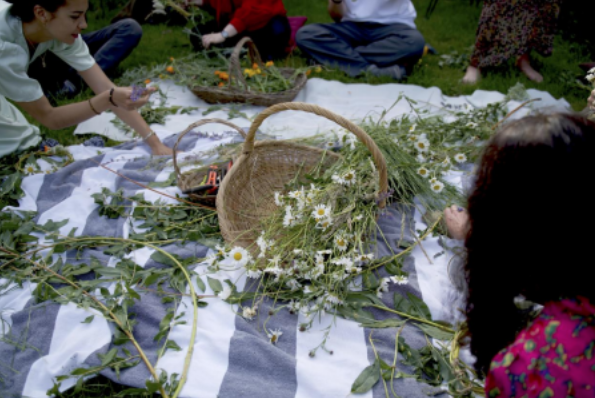
Set within the flourishing landscape of OmVed Gardens, the evening began with herbal teas and botanical refreshments, accompanied by guided tours of the gardens and seasonal flower crown making workshops. Guests then gathered for welcome remarks and conversation before a seated al fresco dinner celebrating the abundance of the season.
Attendees included Rosa Minney of UNIQLO, Phoebe Glover Minney, of With Nothing Underneath, Harriet Fletcher-Gilhuys of The Great British Wool Revival, Sarah Rose of Never Fully Dressed, Aydin and Angie Kurdash of Gina, Brontë Crouch of JW Anderson, Forbes contributor and author Jeetendr Sehdev, BBC broadcaster Aaron Akinyemi and other leaders from across fashion, media, sustainability and entrepreneurship.
The event highlighted the growing importance of creating spaces for meaningful dialogue across sectors at a time when the fashion industry continues to navigate questions around sustainability, responsible growth, craftsmanship, heritage, circularity and community building.
Tamara Cincik FRSA, Founder and CEO of Fashion Roundtable said:
"Fashion Roundtable's partnership with The Fashion People is about bringing policy and practical solutions together. As new product responsibility legislation emerges across Europe, businesses need support navigating change whilst creating long-term value. Collaboration across industry has never been more important."
Dias Nurlanov, Founder of The Fashion People, said:
"Circularity is no longer a future ambition; it is becoming a business necessity. We are proud to work alongside Fashion Roundtable to help brands prepare for a more transparent, responsible and value driven future."
The evening also provided an opportunity to celebrate the progress made through Fashion Roundtable's ongoing initiatives, including The Great British Wool Revival, which continues to champion British wool, support rural economies and reconnect consumers with the value of natural fibres.
As the sun set over the gardens, conversations continued around the dinner table, with guests exchanging ideas on innovation, circularity, retail, media, education, policy and the role that nature can play in shaping healthier and more resilient business practices.
The Summer Solstice gathering reflects Fashion Roundtable's wider mission to bring together policymakers, industry leaders, educators and innovators to shape a more sustainable and prosperous future for fashion, whilst reinforcing The Fashion People's commitment to advancing circularity, resale and responsible growth.
Media enquiries and expert commentary
Tamara Cincik FRSA is available for media interviews, keynote presentations, panel discussions, broadcast appearances and expert commentary on topics including fashion policy, international trade, sustainability, circularity, British manufacturing, textiles, natural fibres, UK fashion education, responsible business, luxury, retail innovation and the future of the fashion industry.
Fashion Roundtable regularly provides expert insight and industry analysis to national and international media outlets, policymakers and business leaders.
ENDS
About Tamara Cincik FRSA
Tamara Cincik FRSA is Founder and CEO of Fashion Roundtable, the UK's leading fashion policy and industry think tank. She is Founder of The Great British Wool Revival, a Fellow of The King's Foundation, Secretariat of the All-Party Parliamentary Group for Fashion, Commissioner of the UK Trade and Business Commission, and Fellow of LPIP at the University of Birmingham.
About Fashion Roundtable
Fashion Roundtable is the UK's leading fashion policy and industry platform, bringing together stakeholders from across fashion, textiles, retail, education and government to create meaningful change and support a thriving, sustainable fashion ecosystem.
About The Fashion People
The Fashion People supports the transition towards more circular and responsible fashion business models, helping brands unlock value through resale, recommerce and product lifecycle innovation.
About OmVed Gardens
OmVed Gardens is a centre for ecological learning, biodiversity and regenerative living in North London, offering programmes and experiences that connect communities with nature, sustainability and wellbeing.
For further information, access to and bookings of Tamara Cincik, please contact Natalia Cassel at natalia@casselconsultancy.com || +447872506429
THE GREAT BRITISH WOOL REVIVAL SUMMIT CONVENES INDUSTRY, EDUCATION AND POLICY LEADERS AT DUMFRIES HOUSE
FOR IMMEDIATE RELEASE____21st May 2026
THE GREAT BRITISH WOOL REVIVAL SUMMIT CONVENES INDUSTRY, EDUCATION AND POLICY LEADERS AT DUMFRIES HOUSE
Hosted in collaboration with The King's Foundation, the inaugural summit explored the future of British wool, regenerative fashion, education and rural industry.
GBWR summit imagery credit: Jamie Simpson - Google Drive
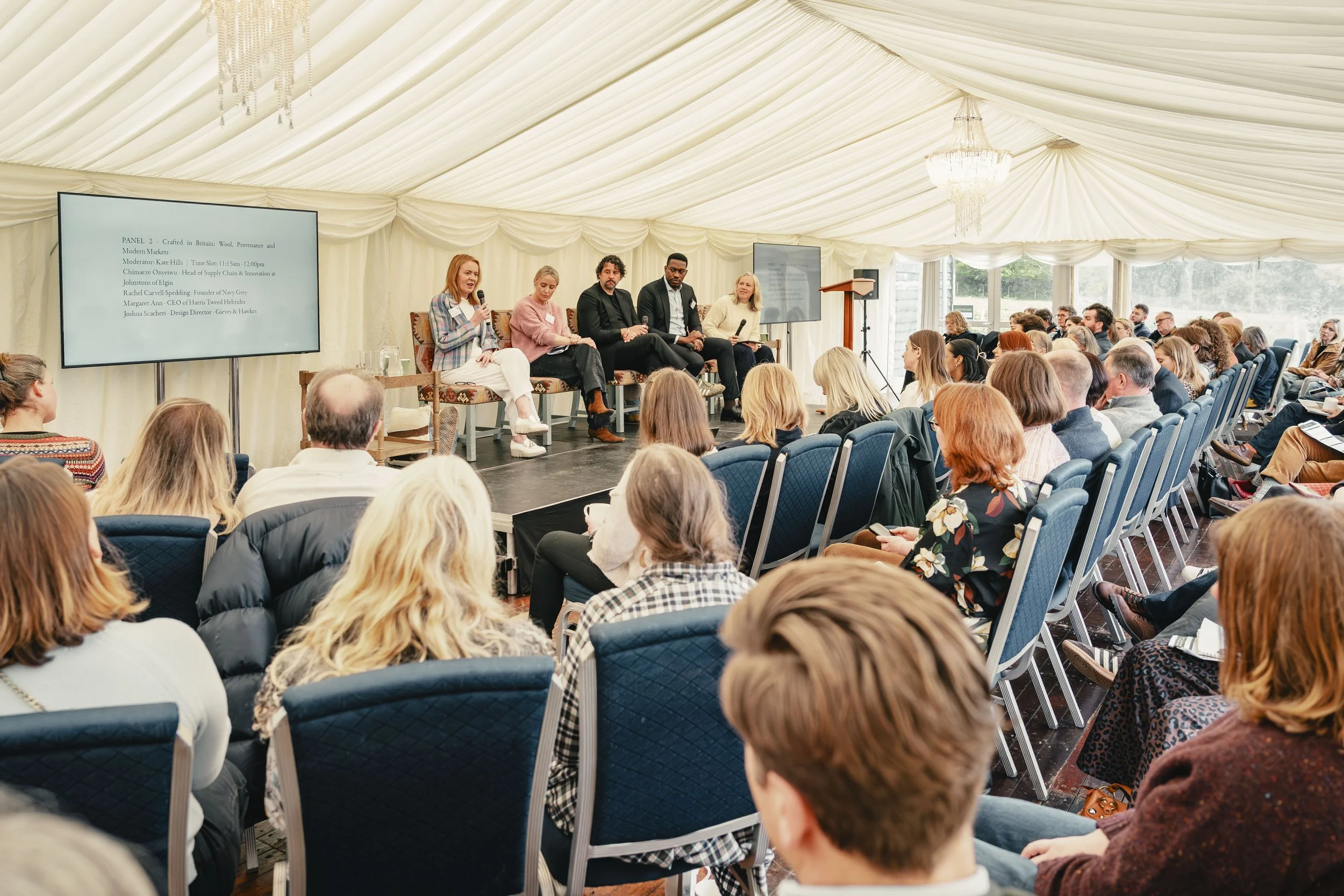
DUMFRIES HOUSE, SCOTLAND - Leaders from across fashion, agriculture, education, sustainability and policy gathered this week at Dumfries House for the inaugural Great British Wool Revival Summit, hosted in collaboration with The King's Foundation.
Founded by Tamara Cincik, Founder and CEO of Fashion Roundtable, The Great British Wool Revival was launched to champion British wool as a cornerstone of the UK’s cultural, agricultural and economic future - reconnecting fashion, farming, craftsmanship and education through a regenerative lens.
Held at Dumfries House - headquarters of The King’s Foundation, His Majesty The King’s flagship nature and sustainability charity - the two-day summit brought together thought leaders, designers, researchers, farmers, educators, manufacturers and policymakers for a programme focused on the future potential of British wool and natural fibres.
The summit opened with a dedicated Education Day, welcoming students, academics and emerging talent into conversations around textile innovation, circularity, craft preservation and regenerative systems thinking. The following day, Industry Day convened senior figures from across the fashion and wool ecosystem to address challenges and opportunities facing British wool production, supply chains, manufacturing and consumer engagement.
Speakers and contributors across the two days included representatives from across the worlds of fashion, farming, education, sustainability, manufacturing and policy, reinforcing the growing momentum behind British wool as both a cultural and commercial force.
Topics explored throughout the summit included:
The future of regenerative fashion and fibre systems
Rebuilding British textile manufacturing and regional skills
Wool innovation and material research
Education and pathways into craft and textile industries
Circular business models and resale ecosystems
The role of natural fibres within sustainable luxury
Cross-sector collaboration between agriculture, fashion and policy
The summit also highlighted the growing impact of The Great British Wool Revival initiative, which is supported by The King’s Foundation, since its launch in 2024, including increased visibility for British wool, expanded industry participation and renewed conversations around localised textile economies and rural craftsmanship.
Ashleigh Douglas, Future Textiles Manager for The King’s Foundation at Dumfries House, said: "A decade on from the signing of the Dumfries House Wool Declaration, the successful Great British Wool Revival Summit has decisively cemented the close collaboration between farmers and the fashion industry that is key to British wool's long-term, sustainable future. The innovative two-part summit, including the 'clip-to-consumer' Industry Day, brought the entire value chain together, setting a clear path to sustain the momentum created by wool’s recent ten-year high in price.”
Tamara Cincik concludes, “The inaugural Great British Wool Revival summit at Dumfries House, the headquarters of The King’s Foundation, was the first clip-to-consumer event of its kind, bringing the entire value chain from farmers to designers under one roof. It felt so special to see the connection restored between farming and design and to see networks being revived and in many cases created. A truly wonderful event.”
The Great British Wool Revival continues to build a national and international platform for British wool - bringing together heritage, innovation, education and industry to reimagine the future of fashion and textiles through a more regenerative and locally rooted approach.
About The Great British Wool Revival
The Great British Wool Revival is an initiative founded in September 2024 by Tamara Cincik in collaboration with The King's Foundation to champion British wool, support regenerative fashion systems and reconnect the fashion industry with local craftsmanship, agriculture and manufacturing.
About Fashion Roundtable
Fashion Roundtable is the leading UK-based fashion policy and industry platform bringing together government, business, academia and the creative industries to shape a more sustainable and responsible future, boosting creative wellbeing within the economy
About The King’s Foundation
The King’s Foundation The King’s Foundation is a charity founded by King Charles III and was first formed in 1990. His Majesty is the Royal Founding President of the charity.
Inspired by the vision and values of His Majesty, the Foundation builds and supports communities where people, places and the planet can coexist in harmony. The charity offers education courses for almost 15,000 students annually, health and wellbeing programmes for nearly 2,000 people every year, and spearheads placemaking and regeneration projects in the UK and overseas to revitalise communities and historic buildings.
For further information, please contact Comms Partner Natalia Cassel at Cassel Consultancy: natalia@casselconsultancy.com | +447872506429
Fashion Roundtable Launches Landmark Report on Policy Fragmentation andPlace-Based Opportunity in UK Fashion and Textiles
FOR IMMEDIATE RELEASE
24th April, 2026
Fashion Roundtable Launches Landmark Report on Policy Fragmentation and
Place-Based Opportunity in UK Fashion and Textiles
Fashion Roundtable has published a major new report, Policy Fragmentation and Place-Based Opportunity in UK Fashion and Textiles, authored by Tamara Cincik and Alix Coombs, in partnership with the Local Policy Innovation Partnership (LPIP) Hub led by the University of Birmingham’s City Region Economic and Development Unit (City-REDI).
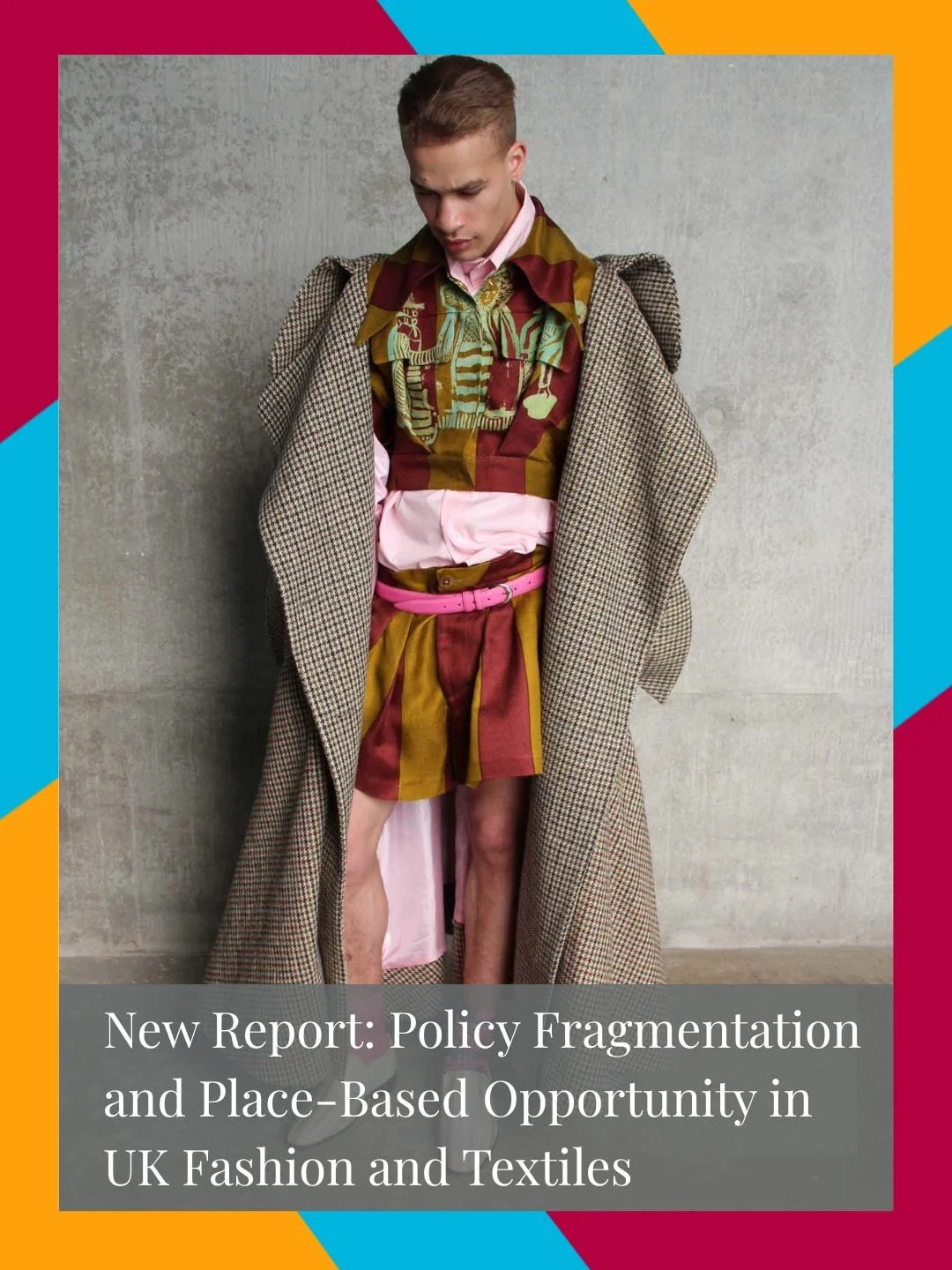
Image of courtesy of Atgof Studio. All rights reserved.
The report finds that the UK fashion and textiles sector is not constrained by a lack of talent, demand or ambition, but by the way it is governed. Drawing on 19 in-depth interviews with industry leaders, policymakers, local authorities and civil society organisations, alongside extensive policy analysis and stakeholder mapping, it reveals a sector that is structurally underserved due to fragmented governance, short-term funding cycles and ongoing ambiguity over whether it sits within creative industries or manufacturing policy.
This lack of coherent positioning has resulted in reduced visibility, inconsistent investment and limited strategic coordination, despite the sector’s clear regional economic significance.
Alongside this diagnosis, the report identifies a critical and underused opportunity: public procurement. Where procurement is aligned with place-based industrial strategies, fashion and textiles can function as anchor infrastructure within local economies, strengthening skills pipelines, enabling innovation and supporting social mobility across the UK’s regions.
Tamara Cincik, Founder and Director of Fashion Roundtable, and co-author of the report, said:
“The thinking behind this report stems from my realisation during the pandemic that the UK had a very disjointed approach to public procurement and a dire need to fix it with a more strategic nationwide and long term approach. I believe firmly that if the UK approached the manufacturing of clothing in the same way as it is aiming to with energy and food, with a more sovereign approach, we would stabilise order books, see greater inward investment and support meaningful employment across the UK seeing a long-term real boost to the economy.”
Alix Coombs, co-author of the report, said:
“Fashion and textiles in the UK is being held back not by a lack of capability, but by a lack of coherent governance. What we are seeing is a fragmented policy landscape that fails to recognise the sector’s true economic and social value. If we align procurement, industrial strategy and place-based policy, we have a real opportunity to rebuild resilient local systems that support both people and production.”
The report calls on government to formally recognise fashion and textiles within industrial strategy, to use public procurement as a strategic lever to stabilise domestic demand and strengthen local value chains, and to improve coordination across national, devolved and local policy frameworks.
This is not a call for special pleading. It is a call for coherence. A sector with proven place-based impact is making the case for smarter, more joined-up governance that reflects its real economic and social contribution.
Fashion Roundtable and the LPIP Hub at the University of Birmingham, led by City-REDI, will continue to convene dialogue across industry and policy to support the translation of these findings into action.
Read the full report:
https://www.fashionroundtable.co.uk/reports
For more information:
Alix Coombs
Strategic Consultant - Organisational Development & Project Design
Fashion Roundtablealix.coombs@fashionroundtable.co.uk
The Fashion People marks its UK arrival with a week connecting Fashion, Technology & British Industry
For immediate release____London, 16th March 2026
The Fashion People marks its UK arrival with a week connecting Fashion, Technology & British Industry
FULL ASSETS - TFP lands in UK March'26 - Google Drive
Over the past week, The Fashion People (TFP) marked its arrival in the UK with a series of gatherings spanning the British capital and the heart of the countryside, bringing together designers, founders, policymakers and industry leaders at the intersection of fashion, technology and sustainability.
Founded in 2022, The Fashion People builds and operates branded resale platforms that enable fashion brands to recover value from returns, unsold inventory and pre-owned pieces while keeping customers within their ecosystem. The fully integrated infrastructure allows brands to launch their own resale platform within days - turning circularity into a scalable revenue channel, while strengthening long-term customer loyalty and engagement.
The week began in London with an International Women’s Day Lunch, hosted by Tamara Cincik of Fashion Roundtable in association with The Fashion People, held at Michelin Star restaurant Luca in Clerkenwell. The intimate gathering brought together female leaders from across the British fashion ecosystem - from designers and entrepreneurs to sustainability advocates - for a conversation centred on leadership, industry transformation and the importance of supporting grassroots British brands.
Among those attending were Lady Amelia Windsor, Angie Kurdash, Martha Mosse and other influential voices from the UK fashion community. Dias Nurlanov, founder of The Fashion People, joined as the sole male at the table.
IWD lunch on Getty Images, by Hoda Davaine
The conversations continued at the Drapers Conscious Fashion Summit & Awards, where Tamara Cincik was one of the award judges. The Fashion People participated as a sponsor and award announcer for the One to Watch category supporting one of the industry’s leading platforms focused on circularity, responsible retail and the future of sustainable fashion business models.
Tamara Cincik, founder of Fashion Roundtable, said:
“We partnered with The Fashion People because we believe strongly in the concept. It allows brands to retain customer loyalty and brand IP while boosting their bottom line through a seamless solution that effectively turbocharges the secondhand economy.
It was wonderful to bring together brilliant women and thought leaders for our International Women’s Day lunch at LUCA, welcoming Dias Nurlanov, CEO of The Fashion People, into that conversation before continuing the discussions at the Drapers Conscious Fashion Awards.”
The week concluded in quintessential British style at the Cheltenham Gold Cup, where Fashion Roundtable and The Fashion People hosted a private box in the Main Grandstand. Guests gathered for a day combining sport, style and conversation at one of Britain’s most iconic cultural and sporting events.
Among those attending were leading figures from across the British fashion industry including designers Jeff Banks, Oliver Spencer, Joshua Scacheri and Charlie Allen, alongside industry voices such as Simon Platts, Scott Wimsett, Ruth Hands and Harriet Fletcher-Gilhuys, together with founders, editors and entrepreneurs from across the UK fashion landscape.
FR & TFP at Cheltenham Gold Cup on Getty
British fashion has long been rooted in the idea of craftsmanship and longevity - garments designed to be worn, repaired and passed on. The arrival of The Fashion People (TFP) in the UK brings a new technological layer to that tradition, enabling brands to give garments a second life with just a few clicks. By integrating resale directly into a brand’s own platform, TFP allows pieces that were made to last to remain within the brand ecosystem - extending their lifecycle while strengthening the relationship between brands and their customers.
Reflecting on the Cheltenham Gold Cup gathering, Cincik added:
“Cheltenham highlights the very best of British style - from equestrian chic to heritage brands working with natural British fibres such as tweed and wool, all with that unmistakable English eccentricity.
Hosting our guests in our own box was a fantastic way to celebrate the strength of British brands. Looking around the racecourse, you could see so many people dressed in heritage labels whose values align closely with our own at Fashion Roundtable and the work we’ve done promoting British wool through the Great British Wool Revival.”
Founder of The Fashion People, Dias Nurlanov, concluded: “British fashion has a unique combination of heritage, craftsmanship and cultural influence. What we see today is a powerful opportunity to connect that heritage with modern technology. Our platform allows brands to launch their own resale marketplace in as little as a day, turning unsold inventory and pre-owned pieces into a new revenue stream while keeping customers within their own ecosystem.
By integrating resale directly into a brand’s existing e-commerce infrastructure, we help brands quickly unlock value from products already in circulation - often delivering a clear return on investment within months. Instead of losing customers to external marketplaces, brands can retain the relationship, drive repeat purchases, and transform circularity into a scalable growth channel.”
Across the week’s events - from the International Women’s Day lunch to the Drapers summit and the Cheltenham Gold Cup - a common theme emerged: connecting global fashion innovation with the grassroots creativity and entrepreneurial spirit of British fashion.
For The Fashion People, the week marked more than a series of events. It signalled the beginning of a long-term commitment to the UK - working with British brands, industry leaders and policymakers to help build the infrastructure that supports circular fashion, unlocks new value from garments already in circulation, and helps brands keep customers engaged for longer.
For further info, please contact Natalia: natalia@casselconsultancy.com, +447872506429
Fashion Roundtable and The Fashion People Host Industry Leaders for a Burns Night Dinner at Boisdale Belgravia
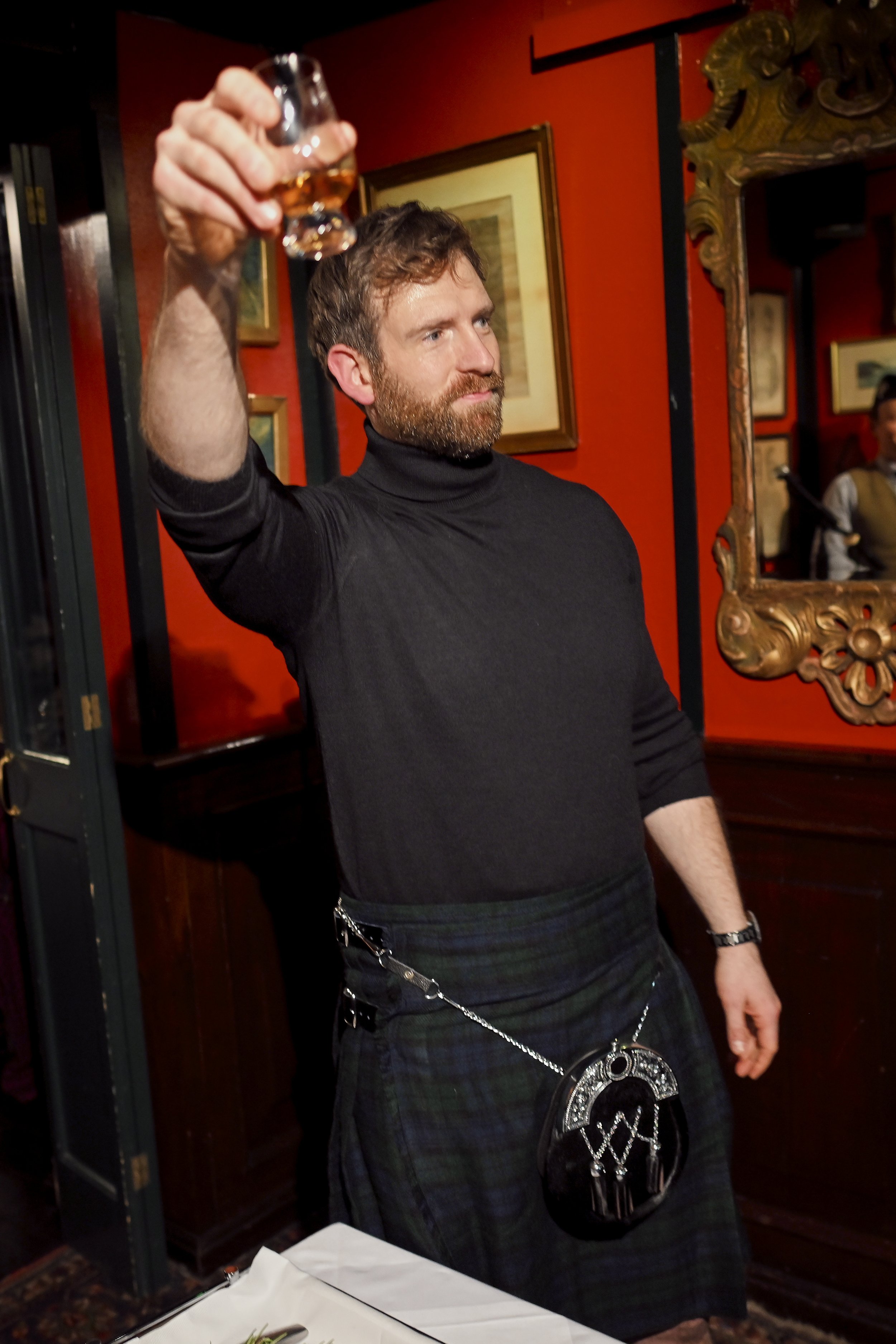
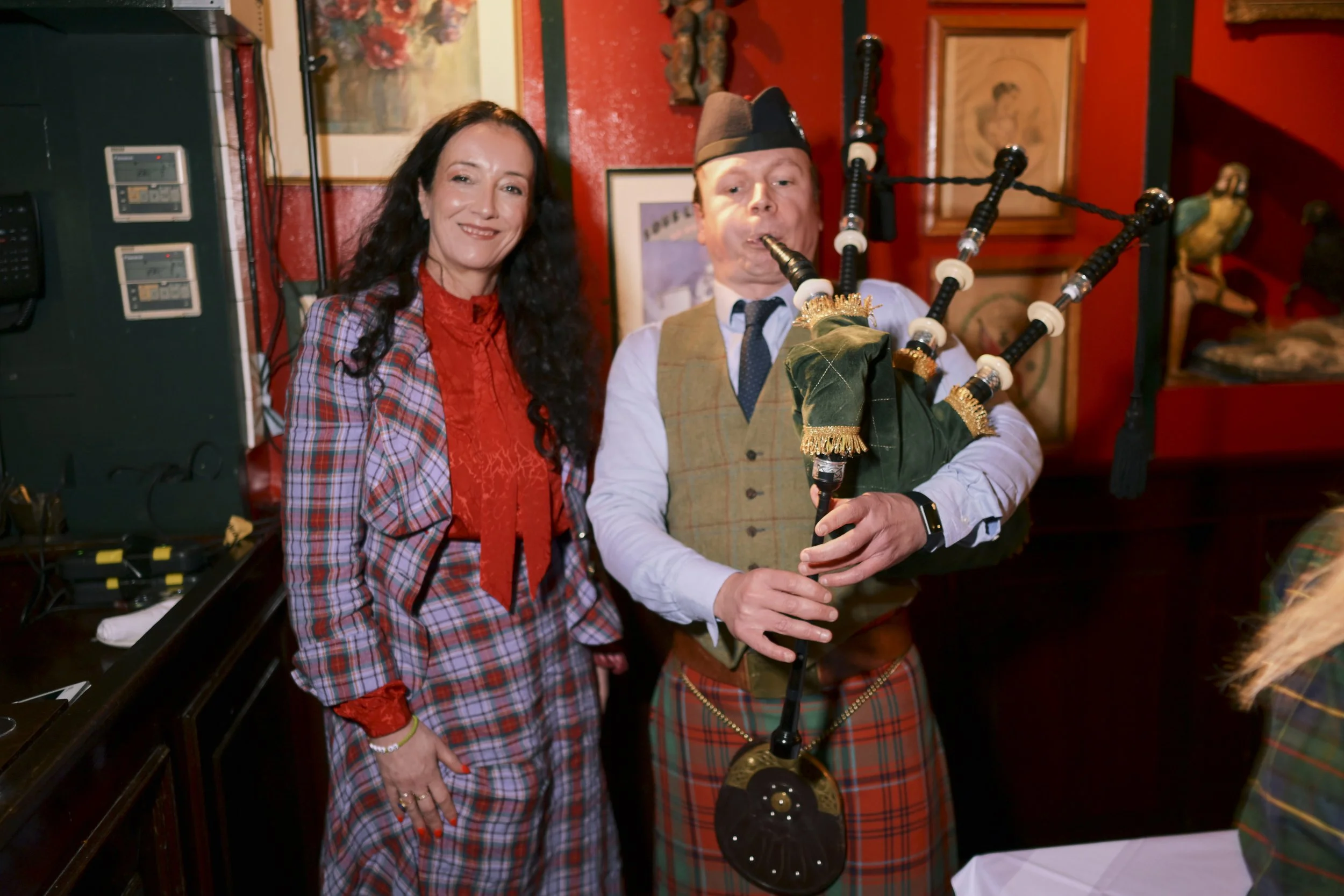
FOR IMMEDIATE RELEASE___London, 4th February 2026
Fashion Roundtable and The Fashion People hosted an intimate Burns Night dinner at Boisdale Belgravia, taking over its Auld Restaurant for an evening celebrating circular fashion, heritage and community.
wider raft of unmarked imagery
Hosted by Tamara Cincik, with the generous support of The Fashion People’s Dias Nurlanov, the guest list brought together leaders across fashion, media and sustainability, including Suzy Menkes, Clare Press, Bay Garnett, Virginia Bates, Bora Aksu, Karen Binns, Joshua Scacheri, Jason Gerrard, Emily Zak, Bella Webb, Dave Benett and representatives from Savile Row and the Pollen Estate, Mulberry, TOAST, Bamford, Gieves & Hawkes, Threadology and Paul Smith among others.
Guests were welcomed by a traditional bagpiper, who later returned to ceremoniously usher in the haggis. Actor Craig McGinlay, having travelled from Gleneagles and dressed in a kilt made especially for him by a fan, and styled with his own wardrobe, delivered a stirring recital of Robert Burns’ Address to a Haggis.
Tables were laid with ivy garlands and vintage vases filled with thistle, white rose and lucky heather, tied with tartan ribbon. The menu honoured tradition with smoked salmon, followed by haggis (veg & non) - toasted with “a wee dram” - and Cranachan to finish.
Tamara said: “What a fantastic evening to celebrate the secondhand economy, Scottish heritage and our exciting partnership with The Fashion People at our Burns night event at Boisdale, Belgravia. Bringing such brilliant minds together in such a special setting made it truly memorable - and when the bagpipes began, it felt unmistakably magical.”
***
About Fashion Roundtable
As fashion’s leading think-tank and change agency, Fashion Roundtable solves the big questions and delivers consistent thought leadership. Its unique team drawn from fashion, industry, economics, academia and politics, offers transformative strategies across the sector’s complex value chain.
The only organisation that delivers creative leadership to solve the world’s pressing social, environmental and economic problems, with a focus on creative industry issues, heritage crafts, industrial legacies, and an innovation-led future, Fashion Roundtable creates policy roadmaps to address these with social-purpose driven solutions. Building active partnerships with industry experts, business leaders and sustainable innovators, and developing independent evidence-based data insights, research, and reports, Fashion Roundtable is a not-for-profit, non-partisan, independent voice.
About The Fashion People
The Fashion People enables brands to launch and operate their own branded resale marketplaces.
Managing the platform and end-to-end operations - from logistics and authentication to customer experience and data - the company allows brands to generate new revenue, capture valuable circular data and strengthen customer loyalty, without operational complexity.
By retaining ownership of their resale ecosystem, brands transform second-hand into a strategic asset rather than a third-party channel.
Socials
Fashion Roundtable
LinkedIn: https://www.linkedin.com/company/11204144/admin/dashboard/
IG: https://www.instagram.com/fashionroundtable/
Website: https://www.fashionroundtable.co.uk/
The Fashion People
LinkedIn: https://www.linkedin.com/company/thefashionpeople/?originalSubdomain=pl
IG: https://www.instagram.com/tfp.resale/
Website: https://thefashionpeople.com/
For further information, please contact natalia@casselconsultancy.com ; +447872506429
As farmers take to Westminster in protest at yesterday’s Budget, The Great British Wool Revival is delighted to announce that there is a decade level high in the price of British wool.
// PRESS RELEASE
For Immediate Release: 27th November 2025
As farmers take to Westminster in protest at yesterday’s Budget, The Great British Wool Revival is delighted to announce that there is a decade level high in the price of British wool.
The Great British Wool Revival is a pioneering talent initiative launched by Fashion Roundtable in September 2024 in partnership with The King’s Foundation and support from brands including YOOX Net-A-Porter and John Smedley. Aimed at supporting UK sheep farmers in selling their fleeces )as all too often this was a by-product and being dumped or burnt by farmers) and designers in working with British wool.
Just one year later the price of the yearly 'clip' of British wool has reached its highest price in 9 years. In October prices rose by an astonishing 22.5%. This means more farmers now have the opportunity to dual income stream their revenue from sheep, making money from their wool as much as from their meat sales. A timely solution for our nation’s farmers.
What's next? The Great British Wool Revival Summit at Dumfries House, May 2026
The King’s Foundation has kindly agreed to host the first ever Great British Wool Revival Summit at their headquarters Dumfries House in May 2026.
The event will strengthen the wool network for luxury, business, brands and regenerative thought leadership.
Official Media Partners: The Farmers Guardian. Expected coverage spans: BBC, Guardian, Vogue Business, Business of Fashion, Country Life, Tatler, Financial Times and Selvedge amongst others.
Tamara Cincik, Founder and CEO of Fashion Roundtable, Founder of The Great British Wool Revival and Fellow of The King’s Foundation said:
“The price of British wool reaching a 9 year high is evidence that Fashion Roundtable’s pioneering work changes lives and incomes with positive impact. We launched The Great British Wool Revival to plug a gap and refocus attention back on the best of British, from our rural sheep farmers, to our talented designers. UK farmers have faced a series of challenges, so if we can support their income streams by enabling more designers to work with British wool, then not only does this keep value chains UK-wide, it also reduces our carbon footprint by reducing our reliance on global suppliers. This means more support for our rural and urban economies, and income staying inside the UK from farmer to designer. A win-win.”
Notes to Editors:
The Great British Wool Revival was founded in 2024, and the project supports the development and expansion of the British wool industry in the UK through an open-access and interactive map of stakeholders across the supply chain, paired with detailed resources on the best practices for utilising British wool. The initiative connects the dots between farmer and designer, ensuring sustainable income generation for British fleeces while working towards best-practice and proof of concept for fibres grown on British soil.
The Great British Wool Revival, has been showcased at numerous events since its launch, including Groundswell Agriculture, Future Fabrics Expo, London Design Festival, The Knit and Stitch Show, Interwoven: Wool Across Borders with Khadi London x Selvedge Magazine, and Fashion Council Germany x The King’s Foundation youth conference, fast becoming a well recognised change maker. More information can be found on the GBWR website here.
Fashion Roundtable is the only think tank in the UK dedicated to reimagining a creative and responsible fashion industry. More here.
Press Coverage can be found here.
For more information please contact:
Natalia Cassel, Communications Partner, Natalia@casselconsultancy.com
To partner with The Great British Wool Revival, contact Harriet Fletcher-Gilhuys, harriet.fletcher-gilhuys@fashionroundtable.co.uk

FOR IMMEDIATE RELEASE: Fashion Roundtable and Aja Botanicals celebrate Creative Wellbeing and British Craftsmanship during Chelsea Flower week
Tilly Wood (L), Maddison May Brudenell Mountbatten with baby Michael and Tamara Cincik (R) Photo: Steve Watson.
house high-res assets here (pls credit Steve Watson)
Full raft of assets here (user: fashion; password: roundtable; pls credit Steve Watson)
FOR IMMEDIATE RELEASE
Fashion Roundtable and Aja Botanicals celebrate Creative Wellbeing and British Craftsmanship during Chelsea Flower week
London, 23rd May 2025 — Yesterday, on a warm and vibrant evening at Gold Notting Hill, Fashion Roundtable and Aja Botanicals brought together industry leaders, creatives, and changemakers to celebrate the intersection of craft, sustainability, and wellbeing.
In attendance were Jo Wood, Camilla Rutherford, Sascha Bailey and Lucy Brown (expecting their first child), Maddison May Brudenell Mountbatten with baby Michael, Rowan Brudenell Mountbatten, Clare Press, Carry Somers, Julia Clancey, Azzi Glasser, Victoria Grant, Maria Magdalena Campos-Pons & Kamaal Malak, Omer Asim & Maya Antoun, Darshna Chandaria & Patrick Couris, Dominic Sebag-Montefiore, Joshua Scacheri, Lainey Sheridan-Young, Naz Choudhury, Lilia Stobbs, Terence Eben and many more gathered on the garden rooftop as the sun set.
The event, co-hosted by Tamara Cincik, CEO and founder of Fashion Roundtable, and Tilly Wood, founder of Aja Botanicals, spotlighted the urgent need for creativity-led solutions to the systemic challenges facing fashion, craft and policy today. Guests were invited into a sensorial experience, surrounded by the captivating scent of Tilly’s British-made candles, the sight of incredible bespoke flower and vegetable arrangements by young florist ARRANGED, and an immersive celebration of sustainable craft. Highlights included floral natural dyeing demonstrations by The Secret Dyery, a showcase from the Great British Wool Revival, and garments from The King’s Foundation’s Modern Artisan collection—crafted using the innovative King’s Clip, natural dyes, and championing homegrown talent. The evening was complemented with conscious culinary creations, washed down with British-made botanical spirits, and Dorset-born, Apres Provence rosé.
“This evening was a celebration of creative wellbeing—something that lives at the heart of both Fashion Roundtable and Aja Botanicals,” said Cincik. “Our work is about aligning values with impact, shifting from linear systems to regenerative, community-driven models.”
Cincik reflected on her own journey from stylist to policy advisor, sharing how storytelling and systems thinking underpin her advocacy for a Creative Wellbeing Economy—a new framework presented as a solution in Fashion Roundtable’s landmark Cleaning Up Fashion report (https://www.fashionroundtable.co.uk/reports). This economic vision emphasises local supply chains, regenerative practices, and the power of creativity to heal and transform.
Attendees explored the progress of the Great British Wool Revival, a partnership between Fashion Roundtable, The King’s Foundation and YNAP, designed to revitalise the British wool industry by supporting fibre sovereignty and fairer value for farmers. The initiative has already mapped over 200 participating brands and helped drive the highest British wool prices in seven years.
Further initiatives announced include a Wool Conference at Dumfries House in 2026; a forthcoming Best of British fashion and textiles showcase currently in development; and a pioneering travelling living museum, developed in partnership with Heritage Craft, designed to democratise craft education by delivering hands-on experiences directly to underserved communities across the UK.
Cincik concluded: “We believe in a future where creative practice, wellbeing, and economic growth are intertwined. Tonight was a step toward that vision.”
The event was made possible through the support of AEON Black Creative’s British-made and botanical spirits, Apres Provence rose' and the gracious hosting of Nick House at GOLD.
For further information, media inquiries, select imagery, or interview requests, please contact: natalia@casselconsultancy.com

Overview of the Fashion & Economic Value Report 2024
As the election period is nearing its conclusion, I wanted to provide you with pivotal insights from our latest report, "Fashion & Economic Value Report 2024." This report underscores the significant contributions and future potential of the UK fashion sector and outlines critical recommendations for driving sustainability, inclusivity, and economic resilience within the industry.
Report cover: Design by www.studiobyfarr.co.uk

As the election period is nearing its conclusion, I wanted to provide you with pivotal insights from our latest report, "Fashion & Economic Value Report 2024." This report underscores the significant contributions and future potential of the UK fashion sector and outlines critical recommendations for driving sustainability, inclusivity, and economic resilience within the industry.
Overview of the Fashion & Economic Value Report 2024
Our latest report illuminates the vast contributions of the UK's fashion sector, which generates approximately £60 billion annually—nearly half of the total economic impact from the UK's creative industries. It explores the economic influence, regional growth, and pivotal role in sustainability and innovation of the fashion industry. Here are the key findings and recommendations from the report:
Key Findings:
Economic Impact: Fashion is the largest of the UK's creative industries, contributing around £60 billion per year to the economy and employing 1.3 million people.
Regional Growth: The fashion industry supports regional economies, with notable increases in fashion businesses in Scotland and employment growth in Manchester.
Sustainability Challenges: The industry faces significant challenges related to sustainable manufacturing practices and the environmental impact of fast fashion.
Recommendations:
Prioritise UK Manufacturing: Given the economic contribution of the fashion industry, it is crucial to prioritize keeping and expanding clothing manufacturing in the UK to boost economic growth.
Support Regenerative Practices: Introduce tax and financial incentives to support regenerative and sustainable practices, ensuring skilled jobs can be developed to underpin local economies.
Increase Responsibilities of Fast Fashion: Implement laws to hold fast fashion companies accountable for their environmental impact, preventing them from skewing the market in a damaging way.
Develop Recycling Infrastructure: Work with the private sector to unlock funding and space needed to develop textile recycling centres, creating jobs and supporting local economies.
Encourage Fashion Startups: Monitor the success of fashion startups and ensure university curriculums equip students with the necessary business skills to thrive in the evolving fashion industry.
Integrate Fashion in Devolved Powers: Consider the role of the fashion industry when allocating funding and powers to devolved areas, ensuring local strategies support regional economic growth.
The fashion industry remains a cornerstone of the UK economy, previously the fastest-growing creative industry in the country. Our report provides a comprehensive overview of the current landscape and proposes actionable solutions for leading in sustainability, social justice, increased social mobility, and boosting UK GDP.
We urge all political parties to incorporate these recommendations into their post-election strategies. This is a pivotal moment to ensure a sustainable, inclusive, and prosperous future for the UK fashion industry.
We also seek your support in raising awareness about our work and the critical issues outlined in our report. By highlighting these key findings and recommendations, you can help drive the necessary changes that will benefit the entire fashion sector and beyond.
For further details or to arrange an interview, please feel free to reach out to Jane in cc.
You can read the full report here.

Delivering a Sector Vision for the Fashion and Textile industry
On the 22nd February 2024, Fashion Roundtable as Secretariat of the Ethics and Sustainability in Fashion All-Party Parliamentary Group delivered their sector vision for the fashion, textiles, manufacturing and retail industries to leading figures in the sector.
John McNally MP and Fashion Roundtable’s CEO, Tamara Cincik, chaired a poignant panel discussion about the future of the sector. Panellists included, Junior Bishop – a Zebedee Model and Advocate for Minority Groups; Clare Press – Fashion Roundtable’s Global Sustainability Expert, Author and Podcast Host of the Wardrobe Crisis; Julia Roebuck – Volunteer Director of Thread Republic (Mend Assembly Affiliate); Maria Chenoweth – Co-founder of Charity Super.Mkt; Dominique Muller from Labour Behind the Label.
Talking points encompassed representation and inclusion; the effects of Artificial Intelligence on the modelling sector; the Creative Wellbeing Economy; Clare Press’s research on reimagining the sector; social prescribing and third-sector initiatives; the purposeful use of vacant spaces with the example of Charity Super.Mkt and worker rights.

Image: Panellists and Chair from left to right: Junior Bishop, Clare Press, Tamara Cincik, Chair John McNally MP, Dominique Muller, Julia Roebuck, Maria Chenoweth. Credit Steve Watson.
On the 22nd February 2024, Fashion Roundtable as Secretariat of the Ethics and Sustainability in Fashion All-Party Parliamentary Group delivered their sector vision for the fashion, textiles, manufacturing and retail industries to leading figures in the sector.
John McNally MP and Fashion Roundtable’s CEO, Tamara Cincik, chaired a poignant panel discussion about the future of the sector. Panellists included, Junior Bishop – a Zebedee Model and Advocate for Minority Groups; Clare Press – Fashion Roundtable’s Global Sustainability Expert, Author and Podcast Host of the Wardrobe Crisis; Julia Roebuck – Volunteer Director of Thread Republic (Mend Assembly Affiliate); Maria Chenoweth – Co-founder of Charity Super.Mkt; Dominique Muller from Labour Behind the Label.
Talking points encompassed representation and inclusion; the effects of Artificial Intelligence on the modelling sector; the Creative Wellbeing Economy; Clare Press’s research on reimagining the sector; social prescribing and third-sector initiatives; the purposeful use of vacant spaces with the example of Charity Super.Mkt and worker rights.
The meeting provided an opportunity for Fashion Roundtable to share recommendations based on evidence from a number of key sector roundtables, an industry wide snap survey and meetings with stakeholders. Fashion Roundtable identified the following top-line issues with clear recommendations for each:
Restriction-free movement for UK talent who wish to work in Europe and a reduction in red tape for the transportation of goods between the UK and EU.
The UK committing to Extended Producer Responsibility (EPR) to support the transition of the industry’s annual carbon footprint of 3.3 billion tonnes CO2e to Net Zero by 2050.
The reinstating of the VAT Retail Export Scheme with an estimated economy boost of £10bn a year according to current data.
Regenerating high streets to support UK businesses and protect local communities.
Greater support for on-shoring, a commitment to British made and a strengthening of public procurement.
Investment in UK manufacturing through consistent and secure orders.
Support for the UK as a place of decent work for garment workers.
Ratify the UNESCO Convention of Intangible Cultural Heritage.
Return to STEAM education.
Initiatives for UK workers from working-class backgrounds to access training and employment in the creative industries.
Support for more inclusivity in the fashion sector.
Rejoining of the Erasmus + Programme.
Artificial Intelligence (AI) and support of creative intellectual property (IP).
Food and fibre sovereignty.
Creative Wellbeing – Support for access to meaningful and rewarding work through a revaluing of craft, creativity, community, intersectionality and inclusivity.

Image: Chairs John McNally MP and Tamara Cincik. Credit Steve Watson.
Fashion Roundtable’s recommendations can be viewed here.
Fashion Roundtable also launched their Creative Wellbeing Economy paper, a living document which places people and planet in an interwoven symbiotic relationship: revaluing locality, creativity, and enhancing accessibility to transformative tools and opportunities as links in a newly formed chain of opportunity from cradle to grave.
Chair John McNally MP said:
“Once again the ESF APPG had a full attendance with a packed room of business representatives and academics alike. What was really interesting is the wider range of ages and diversity that attend, probably, the best attended APPG at Parliament.
“This APPG has provided so much information from the guest speakers and also the attendees who care deeply about this industry and how everyone engages with one another – it’s a pleasure to witness.
“The recommendations are there for everyone to read and understand how important the work that the Secretariat provides in pulling all this information together and to produce such a readable document.
“It is apparent that everyone who attends appreciates the effort, thought and expertise, and the knowledge in no small measure our professional Secretariat and guest speakers provide to all the attendees.”
Tamara Cincik, CEO, Fashion Roundtable said:
“I was delighted to deliver our sector vision in the build up to a General Election to the packed Parliamentary room filled with policy makers, industry leaders and academic experts. Our values and concerns are of paramount importance as politicians from across the political divide consider their manifesto pledges. We hope that our sector vision and key recommendations will help them to deliver those effectively and show understanding and commitment to our valuable sector and its stakeholders.”
Meg Pirie, Fashion Roundtable said:
"In writing these policy recommendations we have focused on long-term system’s change for the sector. The Creative Wellbeing Economy turns the 'growth-at-all-costs' paradigm on its head and reimagines something much deeper, that offers communities an opportunity to thrive outside of the current system. This focuses on long-term policies which put people and the planet first – valuing localism, food and fibre sovereignty, the preservation of cultural heritage and hyper-local placemaking. This is a living document and will forever evolve, but is the first step to a much-needed system's change within the fashion sector."

Make it British and Fashion Roundtable host industry roundtable with Baroness Jane Bonham-Carter and the Liberal Democrat Creative Network on the impacts of Brexit on the fashion sector
On the 31st January 2024, Fashion Roundtable along with Make it British, hosted an industry-focused roundtable discussion with Baroness Jane Bonham-Carter – the Liberal Democrat Lords Spokesperson for Culture Media and Sport, as well as the Liberal Democrat Creative Network and the Liberal Democrat DCMS Parliamentary Group.
The purpose of the roundtable was to discuss the main challenges that post-Brexit agreements were posing to the British fashion sector, providing an opportunity for the top-line issues of Brexit to be heard.

image of Kate Hills and Tamara Cincik in the House of Lords.
Topic: How Brexit has impacted the British fashion sector and what we can do about it
House of Lords, London, 31st January 2024 // PRESS RELEASE
On the 31st January 2024, Fashion Roundtable along with Make it British, hosted an industry-focused roundtable discussion with Baroness Jane Bonham-Carter – the Liberal Democrat Lords Spokesperson for Culture Media and Sport, as well as the Liberal Democrat Creative Network and the Liberal Democrat DCMS Parliamentary Group.
Chaired by Fashion Roundtable’s CEO, Tamara Cincik, as well as Charles Brand, the Chair of the Liberal Democrat Creative Network, those who gave evidence at the roundtable included Kate Hills – CEO of Make it British; John Horner – CEO of Models 1 and the Chair of the British Fashion Model Agents Association (BFMA); Sylvie Freund Pickavance – Global Strategy and Business Development Director, Value Retail; Alexander Wills – Founder of Maake; Zowie Broach – Head of Programme, MA Fashion at the Royal College of Art; Paul Alger – Director of International Affairs at UK Fashion & Textile Association; Rachel Walker – Founder of Luxury Lockstitch.
The purpose of the roundtable was to discuss the main challenges that post-Brexit agreements were posing to the British fashion sector, providing an opportunity for the top-line issues of Brexit to be heard.
With the majority of the UK manufacturing sector made up of SMEs, the roundtable heard that Brexit has compounded a skills shortage. Issues of freedom of movement in both goods as well as talent as well as a massive impact to the luxury sector, tourism and hospitality due to the removal of the UK VAT Retail Scheme.
Tamara Cincik, CEO, Fashion Roundtable said:
“The impacts of Brexit have always been well understood by the fashion industry, who since Fashion Roundtable’s inception, have consistently told us the issues they face and the impacts this is having on the sector, from the loss of reputation, to the severity of the delays and cost of red tape, as well as unilateral decisions by the UK Government to end the lucrative VAT Retail Export Scheme, which Sylvie Freund-Pickavance cited could generate £10bn in terms of sales, hospitality and tourism for the UK economy and rebuild the UK’s reputation, as Paris not London is now the number 1 tourist destination of choice within Europe, impacting sales, spend and jobs.”
Kate Hills – CEO of Make it British said:
“UK garment and textile manufacturing is made up of thousands of micro businesses, and these roundtables are essential to get the voices of those businesses heard."
Baroness Jane Bonham-Carter the Liberal Democrat Lords Spokesperson for Culture Media and Sport said:
“Yesterday’s presentation of the serious issues facing the Fashion Industry highlighted not only the self-inflicted damage caused by post Brexit regulations but also a serious growing skills shortage. The Liberal Democrats will redouble efforts to highlight ways that the Government could undo some of the damage done.”
Charles Brand, the Chair of the Liberal Democrat Creative Network said:
“Yesterday’s briefing meeting organised by the Fashion Roundtable and Make It British, laid out the shocking damage done by post Brexit regulations and the associated skills shortages to what was until recently a world beating expanding industry. We will work to publicise the need for Government to urgently focus on coming up with solutions.”
Notes to Editors:
Baroness Jane Bonham-Carter is the Liberal Democrat Lords Spokesperson for Culture Media and Sport.
The Liberal Democrat Creative Network is the forum for people who work in or support the creative industries.
Fashion Roundtable is the only think tank dedicated to reimagining a creative and responsible fashion industry.
Make it British is a membership organisation, supporting UK brands. Founded by UK manufacturing expert Kate Hills.
For more information please contact:
Meg Pirie, Fashion Roundtable’s Content Editor – meg.pirie@fashionroundtable.co.uk

Press Release: Leading figures from UK Fashion attend Roundtable with Labour’s Shadow minister at the Design Museum
On the 30th January 2024, Fashion Roundtable, along with Shadow Minister for Creative Industries and Digital, Sir Chris Bryant, hosted a roundtable with the Parliamentary Labour Party where industry leaders outlined the opportunities and challenges faced by the British fashion sector.
Topic: How can Labour support the British fashion industry?
Design Museum, London, 30th January 2024 // PRESS RELEASE

Image shows Sarah Mower MBE with Sir Chris Bryant. Photo Credit: Steve Watson
On the 30th January 2024, Fashion Roundtable, along with Shadow Minister for Creative Industries and Digital, Sir Chris Bryant, hosted a roundtable with the Parliamentary Labour Party where industry leaders outlined the opportunities and challenges faced by the British fashion sector.
The roundtable was preceded by a tour of the Design Museum’s ‘REBEL: 30 Years of London Fashion’ exhibition by Guest Curator Sarah Mower MBE. This allowed for the context of how politics and fashion could be a power play for the UK when combined effectively.
Chaired by Fashion Roundtable’s CEO, Tamara Cincik, speakers for the subsequent roundtable included Sarah Mower MBE – the British Fashion Council's Ambassador for Emerging Talent, Chair of the NEWGEN committee and Guest Curator of the Design Museum’s ‘REBEL: 30 Years of London Fashion’ exhibition; John Horner – CEO of Models 1 and the Chair of the British Fashion Model Agents Association (BFMA); Kate Hills – CEO of Make it British; Professor Dilys Williams – Head of the Centre for Sustainable Fashion, UAL; and Sylvie Freund Pickavance – Global Strategy and Business Development Director, Value Retail.
The meeting provided an opportunity for stakeholders within the sector to be heard and provided a strong overview of the current landscape of the British fashion sector. From opportunities for international business; British made and owned fashion procurement and onshoring opportunities; end-of-life strategies; barriers and opportunities for NEW GEN as well as existing talent within the UK and global markets; and a means for creative education to recentre sustainability within the curriculum. The EU has 16 pieces of legislation already in place for the fashion and textiles sector and it was noted that the UK has an opportunity to align and develop a sector which can operate in the local and global market with ease.
Tamara Cincik, CEO, Fashion Roundtable said:
“In the countdown to a General Election it is so important that the fashion industry is part of the policy making debate as political parties create their Manifesto pledges to us the electorate. The roundtable hosted at The Design Museum was a fantastic opportunity for key voices from across fashion, design, education, manufacturing and retail to discuss issues and opportunities with Sir Chris Bryant in his role as Shadow Minister for Creative Industries and Digital.
“The General Election is a chance for the UK to revalue our fantastic creative industries, a vanguard fashion industry and commit to bringing public procurement back to the UK, reinstating the VAT Retail Export Scheme to lure tourists back to the UK, as well as supporting our world-class leaders in sustainable and heritage fashion and textiles. I am hopeful that we can not only fix the problems but build these solutions together.”
Shadow Minister for Creative Industries and Digital, Sir Chris Bryant said:
“The UK has a phenomenal set of talented individuals and international fashion brands that mean we can excel in a way no other country can. We bring verve, passion, edge and commercial savvy to the table. There are big challenges for the industry and Labour is determined to work with industry to make sure no talent is wasted.”

Image shows John Horner, Founder of Models 1 and Chair of the BFMA with Sir Chris Bryant.
Notes to Editors:
Sir Chris Bryant is the Shadow Minister for Creative Industries and Digital.
The Parliamentary Labour Party (PLP) is the parliamentary group of the Labour Party in Parliament.
Fashion Roundtable is the only think tank dedicated to reimagining a creative and responsible fashion industry.
For more information please contact:
Meg Pirie, Fashion Roundtable’s Content Editor – meg.pirie@fashionroundtable.co.uk

PRESS RELEASE: Fashion Roundtable Hosts Meeting With Parliamentary Labour Party About The Impacts Of Brexit And Poor Policy On British Fashion
On the 17th May 2023, Fashion Roundtable, along with Shadow Minister Stephanie Peacock MP, hosted a meeting with the Parliamentary Labour Party where industry leaders outlined the dire need for urgent action for the British fashion sector, which was at one time the fastest growing creative industry in the United Kingdom.

Image shows meeting in progress.
PRESS RELEASE
STEPS TO STOP The Death Of The British Fashion Industry: Industry Leaders Met With The Parliamentary Labour Party To Discuss The Impacts Of Brexit And Poor Policy On British Fashion
Topic: From Designers to Distribution, How Can Labour Support the Fashion Industry?
London, 23rd May 2023 // PRESS RELEASE
On the 17th May 2023, Fashion Roundtable, along with Shadow Minister Stephanie Peacock MP, hosted a meeting with the Parliamentary Labour Party where industry leaders outlined the dire need for urgent action for the British fashion sector, which was at one time the fastest growing creative industry in the United Kingdom.
Chaired by Fashion Roundtable’s CEO, Tamara Cincik, speakers included Stephanie Peacock MP; Kate Hills, CEO, Make It British; Alexander Wills, Founder and Director, Fashion Formula; Julian Vogel, CEO, ModusBPCM; John Horner, CEO Models 1, Chair BFMA; Carson McColl, Co-founder, Hard + Shiny and Creative Director, Gareth Pugh Studio; Karen Binns, Fashion Director, Fashion Roundtable; Professor Dilys Williams, Head of Centre for Sustainable Fashion, UAL.
The meeting gave an overview of the current landscape for UK-based manufacturers and the key challenges and proposed solutions to support the sector to lead on sustainability, social justice, increased social mobility for working-class children, and increased revenue for UK GDP. The UK is not currently on the forefront of legislation coming out of the EU and needs to be more aligned and active with developments to enable the sector to operate in a global market.
Tamara Cincik, CEO, Fashion Roundtable said: “Fashion is core to culture and business, as the largest of the creative industries, it was the fastest growing sector until recently and a massive employer. UK talent leads in work across sustainability, social impact and digital initiatives, but it needs support from the government if it is to thrive and not drive our talent to relocate due to a combination of a lack of support, overwhelming red tape and critical underinvestment. That is why a meeting attended by Stephanie Peacock MP, Shadow Culture Minister, was so important for stakeholders to communicate their frustrations and outline key priorities and ambitions to drive opportunities for the UK at this critical time in the build up to a General Election.”
Shadow Minister, Stephanie Peacock MP said: “The fashion industry contributes tens of billions of pounds to the UK economy, from mainly small and medium sized businesses across the country. I am thankful to all the experts who joined the Labour Party and myself in Parliament to discuss the industry at our roundtable. It was great to hear directly from them and learn about what the industry needs to thrive in the UK.”
Points To Note:
Market Competition
Stakeholders confirmed that brands and manufacturers are finding it difficult to retain market share and remain competitive when many other brands offer cheaper prices due to producing lesser quality items, made under different factory conditions. There is vast competition from suppliers, brands and retailers who are not abiding by UK standards which Professor Dilys Williams, attributed as a ‘licence to do harm’.
Employment, Skills, Retention, Training, Education
Due to Brexit and a lack of EU-skilled workers willing or able to work in the UK, the sector is unable to meet the level of employment required. UK residents do not have the skills or desire to work in a factory/supply chain and retaining skilled workers is very difficult. Kate Hills, CEO of Make It British, offered that while the UK does have world class universities that are creating hundreds of designers, there are not enough people who want to work in roles such as factories, machinists, product development etc.
Freedom Of Movement
All stakeholders agreed that the industry is now in a far worse position compared to the sector’s EU counterparts. Due to Brexit and visa requirements people are unable to work in the EU at short notice, which is a particularly difficult situation for freelance creatives, and especially for models who need to be physically in the place of proposed work before being booked. Julian Vogel, CEO of communications behemoth ModusBPCM stressed that the EU Entry/Exit System (EES), an automated system for registering travellers from the UK and other non-EU countries each time, will only exacerbate the situation.
The industry also relies heavily on transporting samples for press, model fittings and production. Particularly new/smaller designers are finding it extremely challenging to operate and know how to enable their business to function in relation to this specific issue. Stakeholders were in agreement that it is now extremely difficult to import and export goods and components from other countries due to red tape and increased cost and timelines.
Funding And Investment
Overseas (EU) countries are given substantial funding to help promote their businesses internationally and this support does not happen in the UK. As the market has become more challenging brands who operate internationally are deciding to not invest in the UK as much as previous years. This is because their investment is based on sales in the local market. With the cost-of-living crisis and lack of overseas visitors, due to the VAT Retail Export Scheme, the UK is being overlooked and places such as Paris are now being chosen to open Flagship stores, leaving the UK lagging behind to create a competitive market place.
Notes to Editors:
Stephanie Peacock is the Shadow Minister for Media, Data, and Digital Infrastructure.
The Parliamentary Labour Party (PLP) is the parliamentary group of the Labour Party in Parliament.
Fashion Roundtable is the only think tank dedicated to reimagining a creative and responsible fashion industry.
For more information please contact:
admin@fashionroundtable.co.uk | www.fashionroundtable.co.uk

Fashion Roundtable Advises MPs On The Importance Of High-Street Regeneration
Last week, in our capacity as Secretariat for the All-Party Parliamentary Group (APPG) for Ethics and Sustainability in Fashion, Fashion Roundtable hosted a jam-packed meeting on regenerating the high street, sponsored by academics from Manchester Metropolitan University and Metropolis.
The meeting entitled, ‘Building Community Agency Through The Purposeful Use Of Unused Retail Spaces,’ was in direct response to the state of our high streets at a national level. Research conducted by Fashion Roundtable, provided evidence that the Covid-19 pandemic, Brexit, shifts to digital rather than ‘bricks and mortar’ shopping, and the ongoing cost-of-living crisis have changed consumer behaviour, alongside record retail closures.
A must-read, with quotes from speakers across the country and access to our full briefing.
By Meg Pirie

Source: Office of John McNally MP. Attendees at meeting.
Last week, in our capacity as Secretariat for the All-Party Parliamentary Group (APPG) for Ethics and Sustainability in Fashion, Fashion Roundtable hosted a jam-packed meeting on regenerating the high street, sponsored by academics from Manchester Metropolitan University and Metropolis.
Prior to this meeting, we had briefed the Chair of the APPG for Ethics and Sustainability in Fashion, John McNally MP, which prompted a question to the Prime Minister Rishi Sunak at Prime Minister’s Questions. The question centred around the “eat out to help out” scheme which was introduced in August 2020, which in turn increased the demand for eating in restaurants by 216% compared to 2019, and tasked the Prime Minister to consider a similar scheme for ‘bricks and mortar’ retail as part of the wider plan to regenerate local high streets –– ‘bricks vs clicks’, if you will.
The meeting entitled, ‘Building Community Agency Through The Purposeful Use Of Unused Retail Spaces,’ was in direct response to the state of our high streets at a national level. Research conducted by Fashion Roundtable, provided evidence that the Covid-19 pandemic, Brexit, shifts to digital rather than ‘bricks and mortar’ shopping, and the ongoing cost-of-living crisis have changed consumer behaviour, alongside record retail closures.
To offer a little more context, in 2021, PWC reported over 17,500 chain stores closed in 2020 alone. More recently, the Centre for Retail Research (CRR) recorded that retail closures affected 34,907 employees in 2022. A consumer survey by PWC suggested that the onus to repair the high street should not fall solely on retail solutions, while CRR suggested that remodelling large obsolete stores to add services such as clothing repair, cafes and concessions could provide a solution.
Finally, the PWC survey showed that 44% of participants would prefer a focus on experiencing and exploring [a brand] rather than the only option being to purchase. Seemingly, this opens a discussion on the importance of experience, connection and community to rehabilitate the high street and locality, whilst stimulating local business. Also showcasing a clear opportunity to align investment to deliver town centres that reclaim maximum impact with hyper-locality as a key focus.

Source: Office of John McNally MP. Julia Roebuck speaking.
The event attracted speakers from across the country to share in detail about the opportunities and barriers to utilising vacant spaces in this way. Liz Twist MP (Labour Party), shared her concerns on the loss of the physical presence of retail on the high street and its impact on jobs in her constituency of Blaydon. Liz Twist called for a reform of business rates to take businesses out of their current ‘survival mode’.
While Maria Chenoweth, CEO of Traid and co-founder of Charity Super.Mkt weighed in on the benefits of utilising the vacant Topshop building in Brent Cross, where in just 6 weeks they sold 40,000 items and raised over £370,000. As a retailer with purpose in 12 weeks they have raised just under £600,000 and diverted 17 tonnes of clothes from landfill, while enabling many charities such as Havens Hospices to offer patients 1,000 hours of specialist end of life care, within their own homes, amongst helping many others in the process.
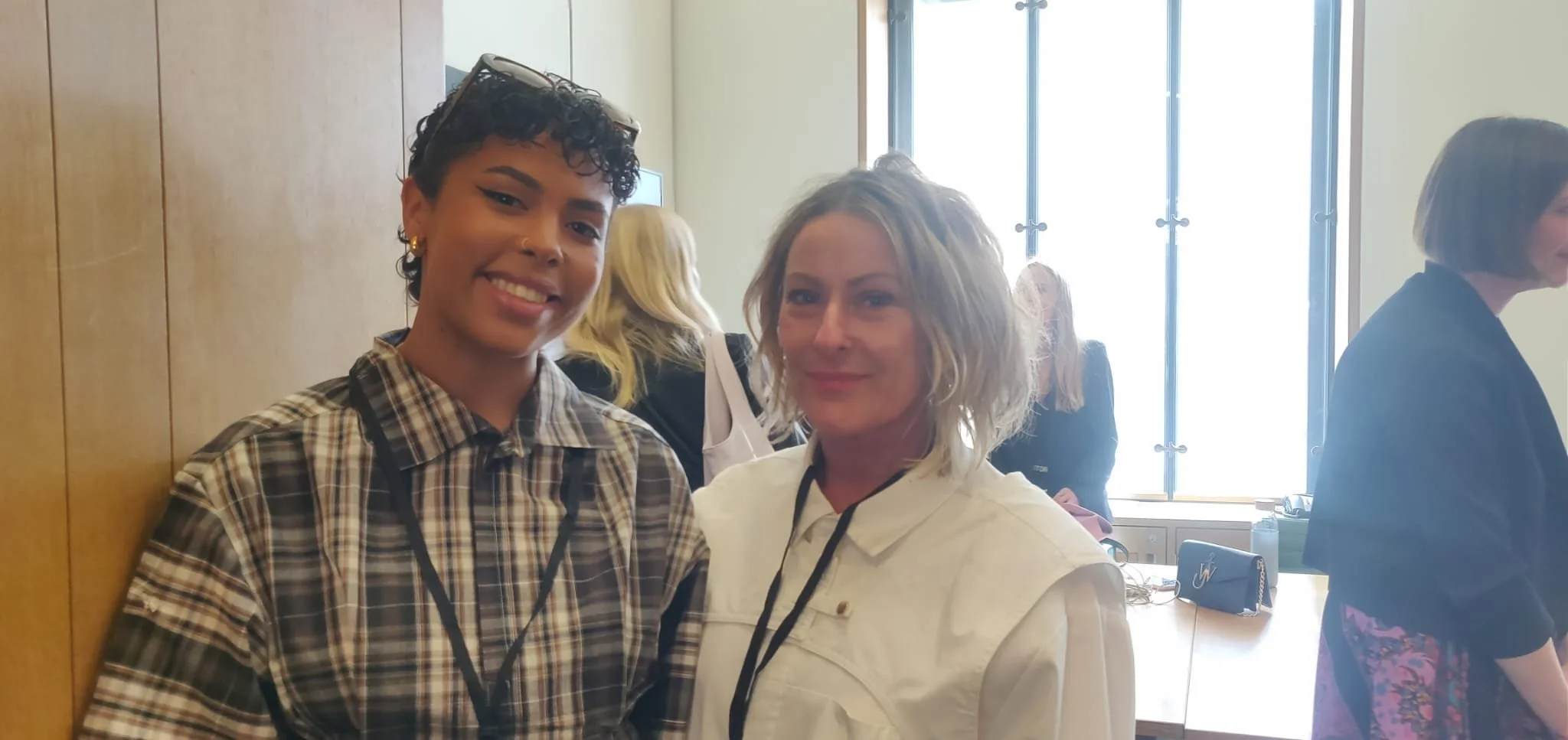
Source: Office of John McNally MP. Left: Kemi Gbadebo, Right: Alison Carlin.
Alison Carlin, founder of Manchester Fashion Movement was also among speakers who had started the community interest company to empower, connect and engage people in a movement that sees communities around Greater Manchester better understand the benefits of approaching fashion with a more sustainable outlook whilst helping them recognise the real impact of the fashion industry and the important role we play as individuals.
One of the brands utilising the space was luxury, sustainable, streetwear brand, Gbadebo –– who specialise in reworking donated, damaged or unwanted textiles and transforming them into new, 90's-inspired streetwear pieces. Founder, Kemi Gbadebo said:
“Having worked with all levels of companies from grassroots like Manchester Fashion Movement to The North Face, Adidas and luxury retail like Flannels in the next couple months, it’s clear that on all levels companies are seeing the benefits of bringing in creatives and small businesses to bridge the gap and reimagine retail spaces on the high-street to provide engaging point of sale experiences for consumers.”

Source: Office of John McNally MP. Fashion Roundtable CEO Tamara Cincik.
To end the session, Julia Roebuck from Thread Republic, a Mend Assembly affiliate based in Huddersfield said:
"It has been so inspiring to learn more about the innovative projects being developed and delivered by third-sector fashion and textile organisations around the UK. These organisations, and many more like them, are perfectly placed to explore new models of fashion and textile experiences on the high street that have sustainability at their core, providing many answers to the question of ‘what next’ for our town centres.
“Whether it's providing new and exciting opportunities for citizens to source pre-loved clothing and textiles, supporting talented makers and independent clothing brands, learning new skills or enabling circularity, all of the innovations we heard about today lead to empowered communities, improved social cohesion and increased footfall on the high street"
Of the event, Manchester Met academic Professor Fiona Hackney commented:
"Shared concerns about the urgent need to change unsustainable fashion behaviours combined with the fear that we are fast losing our high streets ensured that this was a well-attended and stimulating event. MPs, fashion activists, brands, and agencies – many from Fashion Roundtable’s influential network – reviewed problems and responses, much of it based on hard-won, first-hand experience. The event enabled those working on the ground to re-imagine our fashion and retail system to talk to policy makers and meet other like-minded organisations from across the country.”
As a next step, Fashion Roundtable will be taking this work forward with a full report. You can click through to read the full briefing, as well as a look at John McNally’s question on high-street regeneration at PMQs below.
Click through to read the Briefing in full.
Click through to watch John McNally MP deliver his question at PMQs.

APPG for Ethics and Sustainability in Fashion: Cleaning Up Fashion Report
Cleaning Up Fashion examines how the Government and other supportive actors can help amplify sustainability in action, recognising and supporting the work of pioneers and putting an end to exploitation and environmental harm. The report offers clear, evidence-based recommendations that deal with the causes and symptoms of a sector with massive market responsibility, that clothes us all and is global in its economic, environmental and social significance. The ESF APPG hosted a number of parliamentary evidence sessions exploring the issues, as well as conducting a survey with over 110 respondents ranging from business leaders to consumers.

For immediate release
New report from the All-Party Parliamentary Group for Ethics and Sustainability in Fashion urges the Government putting an end to exploitation and environmental harm
London, 12th July 2021 // The APPG for Ethics and Sustainability in Fashion (ESF APPG), co-chaired by Catherine West MP and Baroness Lola Young of Hornsey, release Cleaning Up Fashion Report.
Cleaning Up Fashion examines how the Government and other supportive actors can help amplify sustainability in action, recognising and supporting the work of pioneers and putting an end to exploitation and environmental harm. The report offers clear, evidence-based recommendations that deal with the causes and symptoms of a sector with massive market responsibility, that clothes us all and is global in its economic, environmental and social significance. The ESF APPG hosted a number of parliamentary evidence sessions exploring the issues, as well as conducting a survey with over 110 respondents ranging from business leaders to consumers.
Cleaning Up Fashion addresses the combined issues of worker exploitation, climate change and offers sustainable solutions to support sector transformation towards net zero and the levelling up agenda.
Policy recommendations and findings based on a series of parliamentary evidence sessions and survey research we have 5 recommendations to Government and 2 for industry which we believe would support the Government’s levelling up agenda, the Green Action Plan and commitment to net zero, with stronger legislation to address worker exploitation and environmental impacts across supply chains.
Recommendations
Collective action for net-zero Emissions
Resourcefulness for waste elimination
Expedite Modern Slavery Act legislative changes and introduce a garment adjudicator
Support for UK manufacturing and skills development
An overhaul of the current civil service system to provide a sector lead expert approach, rather than each sector working across multiple Whitehall departments
Tax Incentivising and funding to support onshoring of fashion manufacturing
Measures of success for a just transition and wellbeing economy
Catherine West MP and Baroness Lola Young of Hornsey, Co-chairs of the All-Party Parliamentary Group for Ethics and Sustainability in Fashion: In light of the global pandemic and the evidence we have heard: from non payment of Bangladeshi factory workers, the Uyghur crisis with its implications on cotton manufacture and closer to home the Leicester scandal with its impacts on our fast fashion sector. This report outlines the escalating concerns and issues impacting the supply chain. The report also highlights the unsustainable consequences of the overproduction of garments and outlines the opportunities for a just transition towards a future wellbeing economy. This would support businesses to be more sustainable, workers to be paid fairly for their labour and scope the possibilities for innovation to support greater circularity of finite resources. In the lead up to COP26 we believe this was never more important or timely.
Dilys Williams, Professor Dilys Williams, Special Adviser to the ESF APPG and Head of the Centre for Sustainable Fashion: Tinkering at the edges of change is not an option for a sector as critical to lives and livelihoods as critical in economic, environmental and social terms as fashion. Whilst there is a high level of awareness of the role of this sector in achieving climate justice, with clear actions that can be taken; a joined up approach across Governmental departments is needed and this needs to lead to action across industry and its infrastructure. We are not starting from scratch here, UK pioneers who demonstrate that sustainable prosperity can be achieved are already changing the paradigm: their criteria for success, based on social, economic, cultural and environmental prosperity, needs however to be recognised by the UK Government. That way the licence to do harm is taken away and the licence to prosper is re-defined.
Tamara Cincik, CEO & Founder, Fashion Roundtable: Cleaning Up Fashion, not only highlights the key issues facing the sector, it offers a roadmap to transform the sector and change policy to support success. We outline the haemorrhaging of the Earth’s finite resources to feed the monster that is escalating and utterly unsustainable over production of clothing, the race to the bottom on payments to garment workers and the need for a united coherent strategy from the Government in line with their commitment to net zero and eradicating modern slavery. This is an incredible piece of work that brings together many actors in a complex system. Something we are in a unique position to enable. Based on hearing evidence from a series of experts, our survey data and our unique work with Parliament, Government, brands and businesses, Cleaning Up fashion offers an opportunity to turn insights into action. Fashion is a fantastic, creative industry to work in, but it needs cleaning up, fast, if we are to support future talent, pay workers fairly, end the climate crisis and indeed have any future at all.
Fjolla Kondirolli, Economics Researcher, Fashion Roundtable: The garment industry is one of the biggest employers worldwide, and it is a source of income for millions of people in developed and developing countries. Yet, it is characterized by poor working conditions, low pay and unpaid work, and job insecurity. Covid-19 has exposed the fragile position of garment workers in the fashion industry supply chain. Transparency on supplier lists, wages paid, and responsible purchasing practices is paramount to keeping fashion firms accountable in the public's eyes when it comes to these workers.
Laura Gibson, Head of Sustainability, Other Day: There is a clear need for improved collaboration and knowledge sharing throughout the fashion industry in order to rapidly advance the systemic change needed to decarbonise the supply chain and promote the equitable distribution of responsibility between stakeholders. This report highlights clear recommendations for how to improve the environmental and social sustainability of the UK Fashion industry inline with the aims of the Sustainable Development Goals and the hopes of a Just Transition.
ENDS
Notes to editors
Cleaning Up Fashion report can be downloaded online from Fashion Roundtable here
Cleaning Up Fashion was authored by Fashion Roundtable, secretariat to the All-Party Parliamentary Group for Ethics and Sustainability in Fashion (ESF APPG), with written contributions from; Professor Dilys Williams, Special Adviser to the ESF APPG and Head of the Centre for Sustainable Fashion and Laura Gibson, Head of Sustainability, Other Day.
The report aims to outline the complex current issues, both environmental and ethical, facing the global supply chain on a national and international level, looking both at UK based micro brands (MSEs) and larger internationally renowned brands. The report explores long term sustainable solutions, with key recommendations for both policy makers and business leaders. These recommendations, if actioned, would not only mitigate against the potential suffering of garment workers at the bottom of the supply chain everywhere from Leicester to Xinjiang; they would also address the escalating impacts of the fashion industry on the environment’s finite resources, as a consequence of consumer choices based on an unsustainable and untransparent fashion business models.
The ESF APPG received over 110 submissions to this inquiry, ranging from industry leaders to consumers, through an industry survey and written evidence. It also heard oral evidence from: Basic Premier, Labour Behind the Label, Anti-Slavery International, University of Leeds, Denim Expert Ltd, Traidcraft, King's College London, University of Leicester, Corporate Justice Coalition (previously CORE), the UK Anti-Slavery Commissioner Dame Sara Thornton, First Mile, The Ethical Fashion Initiative, University of Manchester, Dublin City University, Awaj Foundation, Human Trafficking Foundation, Centre for Social Justice, ASOS, TRAID, University of Nottingham's Rights Lab, HURR Collective, Birdsong, Fashion Enter, Compare Ethics, Make It British, Protection Approaches, Uyghur Human Rights Project, IndustriALL Global Union, Worker Rights Consortium, World Uyghur Congress as well as several academics and experts. This report makes specific and direct reference to research carried out to investigate the aims, values and working practices of fashion micro and small (MSE) businesses embedding sustainability within their enterprises. We engage on a regular basis with Governmental departments, including the Department for Business, Energy and Industrial Strategy (BEIS), the Department for Environment, Food and Rural Affairs (DEFRA) and the Home Office on sustainability, business opportunities and labour exploitation in the fashion industry.
Key findings from ESF APPG’s survey are as follows:
72% of respondents self-certified at the top level of concern about the climate crisis
24.5% of respondents self-certified at the top level of concern about the impact of COVID-19 on their business
43% of respondents chose the top level of concern when asked how problematic they believed the issue of Modern Slavery in the UK was.
53% of respondents expressed a clear preference for a focus on onshoring.
30% noted the benefits that onshoring could provide but recognised the complexity of such a move for the impacts both in the UK and globally.
33% of respondents explicitly mentioned Government action when asked what changes need to be made to work toward a more sustainable future in the fashion industry.
58% of responses highlighted an industry recommendation.
Notes to editors:
The All-Party Parliamentary Group for Ethics and Sustainability (ESF APPG) was launched in 2011. The ESF APPG is co-chaired by Catherine West MP and Baroness Lola Young of Hornsey. Members include: John McNally MP, Karen Bradley MP, Caroline Nokes MP, Baron Vaizey of Didcot, Lord Young of Norwood Green, Claudia Webbe MP, Siobhan Baillie MP, Caroline Lucas MP, Dr Lisa Cameron MP, Sharon Hodgson MP.
Fashion Roundtable is an advocacy organisation that supports the fashion industry and Government to shift towards a more representative, equal and sustainable future. We ignite effective discourse between fashion industry and policy leaders; Front Row to Front Bench.
Fashion Roundtable is the secretariat for the All-Party Parliamentary Group for Ethics and Sustainability in Fashion and also the secretariat for the All-Party Parliamentary Group for Textiles and Fashion chaired by Dr Lisa Cameron MP.
All reports available online at Fashion Roundtable
https://www.fashionroundtable.co.uk/reports
For our news updates, please opt into our newsletter
For more information:

Press Release: Fashion Roundtable release Brexit: The Impact on the Fashion Industry report
Eden Loweth, Creative Director Art School: “This important paper highlighting and dissecting the impact of Brexit to our industry is a vital next step in recommending and realising real and important change within government policy. The effects of Brexit to emerging and small businesses like myself has been huge; Fashion Roundtable’s dynamic and fast response in highlighting these issues once again shows how important their work is to our industry.”
Fashion Industry calls for post-Brexit support
London, Thursday 6th May 2021
Fashion Roundtable release Brexit: The Impact on the Fashion Industry report with key recommendations to support the fashion industry to survive and thrive post Brexit
Following on from Fashion Roundtable’s 2018 Brexit and the Fashion Industry paper and #Don't Make Fashion History campaign, we have collated key data and insights to share the most recent impact assessment from the current state of the UK-EU trade deal on the fashion, textiles and fashion retail industry. These insights have been used to form key recommendations, which if the Government could implement would enable the fashion industry to support businesses to not only survive but thrive post-Brexit.
Industry Engagement and Survey
To inform the Brexit: The Impact on the Fashion Industry report, Fashion Roundtable engaged industry leaders and business owners with a snap survey on Brexit and the Impact on the Fashion Industry over 2 weeks in January - February 2021.
Principle Results
59% say Brexit has impacted their business since the end of the transition
77% said they expect to be affected post-lockdown
25% said they have considered relocating all or part of their businesses
15% said they might consider relocating all or part of their businesses
91% say they want a visa that allows creative access to EU countries cheaply and quickly
39% said if offered tax relief they would be more likely to localise manufacturing
39% saying they might consider onshoring
Recommendations
Below are 11 key recommendations to the Government that would enable the fashion industry to support businesses to not only survive but thrive post-Brexit.
Add garment workers to the Shortage Occupation List for Visas
Reinstate the VAT Retail Export Scheme and extend to EU visitors
Reconsider visa requirements for fashion creatives
Close the gap on problems surrounding the rules of origin
Subsidise or scrap ATA carnets for travelling creatives
Begin the Craft and Design T-Level course in September 2021
Establish clarity on the issue of unregistered design rights
Incentivise onshoring with tax relief for those brands who manufacture in the UK, as the UK film industry currently enjoys
Secure a cabotage exemption for the creative and cultural sector – similar to the one that enables the Formula 1 industry to move large amounts of equipment across borders easily
Equal support for the fashion industry for exports to the EU as enjoyed by the fishing industry with their £23m package for a 12,000 workforce generating £1.4bn GVA, versus £2,000 grants available for all of the UK’s 617,600 SMEs
Build a robust IP framework into all trade deals
Catherine West MP, Chair of the APPG for Ethics & Sustainability in Fashion: “The Government’s levelling up agenda post-Brexit must include an absolute commitment to safeguarding and expanding workers’ rights, particularly for workers at the bottom of the supply chain. Over several months, the APPG for Ethics & Sustainability in Fashion has learned of the exploitative working practices in the UK’s £35bn fashion industry, that primarily harms women from BAME backgrounds. I am pleased to hear of significant improvements being made by some UK brands to curb exploitation in factories and hope that this sends a signal to brands that fashion should not come at the cost of the workers that make our clothes.”
Eden Loweth, Creative Director Art School: “This important paper highlighting and dissecting the impact of Brexit to our industry is a vital next step in recommending and realising real and important change within government policy. The effects of Brexit to emerging and small businesses like myself has been huge; Fashion Roundtable’s dynamic and fast response in highlighting these issues once again shows how important their work is to our industry.”
Nick Knight OBE, Photographer and CEO of SHOWstudio: “It is my experience that this government have absolutely no understanding of the fashion industry, even though it supports so many people in Britain and is an industry that if properly supported could be crucial to help fuel the country’s recovery from this awful pandemic and the resulting lockdowns.”
Tamara Cincik, Founder and CEO at Fashion Roundtable: “The UK’s fashion and textiles industry deserves to be understood and valued at this critical time. Our brands lead in innovation, sustainability and creativity, while our fashion retailers outlets are frequently the successful entry point for global brands into Europe. But for us to build back better we need more support, more a redressing of the issues such as the Shortage Occupation List, where we call on the Government to add garment workers to the list to support the greater demand for on-shoring until the necessary T-Levels are rolled out and the ending of the VAT Retail Export Scheme, if we are to attract the tourist consumer to the UK post pandemic.”
Notes to Editors
Brexit and the Impact on the Fashion Industry 2018 report
Don't Make Fashion History Campaign
Following an industry-wide meeting held on Wednesday 20th January 2021, coordinated by Fashion Roundtable, the industry highlighted the key issues, impacts and unforeseen consequences of Brexit in an Open Letter to the Government. Throughout January and February we continued to raise awareness for the sector with our Don't Make Fashion History campaign. The aim of the campaign was to secure a ministerial meeting to discuss the impact of Brexit on the fashion industry and find solutions so we can enable the industry to survive and thrive. Yesterday we hosted an informal roundtable via the APPG for Textiles and Fashion with Paul Scully MP, Minister for Small Business where he answered 13 questions from stakeholders.
Our open letter received cross-party parliamentary support, with signatories including: Baroness Lola Young of Hornsey, John McNally MP, Martyn Docherty-Hughes MP, Lord Cashman CBE, Lord Foster of Bath, Earl of Clancarty, Baroness Bonham-Carter and Lord Taylor of Warwick. The letter also gained industry leaders’ support across manufacturing, retail, modelling, creative business, education, brands and journalism. Signatories including John Horner CEO of Models 1, Jenny Holloway CEO of Fashion Enter, Kate Hills CEO of Make It British, Patrick Grant CEO of E. Tautz, Helen Brocklebank CEO of Walpole, Alistair Knox Chair of ASBCI, Jess McGuire-Dudley Design Director of John Smedley, Caroline Issa CEO of Tank Media Group, Jefferson Hack CEO of Dazed Media Group, Sarah Mower MBE, Nick Knight OBE CEO of SHOWstudio, Dame Vivienne Westwood DBE, Dame Twiggy Lawson DBE, Yasmin Le Bon, and Katherine Hamnett CBE.
Fashion Roundtable is the only organisation that sits between the fashion industry and policy leaders; Front Row to Front Bench
We are secretariat for the All-Party Parliamentary Group for Textiles and Fashion with members including Dr Lisa Cameron MP.
Fashion Roundtable are also the secretariat for the All-Party Parliamentary Group for Ethics and Sustainability in Fashion, co-chaired by Baroness Lola Young of Hornsey and Catherine West MP.
Fashion Roundtable’s Founder and CEO Tamara Cincik, has over 20 years’ experience in the industry and since launching Fashion Roundtable, has spoken publicly on Fashion and Politics with a range of high-profile business press including SKY TV, BBC, New York Times, Stern, Liberation, WWD, The Telegraph, FT, Sunday Times, Vogue Business and Business of Fashion.
For our news updates, please opt into our newsletter.
For more information:
www.fashionroundtable.co.uk
E: admin@fashionroundtable.co.uk

Press Release: The Government Asks Fashion To Use Its "Star Power" To Renegotiate the Brexit Deal
Alice Temperley, Designer: “For the government to come back with this, they are hiding, they are cowards. The government likes to entertain us during fashion week when we are all invited to 10 Downing Street to meet the prime minister. But now the government isn’t here to help, there is no voice, there is no guidance and there is no clarity on the situation. No one is talking about the fashion industry.”
23rd February 2021
As London Fashion Week closes today, as you are no doubt aware, the fashion industry united in signing our open letter to the Government urgently requesting a ministerial meeting. The letter, signed by over 455 industry leaders including Dame Twiggy Lawson DBE, Models 1, John Smedley, Liberty, Nick Knight OBE, Sarah Mower MBE, Roksanda Ilincic, Walpole, ASBCI, AIR, Patrick Grant, Jefferson Hack and Dame Vivienne Westwood DBE, expressed our concern that fashion was facing 'decimation' as a result of punitive Brexit regulations, while offering solutions to support business survival in a challenging market.
On behalf of the Government, Rt Hon Oliver Dowden MP (Secretary of State for Digital, Culture, Media, and Sport) and Paul Scully MP (Minister for Small Business, Consumers & Labour Markets) have now responded, asking us to use our “star power” to negotiate with the EU, rather than committing to our request for a parliamentary roundtable with stakeholders. Our request for a meeting to find solutions to the issues, which are impacting on our industry already, has not yet been granted. We have replied by reiterating the importance of holding a roundtable meeting with the Government, as a matter of urgency.
We include their full letter in this link here and our response here.
Fashion Roundtable’s Open Letter and #dontmakefashionhistory campaign represents the almost 900,000 creatives and business owners; the UK fashion industry has over 59,000 SMEs, plus many more thousands of freelancers. These small to medium enterprises and growing freelancer numbers are the backbone of the thriving economy across the UK. But without the right support they are the most vulnerable, as they do not have the safety net of wide margins to buffer against negative financial impacts.
The fashion industry is the largest of the creative industries, making more than the automobile, film, music and pharmaceutical industries combined, contributing £35bn to UK GDP and employs almost 1 million people, which was growing 11% year on year, at 4 times the growth of other sectors. We note the Government’s £20m commitment to help the UK’s 6m SMEs with up to £2000 to support businesses; but this is not in line with the £23m to support the fishing industries 12,000 workforce (the same number of people as Debenhams employed for reference) with their EU exports. We are concerned by a clear prioritisation of one industry above another for reasons other than economic factors. The UK fashion industry is largely composed of freelancers and SMEs. These creative innovators could be at the forefront of a post Brexit, post pandemic UK; but without Government reaction and support now, they simply won’t survive to help the UK build back better.
Alice Temperley, Designer: “For the government to come back with this, they are hiding, they are cowards. The government likes to entertain us during fashion week when we are all invited to 10 Downing Street to meet the prime minister. But now the government isn’t here to help, there is no voice, there is no guidance and there is no clarity on the situation. No one is talking about the fashion industry.”
Katharine Hamnett CBE: “The government keeps fobbing us off. It is a catastrophe for Made In Britain and the British fashion industry. Made in Britain has a supreme market quality in Japan and across Asia while the Government renegotiates the terms of the Brexit deal with the EU, our largest trading partner. We have an amazing opportunity to build on that and the Government is not working with us to understand that, it is destroying it.”
Tamara Cincik, CEO Fashion Roundtable: “My ‘star power’ from the lockdown sofa, is somewhat limited compared to that of our elected government. If the Government would like to hire me as a fashion czar: a role which Biden is looking at for the US Government, I am all for it and would happily engage at that level, as it is clear that fashion needs an approach which maps across all of the Whitehall briefs as fashion sits across business, creative and innovation, with a clear sustainable agenda to mitigate against the climate crisis. However until then, surely it is best to work with us, so we can map out our solutions to support the Government and our stakeholders in this challenging time.”
Note to Editors
Background
Fashion Roundtable’s Open Letter, signed by over 455 signatories, was presented to the Government on Tuesday 2nd February. A follow-up letter was sent Tuesday 9th February and again on Tuesday 16th February. We received a reply from Oliver Dowden MP and Paul Scully MP on Thursday 18th February and we replied on Friday 19th February. All of our letters request that we can organise an urgent roundtable meeting with the relevant Ministers for the fashion industry in the coming days, to work together and create solutions which will help save our industry.
The Open Letter has received cross-party parliamentary support, with signatories including Baroness Lola Young of Hornsey, John McNally MP, Martyn Docherty-Hughes MP, Lord Cashman CBE, Lord Foster of Bath, Earl of Clancarty, Baroness Bonham-Carter and Lord Taylor of Warwick. The letter has also gained the support of industry leaders across manufacturing, retail, modelling, creative business, education, brands and journalism.
Signatories include Dame Vivienne Westwood DBE (Vivienne Westwood), Jenny Holloway (Fashion Enter), Paul Barnes (Association of International Retail), Kate Hills (Make It British), Jane Shepherdson CBE (MyWardrobe HQ), Caroline Issa (Tank), John Horner (Models 1), Carole White (Premier), Nick Knight OBE (SHOWstudio), Zowie Broach (RCA), ASBCI, Patrick Grant (E.Tautz and BBC’s Sewing Bee), Camilla Lowther OBE (CLM), Bethany Williams, Phoebe English, Professor Dilys Williams (Centre of Sustainable Fashion UAL), Helen Brocklebank (Walpole), Fashion Revolution, Laura Bailey (Model and British Vogue), Dame Twiggy Lawson DBE (model), Katharine Hamnett CBE (Katharine Hamnett), Sarah Mower MBE (Vogue Runway and British Fashion Council), Julian Vogel (Modus BPCM), Ruth Chapman OBE (Matchesfashion), Isabel Ettedgui (Connolly), Yasmin Le Bon (Model), Roksanda Ilincic (Roksanda), Juergen Teller (Photographer), Jess Mcguire-Dudley (John Smedley), Sarah Coonan (Liberty), Justin Thornton (Preen), Andrea Thompson (Marie Claire), Jane Bruton (Telegraph) and Jefferson Hack (Dazed Media Group).
The Open Letter can be found here: https://www.fashionroundtable.co.uk/openletter
About Fashion Roundtable
Fashion Roundtable is the only fashion organisation that sits between the fashion industry and policy leaders: Front Row to Front Bench
We are secretariat for the All-Party Parliamentary Group for Textiles and Fashion chaired by Dr Lisa Cameron MP, with members including Dame Eleanor Laing, Lord Taylor of Warwick, John McNally MP and Baron Vaizey of Didcot.
Fashion Roundtable are also the secretariat for the All-Party Parliamentary Group for Ethics and Sustainability in Fashion, co-chaired by Baroness Lola Young of Hornsey and Catherine West MP.
Tamara Cincik, Founder & CEO of Fashion Roundtable has over 20 years’ experience in the fashion industry and has also worked in parliament. Since launching Fashion Roundtable, Tamara has spoken publicly on fashion and politics with a range of high-profile business press including SKY TV, BBC, CGTN, Telegraph, Financial Times, Times, Guardian, New York Times, Liberation, Stern, Vogue Business and Business of Fashion.
For more information please contact:

Press Release: 14 Days Since Our Open Letter To The Government Calling For An Urgent Meeting About Brexit Impacts
Sarah Reygate, Make-Up Artist for the Fashion and Music Industry: “As with many of my colleagues, my work has been deeply impacted by the pandemic. A lot of work comes from Paris. If I now have to organise work contracts and visas for each trip I am likely to lose that work to local based talent in Paris. The Government needs to commit to frictionless work travel for all creatives for the UK based fashion and music industry to continue to be a world leading industry.”
16th February 2021
As London Fashion Week begins this week, the Fashion Industry still waits for a response from the Government to our open letter sent 14 days ago, asking for an urgent meeting to discuss Brexit impacts and the very real threat of business decimation.
The fashion industry united in signing our open letter with over 455 industry leader signatories urgently requesting a ministerial meeting 14 days ago. The Government is yet to respond. Media attention is turned to the fashion industry for the fashion week calendar, the silence from the Government is ever more worrying.
Our sector is at real risk of decimation by the Brexit trade deal and current Government policy. To reduce the negative impact to the industry, we are asking the Government to urgently meet so we can share solutions which will help save our industry before it is too late.
The fashion industry is the largest of the creative industries, making more than the automobile, film, music and pharmaceutical industries combined, contributing £35bn to UK GDP and employs almost 1 million people, which was growing 11% year on year, at 4 times the growth of other sectors. The DCMS Select Committee this week met with creatives from music and dance to discuss freedom of movement, but not from the fashion industry. We did send the DCMS Select Committee a briefing and request to give evidence. We urge that all creatives are treated and valued equally across all levels of government and parliament. To not hear from the largest of the creative industries is surely an omission? We note the Government’s £20m commitment to help the UK’s 6m SMEs with up to £2000 to support businesses; but this is not in line with the £23m to support the fishing industries 12,000 workforce (the same number of people as Debenhams employed for reference) with their EU exports. We are concerned by a clear prioritisation of one industry above another for reasons other than economic factors.
The UK fashion industry is largely composed of freelancers and SMEs. These creative innovators could be at the forefront of a post Brexit, post pandemic UK; but without Government reaction and support now, they simply won’t survive to help the UK build back better. This is why we call on the UK Government to respond to our open letter and work with us on solutions which will achieve this. We do not have 10 years to wait it out, we should not really have had 14 days. With London Fashion Week fast approaching and media attention upon us, we are still left waiting. This is not the time for inertia, or delays. A £35bn industry is waiting to hear from its government.
We asked some of the signatories to Fashion Roundtable’s Open Letter and #dontmakefashionhistory campaign who work as creatives and small business owners to share their concerns here. The UK fashion industry has over 59,000 SMEs, plus many more thousands of freelancers; these small to medium enterprises and growing freelancer numbers are the backbone of the thriving economy across the UK. But without the right support they are the most vulnerable, as they do not have the safety net of wide margins to buffer against negative financial impacts.
Sarah Reygate, Make-Up Artist for the Fashion and Music Industry: “As with many of my colleagues, my work has been deeply impacted by the pandemic. A lot of work comes from Paris. If I now have to organise work contracts and visas for each trip I am likely to lose that work to local based talent in Paris. The Government needs to commit to frictionless work travel for all creatives for the UK based fashion and music industry to continue to be a world leading industry.”
Deborah Latouche, CEO Sabirah: “I was asked recently if SABIRAH will survive Brexit and after thinking about it I realised that we didn’t just want to just survive we want to Thrive! The past year we have all been in survival mode due to the Covid crisis - All of the unnecessary red tape and costs need to be reconsidered as a matter or urgency to help the UK Fashion Industry thrive.”
Nadja Romain, CEO Everything I Want LTD: “As a small business it’s very hard if not impossible to deal on a daily basis, with the level of bureaucracy now involved in UK/EU trade. Not to mention angry customers who end up paying outrageous import taxes that we can’t even anticipate. Large businesses can absorb extra costs and paperwork a small company with less than 10 employees simply cannot. As a French citizen I came to the UK 15 years ago for the creativity combined with a flexibility that allows anyone with a good idea to create a thriving business. This is gone. As if politics has become more important than business. I am opening a branch of my business in Italy to access the EU market which remains the number one destination for luxury goods.”
Karen Binns, Fashion Director and Brand Consultant: “There is a huge fear for independent designers and brands about the high rise in cost to get their shipments coming in and going out abroad. This is the biggest threat to young and independently owned brands, as this is the sort of escalating costs and delays to market that can shut their businesses down completely.”
Tamara Cincik, CEO of Fashion Roundtable: “Silence is not golden, 14 days is 13 days too long to wait for a government commitment to meet with us and our signatories. I have even offered to arrange this meeting for them, all they would need to do is commit to dialling in. A webinar which was not widely circulated or known about by our 890,00 fashion workforce is simply not enough support or mitigate against the tsunami of challenges this complex and vast sector faces. I have more than twice urged DCMS to allow us at Fashion Roundtable to also offer stakeholders a webinar, to ensure information in this challenging time is accessed by as many stakeholders as possible, as well as this urgently needed sector-facing roundtable meeting.
Surely a £35bn industry is worth an hour of their time? We have London Fashion Week around the corner, a time when the world’s media is shining a light on our brilliant talent, yet my inbox is filled with stories of brands relocating, or stopping their direct to EU consumer (B2C) sales, due to escalating Brexit costs. The music industry, the acting industry, the dance industry, the arts, creative and design industry are all in alignment and we all feel overlooked and undervalued. We echo the points made by other creatives and are in solidarity with those organisations who are sharing their concerns. We are committed to offering solutions so we can find a way out of this mess and implore the Government to commit to meeting with us very soon. What is a country without creativity and innovation at the heart of its DNA?”
Note to Editors
Background
Fashion Roundtable’s Open Letter, signed by over 455 signatories, was presented to the Government on Tuesday 2nd February. A follow-up letter was sent Tuesday 9th February and again on Tuesday 16th February. All three letters request that we can organise an urgent roundtable meeting with the relevant Ministers for the fashion industry in the coming days, to work together and create solutions which will help save our industry.
The Open Letter has received cross-party parliamentary support, with signatories including Baroness Lola Young of Hornsey, John McNally MP, Martyn Docherty-Hughes MP, Lord Cashman CBE, Lord Foster of Bath, Earl of Clancarty, Baroness Bonham-Carter and Lord Taylor of Warwick.
The letter has also gained the support of industry leaders across manufacturing, retail, modelling, creative business, education, brands and journalism.
Signatories include Dame Vivienne Westwood DBE (Vivienne Westwood), Jenny Holloway (Fashion Enter), Paul Barnes (Association of International Retail), Kate Hills (Make It British), Jane Shepherdson CBE (MyWardrobe HQ), Caroline Issa (Tank), John Horner (Models 1), Carole White (Premier), Nick Knight OBE (SHOWstudio), Zowie Broach (RCA), ASBCI, Patrick Grant (E.Tautz and BBC’s Sewing Bee), Camilla Lowther OBE (CLM), Bethany Williams, Phoebe English, Professor Dilys Williams (Centre of Sustainable Fashion UAL), Helen Brocklebank (Walpole), Fashion Revolution, Laura Bailey (Model and British Vogue), Dame Twiggy Lawson DBE (model), Katharine Hamnett CBE (Katharine Hamnett), Sarah Mower MBE (Vogue Runway and British Fashion Council), Julian Vogel (Modus BPCM), Ruth Chapman OBE (Matchesfashion), Isabel Ettedgui (Connolly), Yasmin Le Bon (Model), Roksanda Ilincic (Roksanda), Juergen Teller (Photographer), Jess Mcguire-Dudley (John Smedley), Sarah Coonan (Liberty), Justin Thornton (Preen), Andrea Thompson (Marie Claire), Jane Bruton (Telegraph) and Jefferson Hack (Dazed Media Group).
The Open Letter can be found here: https://www.fashionroundtable.co.uk/openletter
The template letter to your MP can be found here.
About Fashion Roundtable
Fashion Roundtable is the only fashion think tank that sits between the fashion industry and policy leaders: Front Row to Front Bench
We are secretariat for the All-Party Parliamentary Group for Textiles and Fashion chaired by Dr Lisa Cameron MP, with members including Dame Eleanor Laing, Lord Taylor of Warwick, John McNally MP and Baron Vaizey of Didcot.
Fashion Roundtable are also the secretariat for the All-Party Parliamentary Group for Ethics and Sustainability in Fashion, co-chaired by Baroness Lola Young of Hornsey and Catherine West MP.
Tamara Cincik, Founder & CEO of Fashion Roundtable has over 20 years’ experience in the fashion industry and has also worked in parliament. Since launching Fashion Roundtable, Tamara has spoken publicly on fashion and politics with a range of high-profile business press including SKY TV, BBC, CGTN, Telegraph, Financial Times, Times, Guardian, New York Times, Liberation, Stern, Vogue Business and Business of Fashion.
For more information please contact:

Press Release: The Fashion Industry calls on the Government to meet urgently and discuss solutions to help save our industry.
Helen Brocklebank, CEO, Walpole: “Prior to the pandemic, the British luxury sector was in rude health with a value of £48bn to the UK economy and strong annual growth of nearly 10%. Very much a British success story, the sector supported more than 160,000 jobs throughout the UK. However, international visitors to the UK are a crucial revenue driver, and the last 11 months has put severe pressure on their businesses. On top of the pandemic, the eleventh hour Brexit deal has compounded the sector's problems, making chances of swift recovery for British luxury recede compared to their European counterparts. With 42% of all British luxury export sales coming from the EU, the costs and administrative burdens of trading in continental Europe mean many of our members, not least the SME's, have concluded they simply can’t afford to continue selling to those countries.
Monday 1st February 2021
Fashion industry fears for future over consequences of Brexit trade deal
The Fashion Industry calls on the Government to meet urgently and discuss solutions to help save our industry.
The fashion industry contributes £35bn to UK GDP and employs almost 1 million people, but is at real risk of decimation by the Brexit trade deal and current Government policy.
The UK fashion industry is facing several critical issues, which without urgent attention these issues will jeopardise the immediate and long term future of the sector.
Ours is a thriving industry, based on global leadership, complex supply chains and above all a deeply interconnected relationship with our overseas colleagues. To survive post-Brexit and safeguard our future, we need to ensure we can trade with overseas businesses and are also supported to grow the internal market.
Following an industry-wide meeting held on Wednesday 20th January 2021, brought together by Fashion Roundtable, the industry has highlighted the key issues, impacts and unforeseen consequences of Brexit in an Open Letter to the Government, with a call to action.
We are asking the Government to meet so we can create solutions which will help save our industry.
This letter, signed by 451 signatories, will be presented to the Government tomorrow morning, asking that we can sit at an urgent roundtable meeting with the relevant Ministers for the fashion industry in the coming weeks, to work together and create solutions which will help save our industry.
The Open Letter has received cross-party parliamentary support, with signatories including Baroness Lola Young of Hornsey, John McNally MP, Martyn Docherty-Hughes MP, Lord Cashman CBE, Lord Foster of Bath, Earl of Clancarty, Baroness Bonham-Carter and Lord Taylor of Warwick.
The letter has also gained the support of industry leaders across manufacturing, retail, modelling, creative business, education, brands and journalism. Signatories include Jenny Holloway (Fashion Enter), Paul Barnes (Association of International Retail), Kate Hills (Make It British), Jane Shepherdson CBE (MyWardrobe HQ), Caroline Issa (Tank), John Horner (Models 1), Carole White (Premier), Nick Knight OBE (SHOWstudio), Zowie Broach (RCA), Camilla Lowther OBE (CLM), Bethany Williams, Phoebe English,
Professor Dilys Williams (Centre of Sustainable Fashion UAL), Helen Brocklebank (Walpole), Fashion Revolution, Laura Bailey (Model and British Vogue), Dame Twiggy Lawson DBE, Katharine Hamnett CBE, Sarah Mower MBE (Vogue Runway and British Fashion Council), Ruth Chapman OBE (Matchesfashion), Isabel Ettedgui (Connolly), Yasmin Le Bon (Model), Roksanda Ilincic (Roksanda), Juergen Teller (Photographer), Jess Mcguire-Dudley (John Smedley), Sarah Coonan (Liberty), Justin Thornton (Preen), Andrea Thompson (Marie Claire), Jane Bruton (Telegraph) and Jefferson Hack (Dazed Media Group).
Jefferson Hack, Dazed Media Group: “Everyone who cares about the future of Britain economically or the future wellbeing of our youth needs to understand what's at stake if our fashion and textiles industry is trashed because politicians won't look at the paperwork and get ink on their fingers. How can they stand by and watch something built over generations collapse when they have the power to make a difference? Now is the time to act to save British Fashion, culture and livelihoods."
Isabel Ettedgui, Connolly: “Connolly’s home is off Savile Row, but our horizon has always been international, and especially European. Our leather was on the first Rolls Royce and is now on the latest Ferrari. We sell Scottish cashmere but we manufacture our leather goods in a small town in Spain where all the top luxury brands manufacture - because we cannot find the skills to make the goods anymore in the United Kingdom, although the leather is sourced, where possible in this country. It is this dialogue between our island and our neighbours abroad that has shaped who we are. The sadness, the lack of goodwill and the red tape we are now experiencing as a Brexit trading outpost, the financial ramifications of creating barriers with our major trading partner and also the loss of their skills; will be devastating and the result could be the possible closure of a 185-year-old company that holds the Royal Warrant.”
Katharine Hamnett CBE: “We need a radical overhaul of customs arrangements including VAT on all goods shipped into the EU by the end of February, or British brands will die.”
Michelle Noel, MNN Agency: "The fashion industry is having its creative bones fractured by the implementation of Brexit. The emotional and financial impact has been immediate & damaging, to my consultancy practice and to my network of UK & EU clients. Brexit has eroded any slither of confidence in UK governance and highlighted the disdain & insufficient support for thousands of fashion businesses”.
Helen Brocklebank, CEO, Walpole: “Prior to the pandemic, the British luxury sector was in rude health with a value of £48bn to the UK economy and strong annual growth of nearly 10%. Very much a British success story, the sector supported more than 160,000 jobs throughout the UK. However, international visitors to the UK are a crucial revenue driver, and the last 11 months has put severe pressure on their businesses. On top of the pandemic, the eleventh hour Brexit deal has compounded the sector's problems, making chances of swift recovery for British luxury recede compared to their European counterparts. With 42% of all British luxury export sales coming from the EU, the costs and administrative burdens of trading in continental Europe mean many of our members, not least the SME's, have concluded they simply can’t afford to continue selling to those countries.
Before the pandemic, the UK/EU deal would have created exceptional difficulties for Walpole members. On top of the pandemic, its impact puts an unconscionable pressure on businesses who should be given every priority to be a calling card for Global Britain. Our luxury brands sell Britain to the world, exemplifying British craftsmanship, innovation and heritage, and their continued success is imperative if Britain is to maintain its reputation in the global marketplace. This is really not the time to inflict additional damage on British luxury. Our businesses are resilient, and they will work to navigate the challenges, however, now is the time for the Government to step up to the mark and support the sector with a set of very tailored measures if we are to bounce back swiftly.”
Yasmin Le Bon, Model: "It is crucial not only for people in our business but crucial for the welfare of the UK economy that all people in the creative and fashion industries can travel freely within the EU. I have been working continually in this industry for the past 37 years, it works in a very particular way, with jobs being confirmed literally at the last minute. I may get a call, make a decision and be at the airport within 2 hours ready to fly to Madrid, Milan or Miami! The wealth of these creative industries is in our ability to move and change quickly. This is our future, we can not be stuck back in the dark ages or we will be left behind. Up until now, we have been at the forefront. These are crucial negotiations, the fashion business is huge, and every piece of the jigsaw supports each other, we rarely speak up for ourselves for fear of seeming uncool, but this is about more, it’s about hundreds of thousands of jobs that may potentially be lost. You may think that fashion is all about frou-frou skirts and polka dot ties, but it is about so much more. From the designers not just of fashion and accessories, but all the machining for all the hardware, the craftsmanship of the manufacturers, the creativity and artistry of the marketing and advertising tribes, all the wily, resilient retailers, who have been hit so hard by this pandemic. For once we need to be listened to and for the Government to work with us before it is too late."
Tamara Cincik, CEO Fashion Roundtable: “In the fashion industry, everyone wants to "make fashion history": it is a deeply competitive, hardworking and successful sector, generating over £35bn and almost 1m jobs in the UK. Pre-pandemic it was growing 11% year on year. But there is a real risk of it being utterly decimated from the gaps in the Brexit trade deal and UK Government policy, which across each area of the sector: manufacturing, retail, creative, education, is severely impacting on all levels of the business from SMEs to multinationals and in the coming months will destroy the fashion industry in the UK, removing any hope for us to build back better. From the decision to end the VAT Retail Export Scheme, to the decision to not add garment workers to the Shortage Occupation List for visas, while not lining up the necessary T-Levels to train UK domicile garment workers until September 2023, or the extra costs and delays of Brexit red tape to our largest market, the EU and the very real risk of a brain drain, as the UK becomes increasingly unsustainable for our world-leading fashion talent to stay here.
Everywhere I look across our complex, innovative and highly successful UK fashion industry, I see perfect storms and tsunamis unless we act. Fashion Roundtable are about solutions: we have them and urge the Government to engage, listen and act upon them now.
You cannot attract the brightest and the best from overseas, if the talent we already have in the UK cannot stay here for the good of their livelihoods and careers, or you do not shore up the workforce to support a more sustainable, transparent manufacturing sector.
We urge the Government to meet with us, listen to our concerns and policy solutions, so we can ensure the long term viability of the UK fashion industry, which we have all worked so hard to make the success story it is. We want the fashion industry to continue to thrive as a key contributor to GDP and the jobs market in years to come.
We urge the Government to hear us and act: don't make fashion history.”
Note to Editors
Background
The deal done with the EU has a gaping hole where promised free movement for goods and services for all creatives, including the fashion and textiles sector, should be. The fashion and textiles industry is the largest component of the previously thriving UK creative industries, growing 11% annually, bringing vital jobs and innovation to the UK. We contribute more to UK GDP than fishing, music, film, pharma and motor industries combined. Yet we have been disregarded in this deal and our concerns overlooked in current policy decisions. This has significantly impacted our opportunity to build back better and grow our onshoring manufacturing, digital innovation and sustainable design and technology in the UK, where we now, more than ever, have the real chance to show global leadership.
The full letter can be found here https://www.fashionroundtable.co.uk/openletter
About Fashion Roundtable
Fashion Roundtable is the only fashion think tank that sits between the fashion industry and policy leaders; Front Row to Front Bench
We are secretariat for the All-Party Parliamentary Group for Textiles and Fashion chaired by Dr Lisa Cameron MP, with members including Dame Eleanor Laing, Lord Taylor of Warwick, John McNally MP and Baron Vaizey of Didcot.
Fashion Roundtable are also the secretariat for the All-Party Parliamentary Group for Ethics and Sustainability in Fashion, co-chaired by Baroness Lola Young of Hornsey and Catherine West MP.
Tamara Cincik, Founder & CEO Fashion Roundtable has over 20 years’ experience in the fashion industry and has also worked in parliament for Sharon Hodgson MP. Since launching Fashion Roundtable, Tamara has spoken publicly on fashion and politics with a range of high-profile business press including SKY TV, BBC, Telegraph, Vogue Business and Business of Fashion.
For more information please contact: