
By Sam Stuart
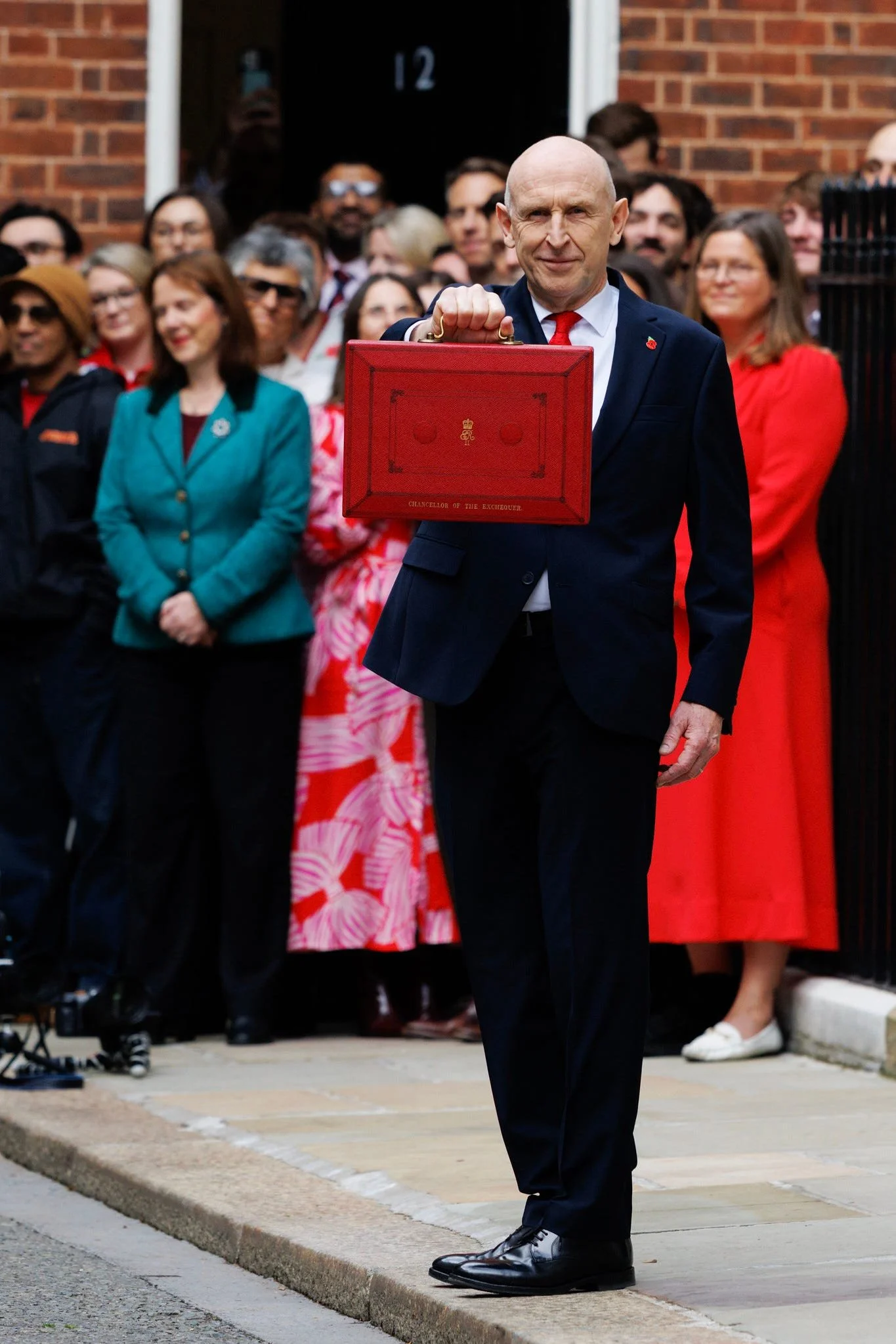
28/10/2026. London, United Kingdom. Chancellor of the Exchequer John Healey prepares to deliver the Budget at 11 Downing Street. Picture by Lauren Hurley / Treasury. Attribution-NonCommercial-NoDerivatives 4.0 International
The Chancellor's Budget offers a lick of welcome support to independent retailers and emerging designers. And yet rising labour costs and the lack of a sector-specific strategy leave important questions for British fashion unanswered.
The autumn Budget is painted in broader brush strokes than many had hoped - ‘mini-budget’ and ‘micro-budget’ are being bandied around by politicos as a result. It is fair to say that fashion is absent (expressly) from the Treasury’s own account of what this Budget is for. The executive summary designates energy bills, housing, defence and artificial intelligence under their own headings and passes over a sector that, to borrow from the British Fashion Council’s CEO Laura Weir, contributes £67.5 billion to the economy while supporting 1.4 million jobs. Her estimates span the wider fashion ecosystem, which makes them a measure of the whole industry, manufacturing included. The Chancellor unveiled no dedicated fashion/textiles “package” on 28 October. Even so, several of his announcements will inevitably land on the independent boutiques, emerging designers, manufacturers and established retailers that make up British fashion, whether or not Whitehall had them in mind. At a glance: business rates, founder support, employment costs, taxation of online competition, and the industry’s unresolved requests of the government all merit scrutiny.
The High Street
From 1 April 2027, qualifying retail, hospitality and leisure properties in England with a rateable value up to £18,000 will pay no business rates - upping this threshold from £12,000 - and tapered relief will stretch to £21,000, up from £15,000. The Treasury suggests that a further 70,000 businesses in those sectors will pay nothing at all, and every other qualifying property gets a two-year freeze so as to avoid an unenviable above-inflation increase in business rates. Per the Budget’s own summary, these businesses in England will see their rates “either frozen in real terms, reduced, or cut to zero”. The increase in the Small Business Rate Relief threshold might come in handy: for an independent boutique or concept store operating on thin margins, property might be among the few overheads an owner can plan around, and relief on grounds of a fixed business premises might free up funds for stock, staff, marketing etc.
“Qualifying”, however, is the operative word. This relief is allocated based on the property, ignoring the brand but for their rateable value, so eligibility is fairly limited for the fashion world. For example, a studio or production unit sits outside the retail, hospitality and leisure categories, and the published material shows no matching change for premises of that variety. A designer who sells from a shopfront and makes in a workshop could therefore see relief on one address and none on the other. The measures are also limited in that they apply to England only. The Treasury will pay for them in part through a higher Machine Games Duty, and dripped down through the new online-marketplace VAT measure, which we shall come to next.
Business Rates Relief is a welcome making-good-on-a-promise from the government - these measures will lower a cost, for some businesses, in some sectors. The dearth of footfall, spates of empty units and the broader squeeze on operating budgets sit beyond their reach, and anyone expecting vibrantly regenerated high streets from a rates bill alone will be disappointed.
The Online Marketplace
The government has VAT dodgers in their sights. From October 2027, online marketplaces are duty-bound to collect VAT on sales by UK businesses that exceed £90,000 through the platform, with personal sales exempt. The Treasury presents this as a remedy for non-compliant UK sellers who have been undercutting high-street businesses that pay what they owe, and the revenue is earmarked for the above business rates relief. Levelling the playing field in reality will depend on enforcement, and the Budget’s answer to this is the funding of 670 further HMRC compliance officers. Alongside this sits the end of the £135 customs duty relief on low-value imports, due by October 2028 at the latest. That measure predates this Budget, having been announced in Budget 2025 and brought forward by six months in June of this year. Its relevance is to brands in competition with parcels shipped straight onto British doorsteps. Whether VAT and customs arrangements, which operate so very differently, might combine into something coherent, remains to be seen.
A more glaring omission concerns visitors to the UK. The absence of tax-free shopping for overseas tourists continues to represent a missed opportunity. Since the scheme ended back in January 2021, the UK has adopted the unfortunate mantle of the only major European economy without one (as noted by the British Retail Consortium in Drapers). This Budget left the matter untouched. For luxury and premium retail, for every London flagship that depends on international spending, the industry’s request has now gone unanswered in yet another auspicious fiscal event.
The Founders
Of all those whose lives and livelihoods centre on fashion and textiles, perhaps emerging designers receive the most direct attention in this Budget. Trading allowance triples from £1,000 to £3,000 on the 6th of April 2027, and a pilot “Young Entrepreneurs Allowance” in England aims to assist successful applicants with their living costs during the first year in business. The British Business Bank will double its existing commitments to women-led businesses and funds to £200 million, with a new scale-up programme alongside, and its overall financial capacity balloons by £5 billion, including a new venture debt product. Laura Weir observes that “more than six in ten London Fashion Week shows come from female-founded brands”, which gives the women-led measures a welcome clear route to supporting the industry.
Starting a label and scaling one are two different beasts. A year of living-cost support certainly eases the first twelve months. It does little for a startup’s first hiring drive or second sartorial collection, or the sustained production run that an emergent brand must finance - and the pilot’s amounts and eligibility remain unpublished to date. In keeping with the rest of the Budget, none of the schemes are specific to fashion.
The tax picture for fashion entrepreneurs points is one of two halves. Lifetime limit on gains eligible for Business Asset Disposal Relief will halve, from £1 million to £500,000, from April 2027, while the Treasury notes that three-quarters of claimants will still receive relief on their entire gain. Moreover, a new Founders’ Relief will tax up to £10 million of lifetime gains at 10% from the same date in April, though it is worth noting this is aimed at high-growth, “innovative” companies. Many profitable and steadily growing labels may find themselves outside of this categorisation, still facing the lower BADR ceiling.
The Cost of Staying Open
Workers on the National Living Wage, those aged 21 and over, rejoice as it rises by 3.9% from April 2027 (to £13.21 an hour!), with the other minimum wage rates shifting proportionally. The OBR forecasts CPI inflation of 3.4% in 2027, so this uprating actually darts ahead of prices by .5%. Shopfloor staff and entry-level production workers grappling with the cost of living get a needed spending boost, and the employers who pay them shoulder the burden of a larger wage bill. The British Retail Consortium estimates that the Budget will add circa £2 billion to retailers’ employment costs, which follows the £6.5 billion increase over the previous two years. How much of that is absorbed and how much is passed on to British shoppers in price-hikes will turn, as ever, on margins and pricing power, which differ vastly between the heritage luxury houses and the small-team labels.
Demand matters as much as cost, because retail fashion (for the most part) deals in discretionary goods sold to people who need to feel secure enough to buy them. The Budget’s own forecasts are ominous on this front: real household disposable income per person is expected to fall by 0.6% in 2026-27, household consumption growth slows from 1.0% this year to 0.6% in 2027, and inflation is predicted to spike at 3.8% in the first quarter of 2027. The package to ease household pressures - the most publicised of Burnham’s “breathing space” measures - focuses on food items, and might trim inflation by only 0.1%. More work is needed in the new year to lift disposable incomes and buoy consumer confidence.
The Manufacturers
To shift focus briefly from retail to manufacturing - the British Industrial Competitiveness Scheme will offer around 10,000 energy-intensive manufacturers a generous 20 to 25% discount on electricity from April 2027 and a back payment for 2026-27. Energy costs have long troubled UK textile and garment makers, but the scheme again covers eligible firms, and this Budget appears to identify only the most energy-intensive manufacturers as deserving of assistance.
On the matter of procurement, the Budget promises to use strategic public purchasing and promotion to back British firms. We need a refined definition of a UK supplier and a comprehensive national procurement policy statement. In July, Fashion Roundtable and innumerable industry signatories urged ministers to require UK manufacture for public textile contracts, starting with defence and NHS uniforms; let us hope the statement (due in March of 2027) answers that call. Under the new raft of devolution policies, mayors will gain a share of income tax and business rates, plus Good Growth Funds to deploy, which could finally help the production communities outside London - in Leicester, Greater Manchester, the Borders, South Wales and Northern Ireland. Any fixed outcome will rest entirely on local decisions. None of this has the intention of, nor succeeds in, amounting to a strategy for domestic textiles manufacturing.
Just The Start
A proportion of fashion retailers who operate in qualifying premises, as well as new founders, will gain real support from this Budget; Burnham and Healey’s drive for online VAT compliance and regional growth may help in time. But, inarguably, the Budget’s benefits fall unevenly. The wage uprating raises payrolls and the BADR ceiling falls. Tax-free shopping stays on the shelf and the manufacturing offer constitutes a narrow set of possibilities. Fashion Roundtable has called on this government to recognise fashion as the major creative and commercial asset it is. The industry has a need for a coherent framework that sees its founders, makers, retailers, and exporters financially emboldened as a collective, and the spending review and Tax Update to come in 2027 offer the next chance to supply one.